
The challenge? With dozens of varieties ranging from compact 3-foot mounds to towering 8-foot specimens—and conflicting advice about pruning, placement, and winter survival—knowing where to start can feel overwhelming.
This guide cuts through the confusion. You'll learn which varieties actually thrive through Buffalo's Zone 6b winters, where to place hydrangeas for maximum impact, which companion plants enhance their beauty, and the care practices that keep them blooming reliably year after year.
Key Takeaways
- Cold-hardy winners: Limelight, Little Lime, Annabelle, and Incrediball bloom reliably in Buffalo because they flower on new wood
- Placement strategies: Use compact varieties for foundations, mass plantings for borders, and tree forms as focal points
- Pruning timing: Prune old-wood bloomers (bigleaf, oakleaf) right after flowering; cut new-wood types (panicle, smooth) in late winter
- Lacecap and panicle varieties attract bees and butterflies — mopheads offer minimal pollinator benefit
- Mulch 3-4 inches deep in late fall; burlap-wrap tender bigleaf varieties through Buffalo's Zone 6b winters
Why Hydrangeas Belong in Your Landscape
Long Blooming Windows That Stagger Through Seasons
Strategic variety selection delivers continuous color from May through October. Oakleaf hydrangeas kick off the show in May, followed by smooth varieties blooming June through September, bigleaf types peaking in July and August, and panicle hydrangeas extending the season into fall. That's nearly six months of continuous color from a single plant family.
The Color-Changing Chemistry of Bigleaf Varieties
Bigleaf hydrangeas (H. macrophylla) offer an interactive element no other shrub can match: soil pH determines bloom color. Acidic soil (pH below 5.5) produces blue flowers, while alkaline soil (pH above 6.5) yields pink blooms. This chemistry applies only to bigleaf and serrata types—panicle, smooth, and oakleaf varieties maintain genetically fixed colors regardless of soil conditions.
Low-Maintenance Reliability Once Established
New-wood bloomers like panicle and smooth hydrangeas are some of the most forgiving shrubs for cold climates. They tolerate pruning mistakes, recover quickly from harsh winters, and deliver consistent blooms without demanding upkeep. Once their root systems establish over the first two years, they require only weekly watering and annual spring fertilization.
Pollinator Benefits: Not All Hydrangeas Are Equal
Flower shape determines pollinator value. Lacecap cultivars averaged 143 pollinator visits per plant annually, while mophead varieties received only 42 visits in a Mt. Cuba Center study. Mophead blooms consist almost entirely of sterile florets — no pollen, no nectar. Lacecap and panicle forms, by contrast, pack hundreds of fertile flowers that actively draw bees and butterflies.
Choosing the Right Hydrangea Variety for Your Yard
Understanding Buffalo's Zone 6b Climate
Buffalo now falls in USDA Zone 6b (-5°F to 0°F), a slight warming from the previous 6a designation. Despite this shift, late spring freezes and harsh winters still threaten flower buds on old-wood bloomers, making variety selection critical for reliable performance.
The Four Main Hydrangea Types
Bigleaf (H. macrophylla): Classic mophead and lacecap forms with pink or blue blooms; blooms on old wood, making buds vulnerable to winter kill in Zone 6b.
Panicle (H. paniculata): Cone-shaped white blooms that age to pink; blooms on new wood; most cold-hardy option for Buffalo.
Smooth (H. arborescens): Large white snowball blooms; blooms on new wood; native to North America; extremely cold-tolerant.
Oakleaf (H. quercifolia): Cone-shaped white blooms with dramatic fall foliage; blooms on old wood; most shade-tolerant variety.
Cold-Hardy Champions for Western New York
After 25+ years serving Buffalo properties, Percy's Lawn Care and Son has found which varieties deliver consistent results through Western New York winters:
New-Wood Bloomers (Most Reliable):
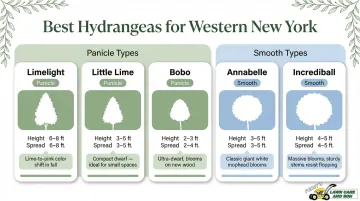
| Cultivar | Type | Height | Spread | Key Feature |
|---|---|---|---|---|
| Limelight | Panicle | 6-8 ft | 6-8 ft | Lime-green blooms aging to pink; hardy to Zone 3 |
| Little Lime | Panicle | 3-5 ft | 3-5 ft | Compact Limelight; ideal for small spaces |
| Bobo | Panicle | 2.5-3 ft | 3-4 ft | Dwarf variety; perfect for containers |
| Annabelle | Smooth | 3-5 ft | 4-6 ft | Massive white blooms; native species |
| Incrediball | Smooth | 4-5 ft | 4-5 ft | Larger blooms than Annabelle; stronger stems |
These varieties bloom on current-season growth, meaning late spring freezes don't eliminate the flower display. Even if winter kills stems to the ground, new growth emerges in spring and blooms the same summer.
Size Considerations: Matching Plant to Space
Match cultivar size to your available space before purchasing:
| Size Range | Best Cultivars | Ideal Use |
|---|---|---|
| Compact (3-5 ft) | Bobo, Little Lime, Annabelle | Foundation beds, small yards, containers |
| Medium (4-6 ft) | Incrediball, standard Annabelle | Mixed borders, mass plantings, property edges |
| Large (6-8 ft) | Limelight, Oakleaf | Hedges, privacy screens, specimen plantings |
Mature width matters as much as height. A 6-foot-wide shrub needs at least 3 feet of clearance from structures and neighboring plants.
Light Requirements: Morning Sun, Afternoon Shade
Most hydrangeas prefer 4-6 hours of morning sunlight followed by afternoon shade, especially during Buffalo's humid summers. This balance supports robust blooming while protecting flowers from scorching during peak afternoon heat.
Oakleaf hydrangeas are the exception: they tolerate deeper shade than other types, making them well-suited for north-facing beds, under-canopy plantings, and areas receiving only dappled sunlight.
Soil Drainage and Amendment
Hydrangeas demand consistently moist, well-draining soil. They fail in both extremes:
- Sandy, dry soils cause chronic drought stress and stunted growth
- Heavy clay retains standing water, triggering root rot at the crown
Amend poor soil with compost at a 70% soil to 30% compost ratio. This improves both drainage and moisture retention — two conditions that seem contradictory but are equally important for healthy root systems.
Hydrangea Landscaping Ideas for Every Style of Garden
Whether you're softening a formal colonial facade, creating a cottage garden retreat, or adding structure to a modern minimalist space, hydrangeas adapt to diverse design styles while maintaining their signature impact.
Foundation Plantings for Maximum Curb Appeal
Few shrubs do more work along a foundation than hydrangeas. Their rounded forms soften hard building lines, and their blooms draw the eye upward from the ground — all without competing with the architecture behind them.
Best practices:
- Choose compact varieties (Bobo, Little Lime, Annabelle) that mature below window sills
- Space plants at least 12 inches from exterior walls to allow airflow and maintenance access
- Plant in odd-numbered groups (three or five) for visual balance
- Pair with evergreen boxwood for year-round structure
For Buffalo homeowners seeking professionally designed foundation beds that enhance property value, Percy's Lawn Care and Son offers landscaping services tailored to Western New York's climate and architectural styles.
Mass Plantings and Borders
Hydrangeas planted in groups hit differently than a single shrub tucked into a corner. Odd-numbered groupings create natural, harmonious compositions that feel organic rather than regimented.
Design strategies:
- Plant in groups of three, five, or seven for maximum impact
- Stagger placement rather than aligning in straight rows—this allows shrubs to fill gaps naturally as they mature
- Use single varieties for cohesive color (all Limelight or all Annabelle) along fence lines and property borders
- Space plants 3-4 feet apart for most varieties, 5-6 feet for larger cultivars like Limelight
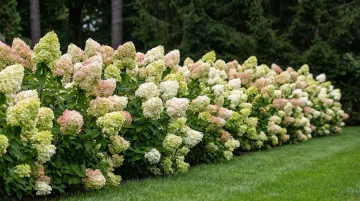
Massed Limelight plantings along a property edge create a living fence that transitions from lime-green in summer to rosy pink in fall, offering two distinct color phases without replanting.
Containers and Entryways
Flanking a front door with matching hydrangea planters adds bold color without committing to a permanent bed. It's a practical move for urban yards, renters, or anyone who wants the option to swap displays each season.
Container recommendations:
- Select compact varieties: Bobo, Little Lime, Strawberry Sundae
- Use containers at least 18 inches in diameter with drainage holes
- Fill with high-quality potting mix enriched with compost
- Water daily during hot weather—containers dry faster than ground plantings
- Move pots to protected locations or insulate with bubble wrap for winter
Hydrangeas as Focal Points
A single specimen hydrangea can anchor an entire bed when given room to perform on its own. Large oakleaf varieties or panicle hydrangeas trained into tree form create vertical interest that low-growing companions can't match.
Panicle varieties grafted onto 2-3 foot trunks reach 6-8 feet tall with a rounded canopy — these are called tree-form standards. Position at bed centers or path intersections where their elevated blooms draw the eye. Surround with shade-tolerant annuals like impatiens or begonias to hide the bare trunk and create layered interest.
Pairing Hydrangeas With Hardscape Features
Once you've placed your focal points, the next layer is how hydrangeas interact with the built environment around them. Their soft, billowing blooms do real work against stone, wood, and fencing — and hardscape returns the favor by holding visual interest through winter dormancy.
Effective combinations:
- Blue hydrangeas cascading over white picket fences (classic cottage look)
- Limelight borders along stone pathways (formal elegance)
- Oakleaf hydrangeas flanking wooden gates (rustic charm)
- Mass plantings against retaining walls (softening hard edges)
- Container hydrangeas on patio corners (defining outdoor rooms)
Best Companion Plants to Pair With Hydrangeas
Hydrangeas dominate the middle layer of garden beds, creating opportunities to layer complementary plants above and below. The design goal: fill visual gaps, hide woody bases, and extend seasonal interest beyond hydrangea bloom periods.
Design Principles for Companion Planting
Layer vertically: Combine tall canopy trees, mid-height hydrangeas, and low-growing perennials or annuals for depth.
Contrast textures: Pair hydrangeas' bold blooms with fine-textured ferns or strappy daylily foliage.
Extend bloom seasons: Use spring-blooming companions (azaleas) before hydrangeas flower, and fall bloomers after peak display.
Hide woody bases: Plant low-growing perennials at hydrangea feet to conceal bare stems.
Recommended Companion Plants by Category
Shade Perennials:
- Hostas fill gaps beneath hydrangeas with bold, textural foliage; hundreds of varieties offer size and color options
- Ferns add fine texture and movement in the same moist, shaded conditions hydrangeas prefer
- Daylilies bloom in early summer before hydrangeas peak and hold up well in partial shade
Spring-Blooming Shrubs:
- Azaleas deliver April–May color before hydrangeas bloom and share the acid-soil preference of bigleaf varieties
Shade Annuals (for under large shrubs):
- Impatiens provide continuous color in deep shade beneath mature hydrangeas
- Begonias tolerate low light and add contrasting foliage texture
- Nicotiana offers fragrant evening blooms in partial shade
Structural Evergreens:
- Boxwood provides year-round structure that frames hydrangea masses and holds visual interest after blooms fade
Overcanopy Trees and Root Competition
Small ornamental trees provide dappled shade hydrangeas prefer while adding vertical layers. Suitable companions include dogwood, crepe myrtle, and holly. Space hydrangeas at least 4–6 feet from tree trunks to minimize root competition for water and nutrients—established trees monopolize moisture and nutrients, which can stunt nearby plantings.
Essential Hydrangea Care Tips for a Thriving Garden
Watering: Consistency Prevents Stress
Hydrangeas require 1 inch of water weekly, increasing to 2 inches during hot, dry periods. Newly planted shrubs need 3 inches weekly for the first two years to establish deep root systems.
Critical watering rules:
- Water at the base using drip irrigation or soaker hoses—never overhead
- Overhead watering splashes Cercospora fungal spores from fallen debris onto leaves, causing brown or purple spots and severe defoliation
- Apply water in one deep soaking rather than frequent shallow sprinkles
- Mulch with 2-3 inches of shredded bark to retain moisture and regulate soil temperature
Pruning: Timing Determines Next Year's Blooms
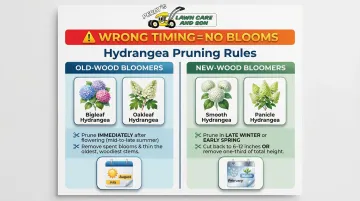
The single most common mistake: Pruning old-wood bloomers at the wrong time eliminates the entire flower display.
Pruning by Bloom Type:
| Species | Blooms On | Prune When | Method |
|---|---|---|---|
| Bigleaf | Old wood | Immediately after flowering (summer) | Remove spent blooms; thin oldest stems |
| Oakleaf | Old wood | Immediately after flowering (summer) | Minimal pruning; shape as desired |
| Smooth | New wood | Late winter/early spring | Cut to 6-12 inches above ground |
| Panicle | New wood | Late winter/early spring | Remove one-third of height |
Remove no more than one-third of total stems per season — cutting more risks shocking the plant and wiping out that year's blooms. This gradual approach keeps flower production steady while slowly restoring overgrown shrubs.
For severely overgrown smooth hydrangeas, cut all stems to 12 inches above ground in late winter. Expect fewer blooms the following season, then vigorous new growth and full recovery within two years.
Fertilization and pH Manipulation
Apply balanced slow-release fertilizer (10-10-10) in early spring and again after flowering. Avoid high-nitrogen formulas that promote foliage at the expense of blooms.
Color Control for Bigleaf Varieties:
Only H. macrophylla and H. serrata change color based on soil chemistry:
- Blue blooms: Maintain pH below 5.5 by applying aluminum sulfate in spring and fall
- Pink blooms: Raise pH to 6.5+ by applying dolomitic lime
White hydrangeas and other species (panicle, smooth, oakleaf) maintain genetically fixed colors regardless of pH adjustments.
Once your fertilization timing is set for the season, the next step is planning ahead for Buffalo winters — which can undo months of careful growth if bigleaf varieties aren't protected in time.
Buffalo-Specific Winter Protection
In Zone 6b, bigleaf hydrangeas face significant bud-kill risk during harsh winters. Protect investments with these practices:
All varieties:
- Apply 3-4 inches of mulch around the base in late November to insulate roots
- Extend mulch 12 inches beyond the drip line
Bigleaf varieties (extra protection):
- Tie branches together gently in December
- Wrap entire plant with burlap to protect flower buds from temperature swings
- Remove wrapping in early April after hard freeze risk passes
Why new-wood bloomers need less protection: Limelight, Annabelle, and other new-wood varieties develop flower buds in spring just before blooming. Even if winter kills all above-ground growth, new stems emerge and bloom the same season.

Frequently Asked Questions
How to use hydrangeas in landscaping?
Hydrangeas work in foundation plantings (compact varieties below windows), mass groupings along borders (odd-numbered clusters), containers flanking entryways (Bobo, Little Lime), and as specimen focal points (tree-form standards). Match variety size to available space and provide morning sun with afternoon shade for best results.
What is the 1/3 rule for hydrangeas?
The 1/3 rule means removing no more than one-third of the plant's stems in any single pruning session. This prevents shock, maintains blooming capacity, and allows gradual rejuvenation of overgrown shrubs without sacrificing an entire season's flower display.
Where should you not plant hydrangeas?
Avoid full-shade locations (insufficient light for blooming), areas with poorly draining or soggy soil (causes root rot), spots receiving intense all-day sun (scorches blooms and foliage), and planting too close to large tree roots that compete for water and nutrients.
How far apart should hydrangeas be planted in the landscape?
Space most varieties 3-4 feet apart for mass plantings, allowing room for mature spread. Larger varieties like Limelight need 5-6 feet between plants. Always check the specific cultivar's mature width and add a 1-foot buffer around that measurement when calculating spacing.
What are the best hydrangeas for cold climates like Buffalo?
Panicle hydrangeas (Limelight, Little Lime, Bobo) and smooth hydrangeas (Annabelle, Incrediball) deliver the most reliable blooms in Buffalo's Zone 6b climate. They bloom on new wood, making them immune to winter bud kill that affects old-wood varieties like bigleaf and oakleaf types.
Do hydrangeas come back every year?
Yes. Hydrangeas are woody perennial shrubs — they go dormant in winter and push new growth each spring. In colder zones like Buffalo's Zone 6b, choosing cold-hardy varieties makes the difference between reliable blooms and disappointment.
Ready to add hydrangeas to your Buffalo property? Percy's Lawn Care and Son has designed and installed landscapes across Western New York since 1999. We know which varieties survive Buffalo winters, which spots on your property work best, and how to make it all look good year after year. Call us at (716) 245-5296 or email hello@percyslawncare.com to get started.