
Introduction
Buffalo homeowners face a familiar challenge: maintaining a yard that looks great through harsh Western New York winters while keeping up with the steady demands of watering, chemical treatments, and weekend maintenance. Conventional lawn care tends to become a cycle of recurring costs—fertilizers, pesticides, irrigation—that strain both your budget and the local environment.
Eco-friendly landscaping offers a more practical path forward. Sustainable design works with Buffalo's climate and soil conditions rather than against them, using native plants, organic soil care, and smart water management to create landscapes that thrive with less intervention—and lower costs over time.
This guide walks through the core principles, plant choices native to Western New York, and seasonal habits that cut maintenance demands while protecting your local environment.
Key Takeaways
- Sustainable landscaping cuts environmental impact and maintenance costs through native plants, organic soil care, and smart water management
- Buffalo's clay soil and freeze-thaw cycles make native, climate-adapted plants essential—they survive seasonal extremes with fewer inputs
- Composting, mulching, and rain harvesting reduce chemical use and can cut outdoor water consumption significantly
- Starting with one rain garden or native plant bed supports local pollinators while trimming your water bill
What Is Eco-Friendly Sustainable Landscaping?
Sustainable landscaping is an approach to design, installation, and maintenance that minimizes environmental harm while creating a functional, attractive outdoor space. It rests on three pillars: reduce resource use (water, chemicals, energy), support local biodiversity, and build long-term resilience into the landscape.
For Buffalo homeowners, that means landscapes built to handle harsh winters, clay-heavy soils, and wet springs — without constant chemical inputs or replanting cycles.
Conventional vs. Sustainable: Key Differences
| Conventional Landscape | Sustainable Landscape |
|---|---|
| Heavy reliance on synthetic fertilizers and pesticides | Organic amendments and Integrated Pest Management (IPM) |
| High water consumption through frequent irrigation | Water-smart design with native plants requiring minimal watering |
| Generates stormwater runoff carrying pollutants to storm drains | Rain gardens and permeable surfaces capture and filter runoff on-site |
| Requires ongoing chemical inputs and replanting | Self-sustaining plantings that return year after year |
| High long-term maintenance burden | Reduced maintenance as landscape matures |
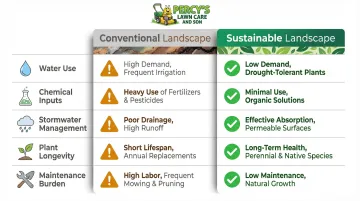
The practical result: less time maintaining, lower costs over time, and a yard that supports the local ecosystem rather than working against it.
Why Buffalo, NY Homeowners Should Consider Sustainable Landscaping
Buffalo's Climate Makes Sustainable Landscaping More Practical
Buffalo's specific climate—cold winters, freeze-thaw cycles, heavy lake-effect snow, and clay-dense soil—makes sustainable, native-adapted landscaping more practical than conventional approaches. Non-native, high-maintenance plants struggle in these conditions, while well-chosen natives are built for them.
Buffalo is now designated as USDA Plant Hardiness Zone 6b (updated from 6a in 2012), reflecting a warmer baseline. But freeze-thaw volatility remains. Plants adapted to these conditions don't need coddling—they're built for it.
The Local Environmental Stakes
Urban runoff is a primary driver of nutrient and pathogen pollution in the Niagara River and Lake Erie watershed. Conventional landscaping with impervious surfaces and chemical treatments contributes to this problem, causing bank scouring, downstream flooding, and loss of aquatic habitat.
That pollution starts at the property level. Rain gardens, permeable hardscaping, and native plantings reduce runoff and filter pollutants before they reach storm drains — giving Buffalo homeowners a direct hand in protecting local waterways.
The Financial Case
Sustainable landscapes reduce long-term costs by lowering water usage, eliminating or cutting chemical treatments, and reducing replanting frequency.
The numbers add up quickly:
- Outdoor water use accounts for 30% of household consumption nationally, averaging 50,500 gallons per home each year
- Water-smart landscapes and native plants can cut outdoor water use by up to 50%, saving thousands of gallons annually
- Fewer chemical inputs and longer-lived plants mean lower recurring maintenance costs year over year
Core Principles of Sustainable Landscape Design
Right Plant, Right Place
Choosing plants already adapted to Buffalo's soil type (often clay-heavy) and USDA zone 6b climate eliminates most of the need for fertilizers, irrigation, and pest intervention. This is the single most impactful decision in a sustainable design.
Native plants have evolved alongside local insects, birds, and soil microbes. They don't require the life support systems that non-native ornamentals demand.
Water-Smart Design
Thoughtful design reduces irrigation needs through:
- Hydrozoning: Grouping plants by water requirements so you're not overwatering drought-tolerant species or underwatering moisture-lovers
- Mulching: Retaining soil moisture and reducing evaporation
- Rain gardens and swales: Capturing and absorbing runoff rather than sending it to storm drains
These features work particularly well in Buffalo, where 9.63 inches of precipitation falls during March, April, and May — rain that would otherwise run straight into storm drains.
Soil Health First
Healthy, biologically active soil is the foundation of any sustainable landscape. Buffalo's clay-heavy soils are prone to compaction, which restricts water infiltration and limits deep rooting.
Build soil health through:
- Composting kitchen and yard waste to build organic matter
- Grasscycling (leaving clippings on the lawn)
- Leaf mulching instead of bagging
- Avoiding soil compaction from heavy foot traffic or equipment
Organic matter improves drainage in clay soils, supports beneficial microbes, and reduces the need for synthetic fertilizers.
Reducing Chemical Dependency
Healthier soil and better plant selection also reduce your chemical load. Native, diverse plantings naturally resist pests and disease — so many problems never develop in the first place.
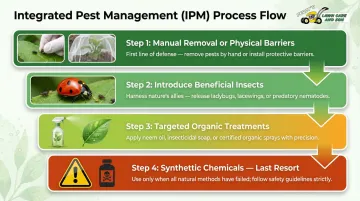
When issues do appear, Integrated Pest Management (IPM) provides a clear response sequence:
- Start with manual removal or physical barriers
- Introduce beneficial insects (ladybugs, lacewings) for pest control
- Apply targeted organic treatments if needed
- Use synthetic chemicals only when all other options are exhausted
Encouraging Biodiversity
Layered planting—ground covers, flowering perennials, shrubs, and canopy trees—creates habitat for pollinators, birds, and beneficial insects.
Over 22% of native North American pollinators face elevated extinction risk, with native bees particularly vulnerable at 34.7%. Residential yards make up 24-36% of urban land and contain an estimated 54-83% of the urban pollinator population.
In a city like Buffalo, where green space is woven into residential neighborhoods, the cumulative impact of individual yards adds up fast.
Practical Eco-Friendly Landscaping Ideas to Start This Season
Plant a Native Pollinator Garden
Replace a section of traditional lawn or bare bed with a native wildflower and pollinator garden. Even a small patch of native plants supports bees, butterflies, and other insects that conventional turf grass does not.
Start incrementally—one corner at a time. You don't need to transform your entire yard overnight.
Add Mulch and Start a Compost Station
Mulch does two things well:
- Suppresses weeds naturally, reducing herbicide needs
- Retains moisture and adds organic matter to the soil as it breaks down
Pair this with a backyard compost station to recycle yard trimmings and food scraps into natural fertilizer instead of sending them to a landfill. Buffalo generates significant yard waste—put it to work improving your soil.
Install a Rain Barrel or Rain Garden
Rain barrels capture roof runoff for use in watering gardens, reducing dependence on municipal water. A 1-inch rainfall on a 1,000 sq. ft. roof yields approximately 623 gallons. Standard residential rain barrels hold 50-60 gallons, with larger models available up to 132 gallons.
Rain gardens Both are practical choices in Buffalo, where 40.68 inches of annual precipitation means managing stormwater isn't optional — it's a regular reality. Hardscaping choices matter for the same reason.
Use Permeable Hardscaping
Solid concrete patios and driveways shed water instead of absorbing it. Permeable alternatives — pea gravel, decomposed granite, or permeable pavers — let rainwater infiltrate the soil rather than pooling or running off.
This is especially relevant for Buffalo properties where ice-melt and spring thaw create significant water flow.
Strategic Tree and Shrub Placement
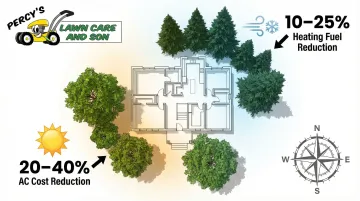
Planting deciduous trees on the south and west sides of a home shades it in summer while allowing winter sun to warm it. This can reduce air conditioning costs by 20-40%.
On Buffalo properties, evergreen windbreaks on the north and northwest sides block cold prevailing winds, reducing heating fuel consumption by 10-25%.
In a climate with Buffalo's heating demands, the right tree in the right spot can meaningfully cut your energy bills year after year.
Best Native Plants for Western New York Landscapes
Selecting plants native to the Northeast ensures adaptation to Buffalo's specific climate, soil, and pollinator needs. Here are proven options across categories:
Flowering Perennials
- Purple Coneflower (Echinacea purpurea): Highly attractive to butterflies and bees; thrives in well-drained soils
- Wild Bergamot (Monarda fistulosa): Excellent nectar source for native bees and hummingbirds
- Black-eyed Susan (Rudbeckia hirta): Drought-tolerant perennial/biennial providing late-summer blooms
Native Grasses
- Little Bluestem (Schizachyrium scoparium): Deep-rooted ornamental grass highly resistant to deer and drought
- Switchgrass (Panicum virgatum): Tolerates moist to average soils; excellent for rain garden borders
Shrubs and Trees
- Serviceberry (Amelanchier spp.): Small tree/shrub providing early spring blooms and edible berries for wildlife
- Eastern Redbud (Cercis canadensis): Understory tree with early spring nectar; requires cold-hardy seed strains for Zone 6b
- Winterberry Holly (Ilex verticillata): Wetland-tolerant shrub providing critical winter fruit for birds; requires male/female pairing
Perennials vs. Annuals: A Sustainability Perspective
Perennial natives are a more sustainable investment than annuals. They return year after year, deepen root systems over time, and require no replanting—making them lower cost and lower effort long-term. Annuals, by contrast, must be replanted each season—generating unnecessary waste and ongoing expense that perennials simply don't carry.
Where to Source Native Plants in Buffalo
- Cornell Cooperative Extension (CCE) Erie County: Hosts an annual Master Gardener Plant Sale featuring native plants and perennials
- Erie County Soil and Water Conservation District: Conducts an annual spring Conservation Tree and Shrub Seedling Sale offering bare-root native seedlings
- Tifft Nature Preserve: Hosts native plant sales and educational planting events
- WNY PRISM: Maintains a vetted "Sources of Native Plants for WNY" directory, highlighting local nurseries
When shopping at any of these sources, avoid non-native cultivars or "nativars" with altered flower shapes or leaf colors—these lack the pollen, nectar, and larval host benefits that local insects depend on.
Sustainable Lawn Care: Maintaining Your Eco-Friendly Landscape the Right Way
Proper Mowing Height and Grasscycling
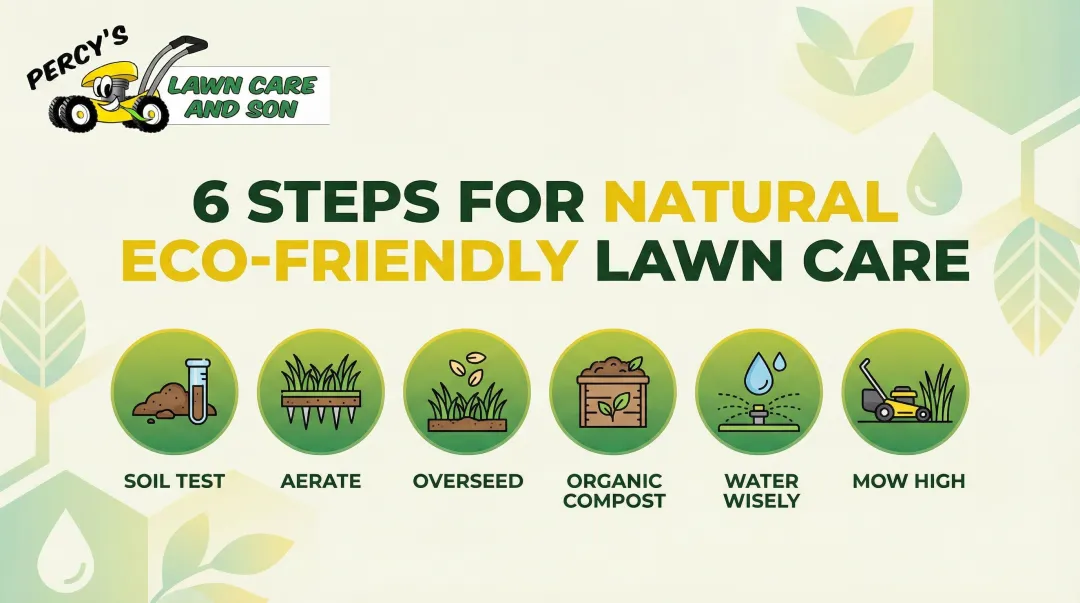
Cutting grass too short stresses the lawn and invites weeds. Maintaining the correct height—typically 3-4 inches for cool-season grasses common in Buffalo—promotes deep root growth and reduces the need for watering and chemical treatments.
Taller grass shades out weed seeds like crabgrass and provides more leaf surface to feed the roots, resulting in deeper root systems that better withstand drought.
Grasscycling—leaving clippings on the lawn—is a simple way to return nutrients to the soil. Follow the "1/3 rule," never removing more than one-third of the grass blade height during a single mowing.
Lawn Aeration for Clay Soils
Aeration relieves soil compaction (especially important in Buffalo's clay soils), improves water infiltration, and supports stronger, deeper root systems that are more drought-resistant and less dependent on fertilizers.
For cool-season lawns in Buffalo, aeration is most effective in late summer to early fall (late August through early October) when temperatures begin to cool and weed competition is lower.
Overseeding with Climate-Adapted Grass Varieties
Overseeding with drought-tolerant or climate-adapted grass varieties improves lawn resilience over time, reducing the water and chemical inputs needed to maintain a healthy lawn.
Selecting the right grass species for Buffalo's climate is itself a sustainability decision. Cool-season grasses like tall fescue or fine fescue blends are well-suited to Zone 6b conditions and provide excellent drought tolerance and deep rooting.
Working with Eco-Friendly Lawn Care Professionals
The right lawn care professional makes eco-friendly maintenance easier by applying treatments responsibly rather than by the calendar. Key practices to look for include:
- Organic or low-input fertilization tailored to soil test results
- Responsible, targeted chemical use (only when necessary)
- Seasonal timing based on local climate, not generic schedules
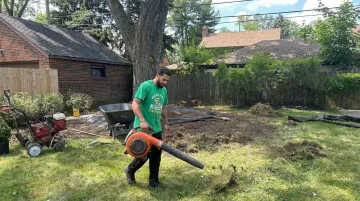
Percy's Lawn Care and Son has been applying sustainable lawn care practices across Buffalo and Western New York since 1999. Their familiarity with the region's clay soils and short growing season means every treatment is timed and dosed for local conditions—not copied from a national template.
Frequently Asked Questions
What do we mean by sustainable landscaping?
Sustainable landscaping refers to designing and maintaining outdoor spaces in a way that conserves water, supports local biodiversity, minimizes chemical use, and works with the local climate and soil conditions rather than fighting them.
What is the rule of 3 in landscaping?
The rule of 3 is a design principle suggesting plants look most visually balanced when grouped in odd numbers—particularly threes. Varying height, texture, and bloom time within those groupings creates a natural, cohesive aesthetic.
What is the 70/30 rule in gardening?
The 70/30 rule refers to dedicating 70% of a garden to low-maintenance, reliable plants (often natives or perennials) and 30% to seasonal or feature plants. This creates a landscape that is visually interesting but easy to manage year-round.
How often should you aerate your lawn?
Most lawns in Buffalo benefit from aeration once a year, typically in early fall for cool-season grasses. Lawns with heavy clay soil or high foot traffic may benefit from aeration twice annually.
Is October too late to aerate and seed?
In Buffalo, early-to-mid October can work for aeration and overseeding. Grass seed requires soil temperatures above 50°F to germinate, so late October carries real risk — cold soil stops establishment before winter sets in.