
Spring cleanup timing depends on more than just calendar dates. Soil temperature, frost patterns, and ground conditions all play a role—especially in Western New York's unpredictable spring climate. Buffalo's proximity to Lake Erie delays spring by several weeks compared to inland regions, and the ice pack on the lake typically doesn't disappear until mid-April. Starting too soon causes more harm than good; starting too late allows weeds to establish and diseases to take hold.
Key Takeaways
- Wait until daytime temps consistently hit 50°F and overnight lows stay above freezing before starting spring cleanup
- If grass is actively growing and the ground is firm underfoot, it's generally safe to begin
- Working on wet, soft ground compacts soil and damages roots just as they're waking up
- Starting too late allows weeds to seed, debris to trap moisture, and lawn diseases to establish
- A phased approach works best: clear light debris first, then move to pruning and mulching once temperatures stabilize
Why Timing Matters for Spring Cleanup
Spring cleanup isn't just cosmetic. Removing matted leaves, dead debris, and winter buildup is essential for allowing sunlight, air, and moisture to reach the soil. But doing it before conditions are right can cause more harm than leaving the mess in place.
Impact on Lawn Health
Debris left too long creates serious problems. Matted leaf litter and grass under prolonged snow cover at 32–45°F create ideal microclimates for gray snow mold (Typhula) and pink snow mold (Microdochium) to ravage turf. These fungal diseases thrive in cool, humid conditions and can destroy sections of lawn before warm weather arrives.
Starting too early carries its own risks. Disturbing partially frozen or waterlogged soil compacts it severely. Soil compaction reduces pore space and limits internal drainage, channels for root growth, and air exchange.
Walking on saturated spring soil presses particles into a denser mass that suffocates roots and ruins drainage for the entire season.
Cost and Effort Savings
Cleanup done at the right moment requires less rework throughout the growing season:
- Pull weeds before they seed and eliminate hours of hand-pulling later
- Prune before rapid growth kicks in to direct plant energy where you want it
- Apply mulch while soil is still moist for better moisture retention and weed suppression
- Time pre-emergent herbicides to soil temperature and stop crabgrass before it germinates
In Buffalo, where spring can swing from 65°F one week to a hard frost the next, that window matters more than most people realize.
The Right Time to Start Spring Cleanup in Buffalo, NY
Buffalo's spring arrives later than much of the country. The real risk of frost extends into mid-May in Western New York, making the general advice to "start in early spring" misleading for local homeowners. Typically, conditions are right from late April into May—but not always.
Based on Temperature
The 50°F rule is your most reliable guideline: soil and air temperatures should both be consistently above 50°F before beginning major cleanup tasks. Research shows this threshold aligns with grass root activity and the emergence of beneficial pollinators.
Buffalo's soil often lags behind air temperature by one to two weeks after a heavy snow winter. A few warm days in early April don't mean the ground is ready—overnight lows still dipping into the 20s and 30s keep soil locked in dormancy.
Based on Ground and Soil Conditions
Use the step test: walk firmly on a small patch of lawn. If footprints leave deep impressions, the ground is too soft and waterlogged to work safely. Walking on or raking saturated soil compresses it, limiting oxygen to roots.
The squeeze test works for garden beds. Dig down 3–4 inches, grab a handful of soil, and squeeze it for five seconds. Drop it from waist height. If it stays in a hard, muddy ball, it's too wet. If it crumbles like chocolate cake, conditions are right.
Based on Visible Lawn and Plant Signals
Watch for these natural indicators that soils have warmed:
- Cool-season grass showing new green growth across the lawn (not just in isolated patches)
- The first mow of the season is overdue because grass is actively growing
- Forsythia is blooming in your neighborhood or yard
- Apple and pear trees have reached full bloom, a reliable sign pollinators are active
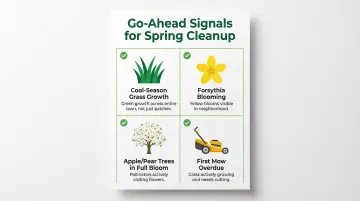
When two or more of these overlap, you're in the right window to start working the yard.
Based on Frost Calendar
Buffalo's average last frost date is April 24–25, according to long-term climate normals. That said, inland Western New York areas face a 10% probability of frost extending well into mid-May, so the calendar alone isn't enough.
Two things to keep in mind before touching garden beds:
- Don't pull mulch too early — it insulates dormant perennials and beneficial insects from late freezes
- Align bed cleanup with the frost window, not the first warm week
Once temperatures are stable and soil passes both the step and squeeze tests, you're ready to move from waiting to working.
Signs It's the Right Time to Start Spring Cleanup
Not sure whether your yard is ready, regardless of what the calendar says? In Buffalo, the calendar is rarely the most reliable guide — spring arrives on its own schedule. These observable cues tell you when conditions are actually right.
Temperature and Ground Cues
- Overnight temperatures consistently above 35–40°F
- Daytime highs reaching 50°F or higher for 3–5 consecutive days
- Snow and ice have fully cleared from all lawn areas
- Soil surface holds firm when walked on—no deep compression or standing water
Lawn and Plant Signals
- Grass is actively greening and growing across the lawn, not just in patches
- Dormant shrubs are showing buds
- Forsythia or other early-blooming plants in the neighborhood have flowered
- Weeds are beginning to emerge in garden beds (indicating soil has warmed enough for growth)
Debris Condition Cues
- Fallen leaves have dried out and lifted slightly off the lawn surface (rather than matted flat and wet)
- Dead grass is visible beneath debris
- Bare soil is visible in garden beds where winter cover has shifted
- Debris crumbles or breaks apart rather than tearing—a sign the ground beneath is firm and dry enough to work
When NOT to Start Spring Cleanup (and What Happens If You Do)
The Most Common Mistake in Buffalo
The most common mistake Buffalo homeowners make is rushing out on the first warm weekend in March or early April. Overnight temperatures are still dipping into the 20s and the soil is saturated from snowmelt — it feels like spring, but it's still winter in every way that matters for your yard.
Consequences of Starting Too Early
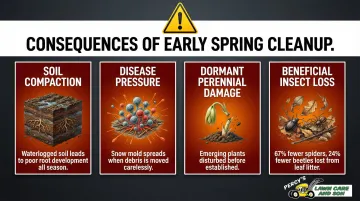
Working on wet, cold ground creates lasting damage:
- Soil compaction from walking or raking waterlogged soil leads to poor root development all season
- Increased disease pressure, especially fungal issues like snow mold if debris is moved carelessly
- Damage to dormant perennials that haven't emerged yet
- Destruction of overwintering beneficial insects still sheltering in leaf litter and plant stems—removing leaves reduces spider populations by 67% and beetles by 24%
Consequences of Starting Too Late
By late May or early June in Buffalo:
- Weeds like dandelions and crabgrass have already seeded, requiring control efforts all season
- Matted debris has trapped moisture long enough for fungal problems to take hold
- Overgrown shrubs have put energy into the wrong growth patterns, requiring corrective pruning that stresses plants
- Mulch becomes far less effective once soil has dried and cracked
The sweet spot is a narrow window — and hitting it consistently is what separates a lawn that recovers in May from one that's still struggling in July.
Best Practices for Timing Your Spring Cleanup Right
Use a Phased Approach Tailored to Buffalo's Spring
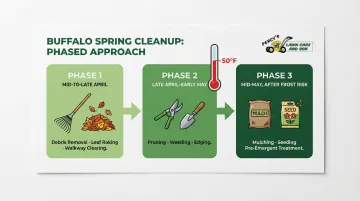
Phase 1 (Mid-to-Late April, once soil firms up):
- Light debris removal from lawns
- Raking leaves from lawn areas (only when dry)
- Clearing walkways and beds of sticks and winter debris
Phase 2 (Late April–Early May, when temps consistently hit 50°F):
- Pruning dead or winter-damaged branches
- Weeding garden beds before weeds set seed
- Edging beds and defining borders
Phase 3 (Mid-May, after last frost risk):
- Mulching garden beds
- Seeding bare patches in lawns
- Applying pre-emergent weed treatment
Monitor Local Weather Forecasts, Not Fixed Dates
Buffalo's spring is notoriously unpredictable. A warm week in April can be followed by a hard freeze. Using a soil thermometer (widely available at garden centers) to confirm 50°F+ soil temperature at 2-inch depth before beginning cleanup gives you a reliable read on timing.
These conditions also dictate when time-sensitive tasks need to happen — and some of those windows are shorter than most homeowners expect.
Prioritize Time-Sensitive Tasks
Certain tasks have narrow windows:
- Pruning flowering shrubs before new buds open
- Pulling weeds before they set seed
- Clearing debris from lawn surfaces before the first real mow
- Applying pre-emergent herbicide when soil hits 50–55°F—crabgrass germinates rapidly when topsoil reaches 60–70°F, rendering late applications completely ineffective
Missing these windows often means spending the rest of the season managing problems that could have been prevented.
When to Call in a Pro
If the phasing and timing feel like too much to track — or if spring slipped by before you got started — that's where a local pro earns their keep. Percy's Lawn Care and Son has been handling Buffalo-area spring cleanups since 1999, and that kind of local experience means knowing which weeks in April are reliably workable and which ones aren't. The team manages the full phased process, from early debris clearing through mulching and pre-emergent treatment, so nothing gets missed and nothing gets done too early.
Frequently Asked Questions
When should you start spring cleanup?
Wait until daytime temperatures consistently reach 50°F, the ground is fully thawed and firm underfoot, and frost risk has largely passed. In northern climates, this typically occurs from late April to mid-May.
When should you start spring cleanup in Buffalo, NY?
Buffalo's average last frost date is April 24–25, but inland areas face frost risk into mid-May. Most cleanup tasks should begin no earlier than mid-to-late April, with mulching and bed preparation waiting until mid-May when frost risk is reliably low.
Is it too early to do yard cleanup?
Use the step test: if footprints compress deeply into the soil, it's too early. If temperatures are still regularly dropping below freezing overnight, it's too early. Rushing cleanup risks soil compaction and damage to overwintering plants and beneficial insects.
What happens if you do spring cleanup too early?
Working on wet ground compacts soil and damages root systems. You'll also disturb dormant perennials and beneficial insects before they've emerged, and remove protective leaf cover before the last frost—raising disease pressure and stunting spring growth.
What is typically included in a spring cleanup?
Core tasks include debris and leaf removal, pruning dead or damaged branches, weeding, edging, the first mow of the season, and mulching. A full-service provider like Percy's Lawn Care and Son can schedule all of these in a single visit.
Can you do spring cleanup when the ground is still partially frozen?
Light surface work like picking up sticks or clearing walkways is fine. Raking, bed work, and pruning should wait until the ground fully thaws—working frozen soil compacts it and damages the roots underneath.