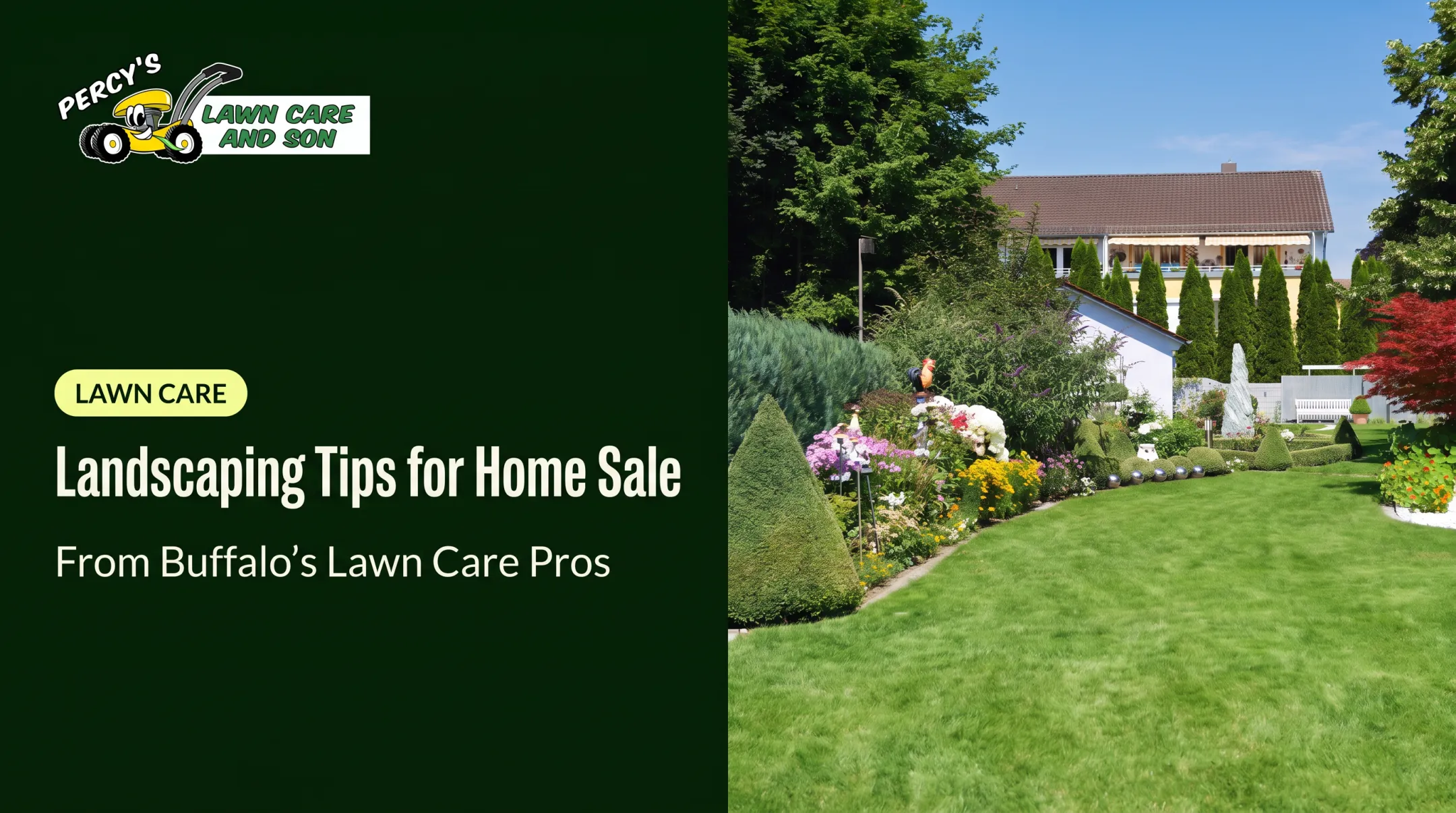
Percy's Lawn Care and Son has spent over 25 years transforming residential properties across Buffalo, Amherst, and Cheektowega. We've seen firsthand how strategic landscaping choices—choosing cold-hardy plants, defining zones, and layering by height—turn tired yards into polished outdoor spaces that boost curb appeal and property value.
This guide covers actionable landscaping design ideas organized by zone (front yard, backyard), practical design rules that create visual cohesion, plant selection tips for Western New York's harsh winters, and budget-smart approaches that let you build your landscape over time.
Key Takeaways
- Repetition, height layering, and the rule of odd numbers shape professional landscapes — before a single plant goes in
- Front yards need a focal point, defined bed edges, and seasonal color to sharpen curb appeal
- Backyards should balance hardscaped living zones with planted garden areas, privacy plantings, and defined paths
- In Zone 6b Buffalo, choose cold-hardy plants that earn their place across multiple seasons — not just summer
- Start with bed framework (edging, mulch, soil prep), then add specimen plants one season at a time
The Landscaping Design Principles That Separate "Nice" from "Wow"
Professional landscape design follows specific rules that create visual cohesion and depth. These principles work regardless of your budget or yard size.
Repetition Creates Visual Flow
Repeating the same plant species—or color family—across different areas of a bed ties the whole design together. Using the same evergreen groundcover at both ends of a border bed, for example, creates bookends that frame the space.
This doesn't mean planting identical rows. It means echoing textures, colors, or forms throughout the landscape so your eye moves naturally from one area to the next.
The Rule of Odd Numbers
Grouping plants in sets of 3, 5, or 7 looks more natural and balanced than even groupings. Even numbers—especially pairs—create rigid symmetry that feels formal and unnatural in residential landscapes. This applies to both small accent plantings (three hostas clustered at a corner) and larger shrub arcs (five spireas sweeping along a fence line).
Once you've nailed your groupings, how you arrange them front-to-back is what really builds dimension.
Layering by Height Adds Depth
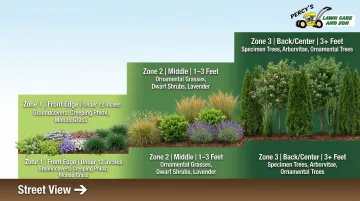
Front-to-back layering transforms flat beds into dynamic plantings with professional depth. Place low groundcovers (under 12 inches) at bed edges, mid-size shrubs (1–3 feet) in the middle, and tall specimen trees or shrubs (3+ feet) at the back or center. This layering is most impactful when viewed from the street, making even modest yards look intentionally designed.
Key layering zones:
- Low groundcovers, perennials, and edging plants along bed borders
- Shrubs, ornamental grasses, and mid-height perennials through the middle
- Specimen trees, tall shrubs, and vertical accents anchoring the rear
Specimen vs. Accent Plants
A specimen plant is the eye-catching anchor—a flowering tree, large ornamental grass, or distinctive shrub that draws attention. Accent plants provide color and texture around it. Every well-designed bed needs both: one strong specimen gives the eye somewhere to land, while accents build out the surrounding composition without competing for attention.
The 70/30 Rule in Gardening
Pioneered by garden designer Piet Oudolf, the 70/30 rule recommends dedicating 70% of your planting bed to a consistent, lower-key base (greenery, groundcovers, shrubs) while 30% provides bold color or texture contrast. This ratio prevents visual overwhelm, makes maintenance easier, and ensures your landscape looks cohesive year-round rather than chaotic.
Front Yard Landscaping Ideas That Boost Curb Appeal
Strategic front yard improvements deliver measurable returns. According to the National Association of REALTORS® 2023 Remodeling Impact Report, 92% of real estate professionals recommend improving curb appeal before selling, and standard lawn care recovers 217% of its cost at resale.
Anchor Your Entry With a Focal Point
Every front yard needs one clear "anchor"—a small ornamental tree, a large statement shrub, or a distinctive island bed. Without a focal point, the eye doesn't know where to land. Weeping ornamental trees or flowering shrubs work well at residential scale.
Flanking the front door or walkway with matching shrubs or container plantings directs guests' attention toward the entrance and makes the whole facade feel intentional.
Defined Beds and Clean Edging
Well-defined bed edges are the single highest-impact improvement most residential yards can make. Even modest plantings look polished when bordered with clean steel, stone, or concrete edging that separates lawn from bed. Edging also reduces maintenance by keeping grass out of planting beds.
Raised beds offer additional benefits for Buffalo's heavy clay soils. Slightly mounding soil in planting beds—even 4–6 inches above lawn grade—improves drainage and helps plants establish faster. They also warm up earlier in spring, extending Buffalo's short growing season.
Seasonal Color for Year-Round Interest
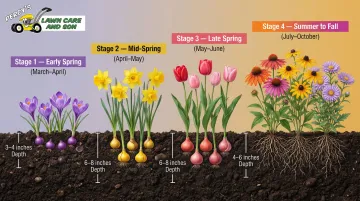
Buffalo's growing season feels short, but smart plant layering maximizes every month. Layer spring bulbs (tulips, daffodils), summer perennials (coneflowers, black-eyed Susans), and fall asters so something is always blooming.
For maximum spring impact, plant bulbs in staggered layers by bloom time—daffodils deepest, tulips mid-depth, and crocuses near the top—to create a succession of spring color from a single bed.
Backyard Landscaping Ideas for Outdoor Living
Outdoor living features deliver immense homeowner satisfaction. New patios score a 9.9 out of 10 on the NAR Joy Score, and a 2025 survey found that 41% of homeowners are creating backyard sanctuaries.
Define Distinct Zones
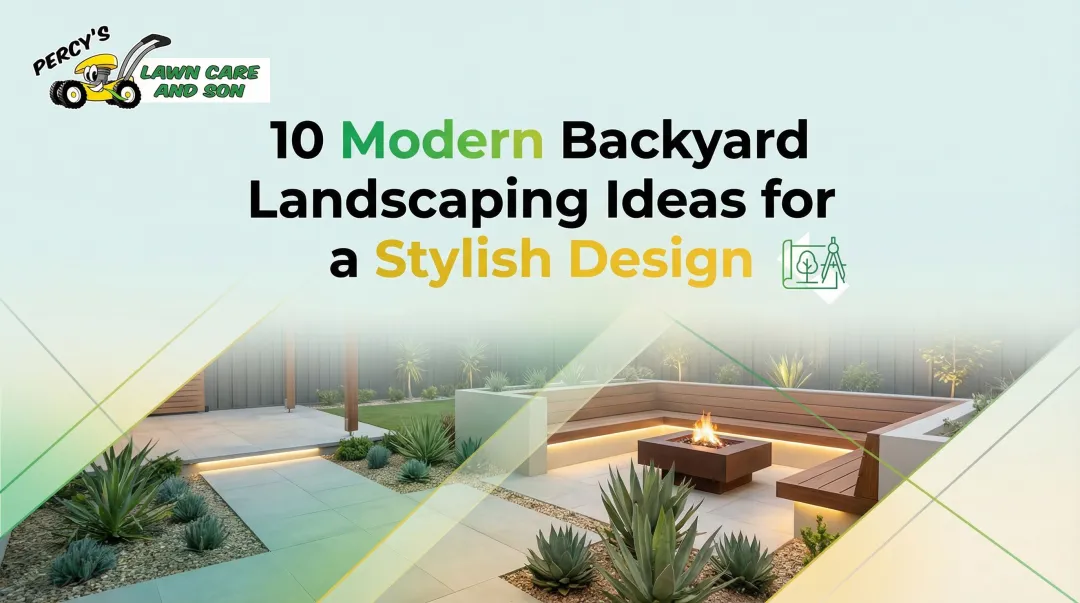
Well-designed residential backyards have at least two distinct areas: a hardscaped living zone (patio, fire pit area, or pergola) and a planted garden zone. Defining these zones with edging, pavers, or plant borders makes a backyard feel larger and more intentional.
Use Privacy Plantings Strategically
Dense evergreen shrubs or arborvitae planted in rows or arcs can screen neighboring properties, reduce noise, and create a sense of enclosure without a fence. This approach also adds year-round greenery to what might otherwise be a bare perimeter. For Buffalo homeowners, privacy plantings need to be cold-hardy and able to withstand heavy lake-effect snow.
Create Garden Paths
A designated path—stepping stones, mulch, or gravel—connecting different areas of the backyard defines boundaries, protects plantings from foot traffic, and makes the space feel like a series of intentional outdoor rooms. Paths should be at least 3 feet wide to feel comfortable for single users; 5–6 feet wide accommodates two people walking side by side.
Add Water Features and Landscape Lighting
Small additions make a measurable difference in how a backyard looks and functions:
- Water features like a birdbath or small fountain add visual interest and attract wildlife without major installation costs
- Landscape lighting along paths or around plantings extends evening usability and earns a perfect 10 out of 10 Joy Score from homeowners according to NAR
- Low-voltage LED path lights are the most cost-effective starting point—easy to install and immediately noticeable after dark
Choosing Plants That Thrive in Buffalo's Climate
Buffalo's climate has shifted. The 2023 USDA Plant Hardiness Zone Map update moved Buffalo from Zone 6a to Zone 6b, reflecting a 30-year warming trend. Homeowners can now confidently select plants hardy to -5°F to 0°F.
That said, Buffalo still experiences harsh winters, heavy lake-effect snow, and fluctuating spring temperatures—factors that eliminate many popular landscaping plants. Choose plants rated to zone 5 or 6 for reliable performance.
Percy's Lawn Care and Son's local knowledge of Buffalo's soil and climate conditions helps homeowners avoid costly plant replacement mistakes. We've seen which plants thrive in Buffalo's dense clay soils and which struggle through unpredictable spring freezes.
Cold-Hardy Ornamental Plants for Western New York
Evergreen privacy hedges:
- 'Emerald Green' arborvitae (Thuja occidentalis 'Smaragd'): Compact, narrowly pyramidal habit; hardy in Zones 2–7; prefers moist, well-drained soil in full sun to part shade
Perennials for year-round interest:
- Purple coneflower (Echinacea purpurea): Native perennial; thrives in full sun; attracts butterflies and finches
- Black-eyed Susan (Rudbeckia hirta): Native perennial; reliable summer blooms; low maintenance
Shrubs with multi-season appeal:
- Spirea: Flowering shrub with good fall color; cold-hardy and low maintenance
- Arrowwood viburnum (Viburnum dentatum): Native shrub; withstands poor drainage in heavy soils; produces berries that attract songbirds; grows well in sun or shade
Ornamental grasses for texture:
- Karl Foerster feather reed grass (Calamagrostis × acutiflora): Upright, clumping grass; hardy to Zone 4; holds structure through winter when most perennials have died back
- Low maintenance and drought-tolerant once established
The Value of Native Plants
Native species are well-suited to Buffalo's conditions and reduce long-term maintenance demands. Key advantages include:
- Adapted to local clay soils and temperature swings without special amendments
- Require less fertilizer and supplemental watering once established
- Support local pollinators, songbirds, and beneficial insects
- More resilient to late spring freezes that damage non-native varieties
That demand is growing. According to the National Wildlife Federation, 17% of U.S. adults are now purchasing region-native plants, and 28% are choosing plants that support native bees, butterflies, and birds.
Budget-Friendly Landscaping Tips and Modern Trends Worth Knowing
Budget Tips
Start with bed framework first. The most budget-friendly approach invests in defining the beds—edging, mulch, and soil amendment—before adding plants. This framework makes everything else look intentional. Poor performance of landscape plants can be traced to poor soils more often than to any other single factor, so soil preparation is critical.
Add specimen plants season by season. Rather than trying to fill every bed at once, add one or two specimen plants per season. This phased approach spreads costs over time and lets you adjust your design as plants mature.
Choose perennials over annuals. Perennials, native plants, and division-friendly plants (like ornamental grasses and hostas) offer the best long-term value — they return each year and can be divided and replanted for free. Annuals, by contrast, need replanting every season, which adds up in both cost and labor.
These budget principles also align well with where residential landscaping is heading overall.
Modern Trends
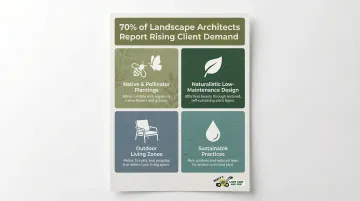
Current residential landscaping trends reflect growing environmental awareness and a shift toward low-maintenance designs. A 2024 ASLA survey found that 70% of landscape architects experienced at least a 10% increase in client demand for climate solutions, with top requests including rain gardens (70%), bioswales (72%), and native plant gardens (64%).
Key trends include:
- Native and pollinator-friendly plantings that support local ecosystems
- Naturalistic, low-maintenance designs replacing manicured, high-upkeep looks
- Defined outdoor living zones — patios, fire pits, and pergolas — that extend usable space
- Sustainable practices: rain gardens, bioswales, and shrinking traditional lawn footprints
Frequently Asked Questions
What is the least expensive way to landscape?
The most budget-friendly approach starts with basic bed preparation (edging, mulch, and soil amendment) and planting perennials or native species that return yearly. Many homeowners phase in professional help once the framework is in place, which keeps upfront costs manageable.
What is the rule of 3 in landscaping?
The rule of 3 recommends grouping plants in sets of three (or other odd numbers) to create a more natural, visually balanced appearance. Even numbers tend to look rigid and overly symmetrical.
What is the 70/30 rule in gardening?
The 70/30 rule suggests roughly 70% of a planting bed should be a cohesive, lower-key backdrop (foliage, groundcovers, green shrubs) while 30% provides bold color or contrasting texture. This prevents visual overwhelm and makes long-term maintenance easier.
What are the latest trends in landscaping?
Current trends include native and pollinator-friendly plantings, naturalistic low-maintenance designs, outdoor living room concepts with defined hardscaping zones, and eco-conscious approaches like reduced lawn areas and rain gardens.
Is it worth seeding a lawn in spring?
In Buffalo's climate, late spring seeding can work but early autumn is generally more reliable for grass establishment. That said, patching thin or bare spots in spring keeps the overall lawn looking cohesive through the growing season.
What is the best month to aerate and overseed?
For Buffalo and Western New York, late August through mid-September is the ideal window for aeration and overseeding. Soil is still warm enough for germination, but cooler autumn temperatures reduce drought and heat stress on new seedlings.