
This guide breaks down what Buffalo-area homeowners can expect to pay for mulch in 2026—covering pricing by type, project size, and whether DIY or professional installation makes more sense for your property.
Key Takeaways
- Professionally installed mulch runs $72–$94 per cubic yard; total projects range from $90 to $2,200+ depending on size
- Specialty mulch types, larger coverage areas, add-ons like edging or weed barrier, and difficult site access drive prices up
- Choosing bulk organic mulch, prepping the site yourself, and bundling with other landscaping work can meaningfully cut costs
- Homeowners with large beds or limited time get the most value from professional installation — even coverage and proper depth without the labor
How Much Does Mulch Cost in 2026?
Mulch doesn't have a single fixed price. Costs depend on the type of mulch, quantity needed, whether delivery and labor are included, and your location. Skipping this understanding often leads to underbudgeting or unpleasant surprises when the final bill arrives.
Pricing by Project Size
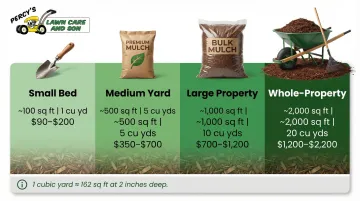
Professional installation ranges from $90 for a small bed to over $2,200 for whole-property coverage, with the biggest cost driver being total cubic yards needed. One cubic yard covers approximately 162 square feet at 2 inches deep—the standard recommended depth for most landscaping beds.
| Project Scale | Coverage Area | Quantity Needed | Installed Cost Range |
|---|---|---|---|
| Small bed | ~100 sq ft | 1 cubic yard | $90–$200 |
| Medium yard | ~500 sq ft | 5 cubic yards | $350–$700 |
| Large property | ~1,000 sq ft | 10 cubic yards | $700–$1,200 |
| Whole-property | ~2,000 sq ft | 20 cubic yards | $1,200–$2,200 |
What's typically included:
- Mulch material
- Delivery to your property
- Spreading and basic site prep
- Even coverage at proper depth
What's usually billed separately:
- Old mulch removal ($20–$50 per cubic yard)
- Landscape edging installation ($1–$5 per linear foot)
- Weed barrier fabric ($0.05–$0.80 per square foot)
Always ask upfront which services are included in any quote you receive. A $500 estimate that includes removal and edging may offer better value than a $400 quote for spreading alone.
Bagged vs. Bulk Mulch Pricing
Once you know your project size, the next decision is format. Bagged mulch costs $3–$13 per 2-cubic-foot bag at retail stores, covering roughly 10 square feet at 2 inches deep. Convenient for small touch-ups, but bagged mulch runs approximately 35% more per cubic yard than bulk.
Cost comparison:
- Bagged mulch: $44–$88 per cubic yard equivalent (13.5 bags required)
- Bulk mulch: $25–$100 per cubic yard delivered
For projects over 3 cubic yards, bulk delivery is more economical, even after the typical $50–$150 delivery fee. Landscape suppliers frequently offer volume discounts of 15–30% off the per-yard price when ordering multiple yards — so the larger your project, the more you save by going bulk.
Types of Mulch and What They Cost
The type of mulch you choose has the single biggest impact on material cost. Mulch falls into two main categories: organic (wood-based, straw, pine bark) and inorganic (rubber, stone, plastic). Each category offers different price points, longevity, and benefits for your landscaping beds.
Organic Mulch
Organic mulches decompose over time, enriching soil with nutrients but requiring replenishment every 1–3 years. For Buffalo-area homeowners, organic mulch provides critical insulation during harsh winters and freeze-thaw cycles, protecting plant roots from temperature swings.
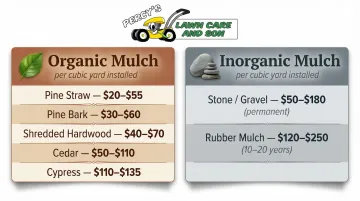
Organic mulch pricing (installed):
| Mulch Type | Cost Per Cubic Yard |
|---|---|
| Pine straw | $20–$55 |
| Pine bark | $30–$60 |
| Shredded hardwood | $40–$70 |
| Cedar | $50–$110 |
| Cypress | $110–$135 |
Shredded hardwood is the most popular choice in the Northeast because it's affordable, readily available, and well-suited to Western New York's climate. The double-shredded texture interlocks to resist blowing away during winter winds, and its natural decomposition adds organic matter to Buffalo's often clay-heavy soils.
Cedar mulch costs more but offers natural insect-repelling properties and a pleasant aroma. It breaks down more slowly than hardwood, reducing replacement frequency.
Colored mulch (dyed black, red, or brown) typically adds $5–$10 per cubic yard to the base price. Keep in mind that dark-colored mulches absorb more solar radiation, which can increase soil temperatures and accelerate decomposition—meaning you may need to refresh it more frequently.
Inorganic Mulch
Inorganic options cost significantly more upfront but eliminate annual replacement costs. They work best in specific situations—xeriscaping, high-traffic areas, or landscape features you don't want to touch again for a decade or more.
Inorganic mulch pricing:
| Mulch Type | Cost Per Cubic Yard | Longevity |
|---|---|---|
| Stone/gravel | $50–$180 | Permanent |
| Rubber mulch | $120–$250 | 10–20 years |
Rubber mulch lasts 10 to 20 years without breaking down, making it popular for playgrounds and high-traffic areas. However, it doesn't enrich soil like organic options and can retain heat during warmer weather.
Stone or gravel mulch works well for xeriscaping, modern landscape designs, or areas where you want permanent, low-maintenance coverage. The upfront cost is higher, but you'll never need to replace it. Occasional raking is all it takes to keep it looking sharp.
Key Factors That Affect the Total Cost of Mulch
Two Buffalo homeowners with similarly sized yards can receive very different mulch quotes. Pricing depends on a combination of material choice, labor requirements, site logistics, and additional services requested.
Project Size and Depth
Total coverage area combined with mulch depth determines how many cubic yards you'll need. The standard recommendation is 2–3 inches deep for most landscaping beds—enough to suppress weeds and retain moisture without suffocating plant roots.
The 3-3-3 guideline:
- Apply mulch 3 inches deep
- Keep it 3 inches away from plant stems and tree trunks
- Refresh it every 3 years (or annually for fast-decomposing organic types)
Going too thin (less than 2 inches) wastes money on weed control, as sunlight will still reach weed seeds. Going too thick (more than 4 inches) can harm plants by trapping excess moisture against stems and creating habitat for pests.
Labor and Accessibility
Landscapers typically charge $35–$65 per hour or $20–$55 per cubic yard for mulch installation. Labor costs increase when:
- Beds are difficult to access (backyard with no gate access)
- Properties have steep slopes or uneven terrain
- Multiple small beds are scattered across the property
- Obstacles like trees, fences, or garden ornaments complicate spreading
For large or hard-to-reach jobs, pneumatic mulch blowing costs $38–$60 per cubic yard but dramatically speeds up installation. A crew can blow mulch through a hose from a truck parked in your driveway, eliminating hours of wheelbarrow trips to backyard beds.
Delivery Fees and Location
Most suppliers charge a flat delivery fee of $50–$150 per trip, depending on distance from the supplier and order size. Northeast U.S. markets like Buffalo tend to run slightly higher than the national average due to regional cost of living.
Regional comparison:
- New York, NY: $102–$124 per cubic yard installed
- Manchester, NH: $82–$99 per cubic yard installed
- Buffalo/Western NY: Competitive bulk rates available locally
Buying local is one of the most reliable ways to cut delivery costs. C.J. Krantz Organics, for example, offers triple-ground hardwood mulch at $44 per yard for pickup or $55 per yard delivered on orders of 5 yards or more.
Add-On Services
Common add-ons that significantly change the final bill:
- Old mulch removal: $20–$50 per cubic yard (or $50–$75/hour plus disposal fees)
- Landscape edging: $1–$5 per linear foot for metal, plastic, or stone borders
- Weed barrier fabric: $0.05–$0.80 per square foot for professional-grade landscape fabric
Always clarify what's included before agreeing to any estimate. A quote of $600 covering removal, spreading, and edging is often a better deal than a $450 quote that adds $200 in surprise line items once the job is done.
DIY vs. Hiring a Pro for Mulch Installation
The DIY case: Spreading mulch yourself saves the $20–$55 per cubic yard labor charge. For a 10-yard project, that's $200–$550 in savings. If you can transport bulk mulch in a pickup truck or trailer, you'll also avoid delivery fees.
Tools needed (if purchasing new):
- Wheelbarrow (6 cu ft): ~$130–$140
- Landscaping bow rake: ~$30
- Round-point shovel: ~$30–$33
- Work gloves: ~$10
Total tool investment: approximately $180–$200 upfront.
DIY works well for small, flat, accessible beds where you have the time and physical ability. However, spreading mulch is physically demanding—expect about one hour of intense labor per cubic yard. For projects exceeding 5–10 yards, the time and physical toll often justify hiring a professional.
The pro case: A professional ensures correct depth and even coverage, handles old mulch removal when needed, and saves hours of labor—particularly on larger Buffalo-area properties with multiple garden beds or difficult terrain.
Percy's Lawn Care and Son has handled mulching across Buffalo, Amherst, Cheektowaga, and surrounding neighborhoods since 1999. The team knows how WNY's freeze-thaw cycles affect mulch depth requirements—and selects organic options that actually protect plant roots through a Buffalo winter.
Here's a quick breakdown of when each approach makes the most sense:
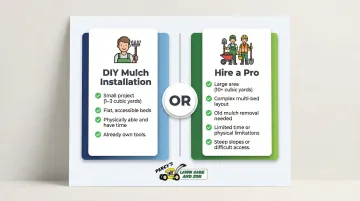
When DIY makes sense:
- Small project (1–3 cubic yards)
- Flat, easily accessible beds
- You're physically able and have time
- You already own the necessary tools
When hiring a pro makes more sense:
- Large coverage area (10+ cubic yards)
- Complex bed layout with multiple areas
- Old mulch removal needed
- Limited time or physical limitations
- Steep slopes or difficult access
How to Get the Most Value from Your Mulch Budget
The cheapest quote isn't always the best value. Focus on what's included, whether the contractor is fully insured, and whether they account for proper depth rather than just coverage area. Skimping on mulch depth means more weed growth and faster replenishment costs down the road.
A few adjustments can stretch your budget without cutting corners:
- Get 2–3 quotes from local landscapers and compare what's actually included, not just the bottom-line price
- Buy in bulk rather than bagged for any project over 3 cubic yards — the per-yard cost drops significantly
- Pull weeds and clear debris yourself before the crew arrives to reduce billable labor time
- Bundle mulching with spring or fall cleanup for package pricing
- Confirm the contractor is fully insured before work begins — it protects you if anything goes wrong on-site
- Ask for photos of past mulch jobs to gauge depth, edging quality, and finish
Done right, mulching pays for itself — fewer weeds, less watering, and healthier plants heading into Buffalo's winters. Prioritize proper depth and material quality over the lowest per-yard number, and you won't need to redo it season after season.
Frequently Asked Questions
How much is a 10 yard mulch job?
A 10-cubic-yard professionally installed mulch project typically costs $700–$1,200, covering approximately 1,620 square feet at 2 inches deep. Add-ons like old mulch removal or edging will push the cost higher.
What is the 3-3-3 rule for mulch?
The 3-3-3 rule is a practical guideline: apply mulch 3 inches deep, keep it 3 inches away from plant stems and tree trunks, and refresh it every 3 years. This maximizes mulch benefits without harming plants or creating pest habitat.
Is October too early to mulch in Buffalo?
For fall protection mulching in Buffalo, October is usually too early. Wait until after three hard frosts and soil temperatures drop below 40°F—typically mid-November to mid-December in Western New York. Mulching before then traps heat and delays plant dormancy.
How much mulch do I need for my yard?
Calculate mulch needs by multiplying length × width of each bed (in feet), then dividing by 324 to get cubic yards at 2 inches deep (or 162 for 3 inches). Measure all beds and add 10% for waste and uneven terrain.
Is it cheaper to buy mulch in bulk or by the bag?
Bulk mulch is significantly cheaper per cubic yard than bagged. Bagged mulch can cost $44–$88 per cubic yard equivalent, while bulk costs $25–$100 per yard delivered. For any project requiring more than 2–3 cubic yards, bulk is the more economical choice.
Should I remove old mulch before adding new mulch?
Topping off existing mulch is fine unless it's diseased, moldy, or excessively thick. Full removal makes sense when the old layer is heavily decomposed, pest-infested, or you're switching mulch types.