
Introduction
After months of heavy snowfall, road salt, and freezing temperatures, Buffalo homeowners face a specific challenge each spring: lawns emerge looking patchy, compacted, and damaged. The short window before summer heat arrives means timing matters more in Western New York than nearly any other climate zone.
Spring recovery here means addressing damage patterns unique to Buffalo: lake-effect snow loads, prolonged freeze-thaw cycles, and sodium chloride from road deicing all leave marks that basic seeding won't fix.
This guide walks through the full spring recovery process:
- Debris cleanup and damage assessment
- Soil health restoration and compaction relief
- Feeding, overseeding, and weed control
- Buffalo-specific timing for April and May
Get this right, and your lawn hits summer in strong shape. Miss a step, and you'll spend the next three months trying to catch up.
TLDR: Spring Lawn Care Checklist at a Glance
- Rake debris and dead grass once the soil is firm underfoot
- Test soil pH and aerate before fertilizing or overseeding
- Apply pre-emergent weed control before soil temps reach 55°F (typically late April)
- Overseed bare patches and fertilize with slow-release nitrogen once growth resumes
- Mow at 3–4 inches and water deeply but infrequently
Spring Cleanup: Clear the Way for a Fresh Start
Skip spring cleanup and your lawn pays for it all season. Debris left over winter blocks sunlight, traps moisture, and creates the perfect conditions for mold and fungal disease to spread across recovering turf.
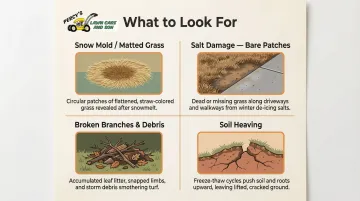
What to Look for During Post-Winter Walk-Through
Conduct a thorough post-winter inspection before you touch a rake:
- Matted-down grass — a telltale sign of snow mold, often appearing as circular straw-colored or pinkish patches
- Bare patches — where salt or ice damage killed grass along driveways and sidewalks
- Broken branches and leaf litter — accumulated debris that smothers new growth
- Soil heaving — areas where freeze-thaw cycles have displaced soil and exposed root crowns
The Right Way to Rake in Spring
Timing matters. Only begin raking once soil is firm enough to walk on without leaving footprints. Raking waterlogged soil causes compaction and tears up emerging grass.
When you're ready, keep these techniques in mind:
- Use a leaf rake or dethatching rake to gently lift dead material without pulling up new growth
- Work in one direction first, then cross-rake perpendicular to catch what you missed
- Rake lightly — aggressive passes on soft spring soil do more harm than good
When to Dethatch
Thatch is the tightly interwoven layer of living and dead tissue between green vegetation and soil. A thin layer of ½ inch or less provides insulation, but when thatch exceeds 1 inch, it blocks water and nutrients from reaching roots.
Signs you need to dethatch:
- Spongy feel when walking on the lawn
- Water pools on the surface instead of soaking in
- Grass feels stressed despite regular watering
- Visible layer of brown, fibrous material when you pull back grass blades
Dethatch only when grass is actively growing so it can recover quickly. For large or heavily matted lawns, professional power raking gets the job done without the risk of tearing up healthy turf in the process.
Remove Clippings and Debris
In early spring, remove all debris rather than leaving it in place. Decomposition is slow in cool temperatures, and clumps of material smother emerging grass and create conditions that invite mold and disease.
Soil Health: Aerate, Test, and Overseed
Buffalo's heavy snowpack and repeated freeze-thaw cycles compress soil, reducing oxygen and water penetration. This directly stunts root growth and weakens turf.
Core Aeration for Compacted Soil
Core aeration removes plugs of soil, creating channels for air, water, and nutrients to reach grass roots. While spring aeration is possible, late summer to early fall is preferred because spring aeration brings dormant weed seeds to the surface just as they're ready to germinate.
That said, Buffalo lawns suffer severe compaction after months of snow weight. If your lawn shows signs of heavy compaction—standing water, hard soil, sparse grass—spring aeration is warranted despite the weed risk.
Aerate when grass is actively growing but before summer heat arrives — late April to mid-May is the sweet spot for Buffalo lawns.
Once soil is loosened, it's the right moment to find out what's actually in it.
Soil pH Testing
Most cool-season grasses common in Buffalo—Kentucky bluegrass, tall fescue, perennial ryegrass—prefer a pH of 6.0–7.0. Outside this range, grass can't efficiently absorb nutrients even when fertilizer is present.
How to test:
- Collect soil samples from 5–6 locations across your lawn
- Mix samples together and send to a soil testing lab
- Results will indicate pH and nutrient levels
- Add lime to raise pH or sulfur to lower pH based on recommendations
Those results should guide your fertilizer decisions — you might find your lawn doesn't need phosphorus at all, which saves money and keeps excess nutrients out of local waterways.
Overseeding Thin or Bare Patches
Recommended cool-season grasses for Buffalo:
| Grass Type | Shade Tolerance | Traffic Tolerance | Germination Time |
|---|---|---|---|
| Kentucky Bluegrass | Poor | Good | 30–90 days |
| Tall Fescue | Good | Good | 21–30 days |
| Perennial Ryegrass | Poor | Good | 14–21 days |
| Fine Fescue | Excellent | Poor | 21–50 days |
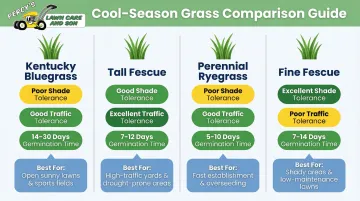
Choose seed varieties that match your lawn's existing grass type and growing conditions. For shaded yards, tall fescue or fine fescue work best. For high-traffic areas, Kentucky bluegrass or perennial ryegrass provide better wear tolerance.
Overseeding steps:
- Aerate first to create seed-to-soil contact points
- Spread seed evenly over bare or thin areas
- Lightly rake to ensure contact between seed and soil
- Water consistently (keep soil moist but not waterlogged)
Pre-Emergent vs. Overseeding Timing Conflict
The timing conflict is real: applying pre-emergent herbicide and overseeding at the same time is counterproductive. Pre-emergents prevent weed seeds from germinating, but they also prevent grass seed from germinating.
Decision hierarchy:
- If your lawn has significant bare patches (>20% thin coverage), prioritize overseeding and skip pre-emergent this spring
- If your lawn is mostly healthy but you had crabgrass last year, prioritize pre-emergent and delay overseeding until fall
- If you must do both, use siduron (Tupersan), the only pre-emergent herbicide safe for new grass seed
Feed and Protect: Spring Fertilization and Weed Control
Get the timing wrong on spring fertilization and weed control, and you can end up feeding weeds instead of grass — or missing the window to stop them before they take hold. Here's what to know for Buffalo lawns specifically.
When to Fertilize in Spring
The right window is once grass is actively growing and has been mowed at least once—typically late April to mid-May in the Buffalo area. Wait until you see consistent green-up and new blade growth.
New York State law prohibits applying lawn fertilizer before April 1 to protect waterways from runoff. State law also requires zero-phosphorus fertilizers unless you're establishing a new lawn or a soil test confirms a deficiency.
What to Look for in Spring Fertilizer
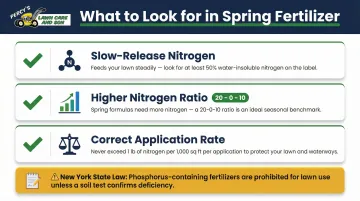
When shopping for spring fertilizer, look for these three things:
- Slow-release nitrogen — at least 50% water-insoluble nitrogen feeds grass steadily without burning
- Higher nitrogen (N) ratio — a spring formula like 20-0-10 supports leaf and blade growth; fall formulas shift toward potassium (K) for root hardiness (e.g., 15-0-25)
- Correct application rate — never exceed 1 pound of nitrogen per 1,000 square feet per application to avoid turf burn and runoff
Pre-Emergent Herbicides
Pre-emergent herbicides prevent weed seeds from germinating by forming a chemical barrier in the soil. When sprouting seeds encounter the herbicide, cell division in the young root is inhibited, causing seedling death.
Timing is critical: apply before soil temperatures in the upper 1–2 inches reach 55°F for several consecutive days. In Buffalo, that window typically falls in late April — use a soil thermometer rather than going by calendar date alone.
Common targets:
- Crabgrass
- Goosegrass
- Foxtail
- Chickweed
Remember: Pre-emergents do NOT kill existing weeds—only prevent new seeds from germinating.
Post-Emergent Options for Existing Weeds
For weeds that have already sprouted, post-emergent herbicides are the right tool. A few ground rules:
- Spot-treat rather than blanket-apply to protect surrounding grass and any new seed
- Use selective herbicides labeled safe for cool-season grasses
- Target common broadleaf invaders: dandelions, clover, and chickweed
Mowing and Watering Right in Spring
How you cut and water in spring directly impacts root development and summer drought tolerance. In Buffalo, where spring temperatures swing between freezes and warm spells, getting these basics right early sets your lawn up to handle the heat ahead.
The One-Third Rule
Never cut more than one-third of the blade height at once, especially in spring when grass is recovering and storing energy for summer growth. Cutting too short (scalping) weakens roots, reduces photosynthesis, and invites weeds to fill bare spots.
Ideal Mowing Height for Cool-Season Lawns
Cool-season grasses should be mowed at 3–4 inches in spring. Higher blade height promotes deeper root systems, increases shade on soil (preserving moisture), and suppresses weed germination.
Keep blades sharp: Dull mower blades tear grass instead of cutting cleanly, creating entry points for disease and causing brown, ragged tips.
Spring Watering Basics
New seed and recovering turf need consistent moisture, but overwatering encourages shallow roots and fungal problems.
Best practices:
- Water deeply — about 1 inch per week, including rainfall
- Water in the morning (4:00 AM–8:00 AM) so blades dry before nightfall
Use the "screwdriver test": if you can't easily push a screwdriver 6 inches into the soil, it's time to water.
What Buffalo Winters Do to Your Lawn — and How to Fix It
Western New York winters inflict specific damage patterns that require targeted recovery strategies.
Snow Mold Damage
Prolonged snow cover on unfrozen, wet soil promotes fungal growth known as snow mold. Two types are common in the Buffalo area:
- Gray snow mold (Typhula): Circular, straw-colored patches 6–12 inches in diameter, sometimes with grayish-white mycelium at the edges. Cornell Cooperative Extension has detailed identification guidance.
- Pink snow mold (Microdochium nivale): Smaller patches under 8 inches with a pinkish tint at the margins, typically appearing in wet conditions.
Recovery steps:
- Gently rake affected areas to improve airflow and promote drying
- Avoid excessive nitrogen early in spring (promotes lush growth vulnerable to disease)
- Most snow mold resolves on its own with warmth and airflow if caught early
- Fungicides are rarely necessary for home lawns
Salt Damage Along Driveways and Sidewalks
Sodium chloride deicing salt causes foliar burn, dehydrates roots, and expands clay particles — leading to compaction and reduced water infiltration. University of Minnesota Extension covers the full range of effects on turf.
How to address salt-damaged turf:
- Flush the area with water to dilute sodium levels (only if drainage is adequate)
- Add gypsum (calcium sulfate) to help displace sodium in soil—but only after a soil test confirms it's needed
- Loosen soil gently with a garden fork to improve infiltration
- Overseed once the area has recovered and salt levels have decreased
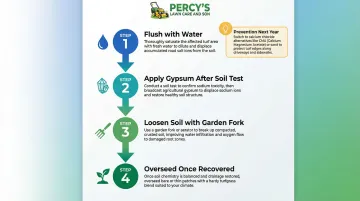
Prevention for next year: Avoid piling salt-laden snow on grass, use calcium chloride or magnesium chloride alternatives, and plant salt-tolerant fine fescues in high-exposure areas.
Heavy Snow Compaction
Buffalo's heavy, sustained snowpack compresses soil, reducing pore space for oxygen and water. If your lawn feels spongy or drains slowly after snowmelt, compaction is likely the culprit. Core aeration is the most effective fix.
Key steps for compaction recovery:
- Aerate once soil is no longer saturated — usually mid- to late April in Buffalo
- Follow aeration with a light topdressing of compost to improve soil structure
- Overseed thin or bare areas immediately after aeration for best seed-to-soil contact
If the damage is widespread or you're unsure which issues you're dealing with, a professional assessment can save you time and money. Percy's Lawn Care and Son has been handling Buffalo spring cleanups since 1999 — call (716) 245-5296 or email hello@percyslawncare.com to schedule a spring recovery visit.
Frequently Asked Questions
When should I start spring lawn care in Buffalo, NY?
Buffalo's spring starts later than much of the country—typically late April is the earliest most lawn care tasks should begin. The average last frost occurs near the end of April in the Buffalo metro area, extending into mid-May for inland locations. Watch soil temperature and firmness (not just the calendar) as the best indicators.
Should I aerate my lawn in spring or fall?
Both seasons work, but spring aeration is especially beneficial for Buffalo lawns after heavy snow compaction, while fall aeration better supports root development before winter. Doing both is ideal for heavily compacted lawns, though fall is generally preferred to avoid bringing weed seeds to the surface.
How do I fix dead patches in my lawn after winter?
- Identify the cause — salt damage, snow mold, and ice damage each look slightly different and may need different prep.
- Prepare the soil by loosening it with a rake or garden fork, then lightly fertilize.
- Overseed with a matching cool-season grass blend and keep the area consistently moist until established (2–3 weeks).
What is the best fertilizer for spring lawn care?
A slow-release nitrogen fertilizer applied once grass is actively growing works best. Soil testing first helps determine what additional nutrients (phosphorus or potassium) the lawn actually needs. Remember that New York law requires zero-phosphorus fertilizers unless soil tests indicate deficiency.
How do I prevent weeds from taking over my lawn in spring?
A pre-emergent herbicide applied before soil temperatures reach 55°F is the most effective first line of defense, combined with proper mowing height (3–4 inches) and a dense, healthy turf that physically crowds out weeds. Address bare spots immediately, as weeds colonize thin areas quickly.
Is it worth hiring a lawn care service for spring lawn care?
It's worth it if you're dealing with significant winter damage, a packed schedule, or a lawn that needs soil testing and a tailored treatment plan. In Buffalo specifically, working with a provider who knows lake-effect snow damage and local soil conditions makes a real difference. Percy's Lawn Care and Son has handled Buffalo properties for over 25 years and understands what spring recovery actually requires here.