Aeration and overseeding are the most impactful steps a homeowner can take to revive a winter-beaten lawn. Yet most homeowners either skip these treatments altogether or do them at the wrong time or in the wrong order, which wastes money and effort and produces poor results.
This guide covers what aeration and overseeding are, whether spring is the right window for Buffalo-area lawns specifically, how to do it correctly step by step, and what mistakes to avoid.
Key Takeaways
- Spring aeration relieves compacted soil, allowing water, air, and nutrients to reach grass roots
- Overseeding immediately after aeration fills bare spots and thickens turf density
- In Buffalo, target early-to-mid spring when soil temps hit 50–55°F for best cool-season grass results
- Consistent watering and holding off on mowing are essential for successful germination
- Avoid applying pre-emergent herbicides the same season you overseed
What Is Lawn Aeration and Why Does Your Lawn Need It?
Core aeration is the mechanical removal of small plugs of soil — roughly 1–2 inches deep — from the lawn at regular intervals. This creates channels that allow air, water, and nutrients to penetrate deeper into the root zone. This creates channels that allow air, water, and nutrients to penetrate deeper into the root zone. For Buffalo homeowners dealing with heavy clay soil and harsh winters, aeration isn't optional maintenance — it's the foundation of a lawn that actually recovers each spring.
Understanding Soil Compaction
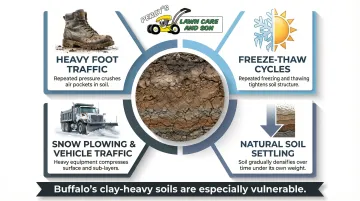
Soil compaction happens when soil particles are pressed together, cutting off roots from the air, water, and nutrients they need. In Buffalo, this is caused by:
- Heavy foot traffic during warmer months
- Freeze-thaw cycles that compress soil particles
- Snow plowing and vehicle traffic on frozen ground
- Natural soil settling over time
Buffalo's clay-heavy soils are particularly prone to compaction. When soil is compacted, water pools on the surface instead of soaking in. Oxygen can't reach roots, and fertilizer sits on top of the ground rather than feeding the grass below.
The Thatch Problem
Thatch is the layer of decomposing roots, stems, and organic matter that builds up between grass blades and the soil. When thatch exceeds 0.5 to 1 inch in depth, it creates serious problems:
- Harbors insects and disease
- Prevents pesticides and fertilizers from reaching soil
- Forces grass roots to grow into the thatch layer instead of soil
- Increases vulnerability to drought and cold stress
Aeration combats thatch by depositing soil cores on the surface. Those cores carry microbes that break down organic matter — most lawns see measurable thatch reduction within a single growing season after treatment.
Measurable Benefits of Aeration
Done right and timed to Buffalo's spring recovery window, aeration produces results you can see and measure:
- Reduced soil compaction
- Improved oxygen uptake by roots
- Stronger and deeper root development
- Better fertilizer and water absorption efficiency
- Increased resilience to heat, drought, insects, and disease
Signs Your Lawn Needs Aeration
Watch for these indicators:
- Water pooling or running off rather than soaking in
- Soil that feels hard and resists a screwdriver being pushed in
- Grass thinning despite regular watering and feeding
- Visible bare or brown patches after winter
- Heavy foot traffic areas that look worn
What Is Overseeding and Why Do Aeration and Overseeding Work Best Together?
Overseeding is spreading new grass seed directly over an existing lawn without tilling the soil. Its purpose is to fill bare spots, increase turf density, and introduce newer, more resilient grass varieties.
The Synergy of Aeration and Overseeding
When overseeding is done immediately after aeration, seeds fall into the holes created by the aerator. This gives them direct soil contact rather than sitting on compacted surface thatch. Seeds that physically contact soil germinate at higher rates than those sitting on compacted ground or thick thatch — and the holes also shield seeds from wind displacement and birds.
Choosing the Right Grass Seed for Buffalo
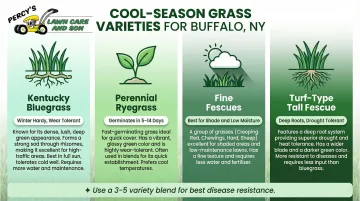
Cool-season grasses are the appropriate choices for Western New York's climate. Recommended varieties include:
- Kentucky Bluegrass — forms a strong sod via rhizomes, excellent wear tolerance, winter hardy
- Perennial Ryegrass — germinates very quickly (5–14 days), provides rapid establishment
- Fine Fescues — excellent for shade and low-moisture conditions
- Turf-Type Tall Fescue — strong drought tolerance and deep root systems; holds up well in Buffalo's clay-heavy soils
Using a blend of at least three to five varieties of a species increases genetic diversity and provides greater overall resistance to turfgrass diseases and environmental stresses. Mixing species draws on the strengths of each: tall fescue's drought tolerance, for example, pairs well with Kentucky bluegrass's spreading growth habit.
Buffalo's clay-heavy soil and freeze-thaw winters make seed selection more than a generic choice. Percy's Lawn Care and Son has been working with these conditions across Amherst, Cheektowaga, and surrounding neighborhoods since 1999 — local knowledge that shapes every seed blend recommendation.
Is Spring the Right Time to Aerate and Overseed Your Buffalo Lawn?
Whether spring is the right time to aerate and overseed depends on your lawn's specific condition — fall is often preferred for cool-season grasses because weeds are less aggressive and seeds have longer to establish before summer stress. But spring has its place.
When Spring IS the Right Choice for Buffalo Lawns
Spring aeration and overseeding make sense when:
- Your lawn has severe winter damage (significant bare or dead patches)
- Heavy compaction from snow plowing or foot traffic on frozen ground
- Your lawn simply cannot wait until fall without worsening dramatically
Timing It Right in Buffalo
Cool-season grasses require soil temperatures between 50°F and 65°F for optimal germination. In Buffalo, soil temperatures typically reach 50°F in late March through May.
The ground must be thawed and workable but not waterlogged from snowmelt. Aerating waterlogged soil destroys soil structure and increases compaction rather than relieving it.
The Pre-Emergent Herbicide Conflict
Many homeowners apply crabgrass pre-emergent in early spring. Most pre-emergence herbicides have long residual activity in the soil and will inhibit the germination of newly seeded turfgrasses — which means overseeding and pre-emergent application don't mix.
You must choose one or the other for that season:
- Apply pre-emergent and skip overseeding
- Overseed and accept some weed pressure
Compatible herbicides like mesotrione (Tenacity) or siduron (Tupersan) can be used safely with cool-season grass seed, but standard products containing prodiamine, pendimethalin, or dithiopyr will prevent grass seed from germinating.
Local Expertise Matters
The herbicide timing conflict, clay-heavy soils, and Buffalo's unpredictable spring weather make these decisions harder to get right than they look on paper. Percy's Lawn Care and Son has navigated these exact challenges for over 25 years — from freeze-thaw compaction to knowing when a specific property's soil is actually workable. The team can assess your lawn's condition and tell you whether spring treatment makes sense or whether waiting until fall gives your lawn a better shot.
How to Aerate and Overseed Your Lawn: Step-by-Step Tips
Step 1 — Prepare the Lawn Before Starting
Mow shorter than usual: Cut the grass slightly shorter than your normal height a day or two before aeration. This allows the aerator tines to reach the soil more easily.
Water thoroughly: Water the lawn 1 to 2 days before aerating so plugs can be pulled more deeply and easily. The soil should be moist but not muddy.
Mark obstacles: Flag irrigation heads, utility lines, and shallow obstacles to avoid damage during aeration.
Step 2 — Choose the Right Aeration Method
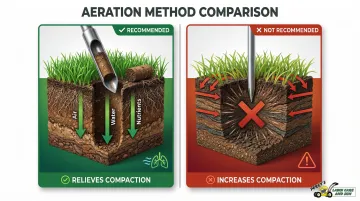
Core (plug) aeration is strongly preferred over spike aeration. Here's why:
- Core aerators remove soil plugs using hollow tines (3 to 4 inches long, ¼ to ¾ inch wide), relieving compaction
- Spike aerators press solid tines into the ground, compressing soil further and increasing compaction at the bottom and sides of the hole
Double-aerate in a crisscross pattern for best results. Most core aerators must make at least two passes to achieve the minimum 3% to 10% soil exposure required to deliver any benefit.
Step 3 — Overseed Immediately After Aeration
Timing is critical: Overseed the same day as aeration so seeds fall into freshly opened holes.
Apply the correct amount: Use these rates for overseeding cool-season grasses in Buffalo:
| Grass Species | Overseeding Rate (lbs per 1,000 sq ft) |
|---|---|
| Kentucky Bluegrass | 2 to 3 lbs |
| Perennial Ryegrass | 4 to 6 lbs |
| Turf-Type Tall Fescue | 6 to 8 lbs |
| Fine Fescues | 4 to 5 lbs |
Spread in a crisscross pattern: Applying seed in two directions at right angles results in fewer skips and a more uniform application.
Step 4 — Apply a Starter Fertilizer
A phosphorus-rich starter fertilizer applied after overseeding supports root development in new seedlings. Common analyses that work well include:
- 10-10-10
- 16-8-8
- 20-10-10
- 15-10-10
- 10-6-4
Apply 0.5 to 1 lb of nitrogen per 1,000 sq ft just before or immediately after seeding. Exceeding 1.5 lbs of nitrogen per 1,000 sq ft can burn young turf.
New York State Law: By law, New Yorkers must use zero-phosphorus fertilizers to prevent runoff that causes algae blooms. However, it is legal to use a lawn fertilizer containing phosphorus if you are establishing a new lawn or if a soil test shows that your lawn does not have enough phosphorus.
Step 5 — Leave the Soil Cores on the Lawn
Resist the urge to rake up soil plugs — they break down within 2 to 4 weeks and return microbe-rich organic matter to the surface. This helps accelerate thatch decomposition and improves overall soil health.
Let the cores dry for 1 to 2 days, then drag with a mat or rake to break them up. They'll filter back into the turf naturally.
Post-Aeration Care and Common Mistakes to Avoid
Caring for Your Lawn After Aeration and Overseeding
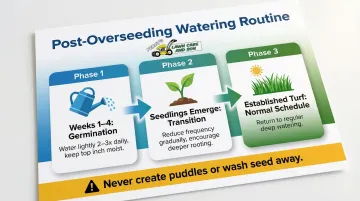
Watering Routine:
New seed needs consistent moisture to germinate successfully. The seedbed must be kept moist at all times, but not excessively wet.
- Water lightly 2 to 3 times per day during the first 3 to 4 weeks
- Keep the top inch of soil moist without creating puddles or washing seed away
- Gradually reduce watering frequency after seedlings emerge to encourage deeper rooting
Mowing Restrictions:
- Wait until new seedlings reach at least 4 inches before mowing down to 3 inches
- Use a light-weight mower to avoid damaging shallow roots
- Never remove more than one-third of the grass height in a single mowing
Foot Traffic:
Keep all foot and vehicular traffic off the newly seeded area as much as possible. Seedlings bruise or uproot easily during the first few weeks.
Common Mistakes to Avoid
Aerating Waterlogged or Frozen Soil
Aerating when soil is too wet destroys soil structure and increases compaction. The soil should be moist but firm, not muddy or icy. If a screwdriver slides easily into the ground but doesn't come out covered in mud, the moisture level is right.
Applying Pre-Emergent Weed Killer the Same Season as Overseeding
Standard crabgrass preventers block all seed germination — including your new grass seed. If you apply pre-emergent herbicide in spring, skip overseeding that season or use a selective product like mesotrione or siduron that allows cool-season grass to germinate.
Skipping the Process Because the Lawn "Looks Okay"
Aeration and overseeding are preventive as much as corrective. Lawns that skip these treatments for several years build compaction and thatch that become significantly harder to reverse.
Buffalo homeowners should consider scheduling professional aeration and overseeding with Percy's Lawn Care and Son as part of their annual spring lawn care routine. Percy's has been serving Buffalo-area properties since 1999, bringing local knowledge of Western New York's clay-heavy soils and unpredictable spring weather to every job.
Frequently Asked Questions
Frequently Asked Questions
Is it good to aerate and overseed in the spring?
Spring aeration and overseeding work well for lawns with significant winter damage or severe compaction, provided soil temperatures are at or above 50°F, no pre-emergent herbicide conflict exists, and the ground isn't waterlogged. For cool-season grasses in reasonable shape, fall is generally the better window.
How soon after aeration can I overseed?
Overseed immediately after aeration — ideally the same day. This allows seeds to fall into the freshly opened holes and establish direct soil contact for the best germination rates.
What grass seed should I use for a Buffalo, NY lawn?
Cool-season grasses suited to Western New York's climate include Kentucky Bluegrass, Perennial Ryegrass, Fine Fescue, and Turf-Type Tall Fescue. Use a blend of at least three to five varieties for resilience against disease and drought.
How do I know if my lawn needs aeration?
Clear indicators include water pooling or running off the surface, hard soil that resists a screwdriver being pushed in, thinning or patchy grass despite regular care, and heavy use or post-winter compaction.
How often should I aerate and overseed my lawn?
Most lawns benefit from aeration at least once a year. Overseed as needed — more frequently for lawns with heavy wear or chronic bare patches.
Should I fertilize after aerating and overseeding?
Yes — apply a starter fertilizer right after overseeding to support new seedling root development. Resume regular fertilization once the new grass has established, typically after the first few mowings.