
Introduction
For first-time homeowners in Buffalo, few experiences are more frustrating than finishing your first mowing session only to discover an uneven, patchy mess—or worse, brown stripes that weren't there before you started. Improper mowing technique is one of the leading causes of lawn damage for new homeowners, yet it's preventable with the right knowledge.
The stakes are higher than many realize. According to the U.S. Consumer Product Safety Commission, lawn mower accidents result in approximately 84,944 emergency room visits annually, with riding mower rollovers alone contributing to about 90 deaths per year.
Beyond safety, incorrect cutting height, dull blades, and poor timing can shock your grass, deplete its root reserves, and invite weeds and disease.
This guide covers the essential areas every beginner should master:
- Mowing height and the one-third rule
- When and how often to mow
- Cutting patterns that prevent ruts and stress
- Blade maintenance and sharpness
- Clippings management and grasscycling
- Safety habits that protect you and your lawn
Get these right from the start, and you'll avoid the most common mistakes that send Buffalo lawns into decline.
Key Takeaways
- Never remove more than one-third of the grass blade in a single mow
- Mow when grass is dry—mid-morning or late afternoon is ideal
- Sharp blades are non-negotiable: dull blades shred grass and invite disease
- Change your mowing direction every session to prevent compaction
- Leave clippings on the lawn; they feed the soil naturally unless the grass is overgrown
Before You Mow: Beginner's Prep Checklist
Clear Your Yard Thoroughly
Before starting the mower, walk your entire property and remove toys, sticks, rocks, hoses, and any loose debris. Objects that seem harmless can become dangerous projectiles when struck by blades spinning at thousands of RPMs.
Then mark any hidden hazards — irrigation pipes, tree stumps, or landscape edging — that could damage your mower deck mid-pass.
Wear Proper Safety Gear
Beginners often skip basic personal protective equipment, but each item serves a specific purpose:
- Closed-toe shoes (preferably steel-toe) protect feet from blade contact and flying debris
- Safety glasses shield eyes from stones, sticks, and grass clippings
- Hearing protection prevents long-term damage from engine noise exceeding 90 decibels
- Long pants guard against cuts, burns from hot exhaust, and projectiles
Check Mower Readiness
Run through these quick checks before every mow:
- Inspect the blade for visible nicks, dullness, or damage
- Confirm the cutting height is set correctly for your grass type
- Ensure fuel tank is filled (or battery is charged) so you don't stop mid-job
- Check tire pressure if using a riding mower
- Verify the discharge chute or bag is properly attached
Five minutes of prep now saves you from stalled mowers, patchy cuts, and equipment damage once you're out on the lawn.
The One-Third Rule and Proper Mowing Height
Understanding the One-Third Rule
The one-third rule states that you should never remove more than one-third of the grass blade in a single mowing session. When you cut more aggressively, the grass plant experiences physiological shock, depletes stored carbohydrates, and diverts energy from root development to blade regeneration. This stress makes your lawn vulnerable to drought, weeds, and disease.
What Scalping Does to Your Lawn
Scalping occurs when the mower deck is set too low, shearing grass down to or below the crown. The visible signs include brown patches and exposed soil.
Scalped grass struggles to recover because the plant must draw heavily on root reserves to regenerate shoots, weakening the entire lawn and creating openings for crabgrass and other invasive species.
Mowing Height by Grass Type
Lawns in the Buffalo area consist almost entirely of cool-season grasses. Keeping them at the right height is what supports deep roots, moisture retention, and tolerance through Buffalo's hot summers and hard freeze-thaw cycles.
Recommended Heights for Western New York Grasses:
| Grass Type | Ideal Height | Shade Adjustment |
|---|---|---|
| Kentucky Bluegrass | 2.0–2.5 inches | 2.5–3.0 inches |
| Tall Fescue | 3.0–4.0 inches | 3.5–4.0 inches |
| Perennial Ryegrass | 2.0–3.0 inches | 2.5–3.0 inches |
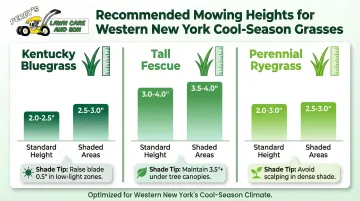
Keep grass at the taller end of its recommended range during summer heat or in shaded areas beneath trees.
The Double-Cut Approach for Overgrown Lawns
If your lawn has grown more than 50% above its ideal height (for example, you skipped a week during spring's rapid growth), don't try to bring it back to target height in one pass. Instead, use a two-step process:
- First pass: Reduce height by 50%, cutting at a higher mower setting
- Wait 3–4 days
- Second pass: Lower the deck to reach your target height
Spring is the most common time you'll need this — growth can outpace a weekly schedule fast when temperatures climb after a wet April.
Late Fall Exception for Buffalo Winters
In late fall—typically November in Buffalo—lower your final mowing height to 2.5–3.0 inches. This prevents grass from matting under heavy snow cover, which creates ideal conditions for gray and pink snow mold, common fungal diseases in Western New York's prolonged winter conditions.
How Often to Mow and the Best Time of Day
Mow by Grass Height, Not by Calendar
A fixed weekly schedule ignores how grass actually grows. Growth rates fluctuate based on temperature, rainfall, season, and grass type. Instead of mowing every Saturday regardless of conditions, use the one-third rule as your trigger: when grass reaches about one-third taller than your target height, it's time to mow.
Practical Frequency Guidance for Buffalo:
- Peak spring growth (April–May): every 4–5 days
- Summer heat/drought (July–August): every 10–14 days
- Fall active growth (September–October): every 5–7 days
- Dormancy (late November–March): stop mowing entirely
Best Time of Day to Mow
Two windows work best: mid-morning (8:00 a.m.–10:00 a.m.), when dew has dried and temperatures are still moderate, and late afternoon (4:00 p.m.–6:00 p.m.), after peak heat has passed and the grass has recovered from midday stress.
Avoid the hours in between. Mowing from 11:00 a.m.–3:00 p.m. stresses both the grass and the operator, and moisture loss accelerates right after cutting. Before 8:00 a.m. is just as problematic — dew-covered grass tears instead of cutting cleanly, wet clippings clump and smother turf, and damp conditions spread fungal spores across your lawn.
Why Mowing Wet Grass Is a Problem
Timing matters especially because wet conditions turn a routine mow into a bigger problem. Mowing wet grass produces ragged, uneven cuts because blades bend under the mower rather than standing upright. Beyond poor aesthetics, wet mowing creates several serious problems:
- Deep ruts from mower wheels pressing into saturated soil
- Dangerous slip conditions on slopes
- Increased spread of fungal diseases through moisture-laden wounds
- Soil compaction that suffocates grass roots
This is especially relevant in Buffalo, where spring rain and morning dew are frequent from March through May.
Mowing Technique: Patterns, Clippings, and Blade Care
Why Mowing Direction Matters
Cutting the same pattern every session causes grass to lean in one direction, creates visible ruts from repeated wheel traffic, and compacts soil along the same paths. Alternate your mowing pattern each session:
- Week 1: Horizontal rows (east to west)
- Week 2: Vertical rows (north to south)
- Week 3: Diagonal passes (northeast to southwest)
- Week 4: Diagonal passes (northwest to southeast)
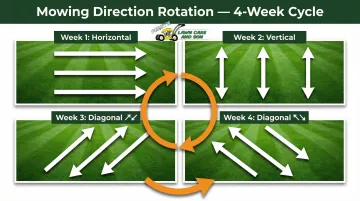
Rotating through these patterns encourages upright growth, spreads mower weight across different soil areas, and gives your lawn a more uniform, even appearance over time.
The Half-Pass Overlap Technique
On each new pass, overlap the already-cut strip by approximately half your mower's cutting width. That overlap:
- Eliminates shaggy uncut strips between passes
- Reduces the grass load per pass, improving cut quality
- Produces a more even, professional finish
- Prevents missed spots that appear days later
Grass Clippings: Leave or Bag?
Whether to leave or bag clippings depends on how much grass you're cutting. Leave clippings (grasscycling) when grass height is within normal range. Kentucky bluegrass clippings return 46–59% of applied nitrogen over three years, acting as a natural, slow-release fertilizer. This can reduce synthetic fertilizer needs by 25–50%.
Bag clippings when:
- Grass was overgrown and clippings would form thick clumps
- Clumps would smother emerging shoots and block sunlight
- Lawn is diseased (to prevent pathogen spread)
One common myth: clippings cause thatch. In reality, they decompose rapidly and have no meaningful impact on thatch accumulation.
Sharp Blade Maintenance
Dull mower blades tear and shred grass rather than cutting cleanly, causing grass tips to turn brown and fray. This tearing increases water loss, weakens plants, and creates entry points for fungal diseases.
Sharpening schedule:
- At the start of each mowing season (April)
- Every 20–25 hours of mowing (approximately every 15 sessions for typical homeowners)
- Immediately after hitting a rock or hard object
Visual inspection: Look for a dull gray edge, visible nicks, or bent blade tips. A sharp blade will slice cleanly through a sheet of paper with no tearing — a reliable field test before each season.
Safe Slope Mowing Technique
Slopes are where mowing direction becomes a safety issue, not just a lawn care preference. Push mowers and riding mowers handle slopes differently — and using the wrong technique on either can cause serious accidents.
Push mowers:
- Mow across the slope (side to side), never up and down
- This prevents the mower from sliding downhill toward you
Riding mowers:
- Mow up and down the slope, never across
- Mowing across increases rollover risk
- Never exceed manufacturer's recommended slope angle (typically 15 degrees)
Common Lawn Mowing Mistakes Beginners Make
Most Damaging Errors and Their Consequences
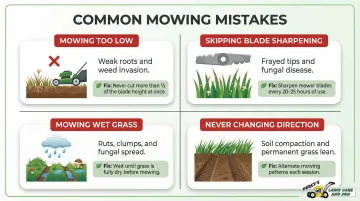
These four errors show up constantly in beginner lawns — and each one causes damage that compounds over time:
- Mowing too low weakens roots, reduces drought tolerance, and opens the door for weeds like crabgrass and dandelions
- Skipping blade sharpening produces ragged, frayed grass tips that invite fungal disease and leave the lawn looking dull even after a fresh cut
- Mowing wet grass spreads fungal spores, leaves wheel ruts, and produces uneven clumpy cuts that are difficult to fix
- Never changing direction compacts soil along the same wheel paths, causes grass to lean permanently, and creates visible stripes and ruts over time
The "Set It and Forget It" Scheduling Mistake
Many beginners mow every Saturday regardless of grass height. That fixed schedule causes two opposite problems depending on the season:
- Mowing during summer drought stress when growth has slowed — unnecessary stress on already-struggling grass
- Skipping cuts during spring's rapid growth spurts — violating the one-third rule and forcing double-cutting to recover
Instead, check grass height before each session and mow when it reaches about one-third above target height.
When to Call in Professionals
Homeowners with large properties, uneven terrain, or tight schedules often find consistent lawn care hard to maintain. A local professional can take the pressure off and keep results consistent through every season. Percy's Lawn Care and Son has served Buffalo-area homeowners since 1999. They offer commercial-grade mowing with clipping removal and customized maintenance schedules built around Western New York's seasonal growth patterns.
Frequently Asked Questions
What is the best strategy for mowing the lawn?
The best mowing strategy combines proper height (following the one-third rule), sharp blades, varied mowing direction, and timing to dry conditions.
Is it illegal to mow your lawn at 7am?
Noise ordinances vary by municipality. In most Buffalo-area communities, mowing before 8:00 a.m. can violate local noise rules. Check your city or town ordinance—mid-morning (after 8:00 a.m.) is generally a safe and lawn-friendly starting time.
How often should beginners mow their lawn?
Frequency should follow the one-third rule rather than a fixed calendar schedule. During Buffalo's active spring growing season, this may mean every 4–5 days, while summer or drought conditions may stretch mowing intervals to 10–14 days.
Should I bag or mulch my grass clippings?
Leaving clippings on the lawn (grasscycling) is beneficial when grass isn't overgrown, as they decompose and feed the soil with nitrogen. Bagging is recommended when grass has grown too long and clippings would clump and block sunlight.
How do I know if my mower blade needs sharpening?
Brown, frayed, or torn grass tips after mowing — rather than cleanly cut — are the key indicator. Inspect the blade for nicks and dullness, and sharpen at the start of each season and after every 15 mowing sessions.
What height should I mow my lawn in Buffalo, NY?
Buffalo lawns are predominantly cool-season grasses. Kentucky Bluegrass should be kept at 2.0–2.5 inches, Tall Fescue at 3.0–4.0 inches, and Perennial Ryegrass at 2.0–3.0 inches. Mow at the taller end of any range during shade or heat stress.