
This guide walks through how to visually identify broadleaf weeds by leaf shape, growth habit, and life cycle. You'll learn step-by-step control methods from hand-pulling to selective herbicides, and understand what timing, lawn health, and product choice mean for whether the treatment actually works. Buffalo's clay-heavy soils and seasonal climate create unique challenges that make local expertise essential for long-term success.
Key Takeaways
- Broadleaf weeds have wide leaves with a central vein and branching smaller veins—easily spotted against turfgrass
- Life cycle matters: annuals are easier to control; perennials regrow from roots and need persistent treatment
- Timing is everything—pre-emergents prevent germination; post-emergents target actively growing weeds
- Consistent mowing, fertilizing, and aeration keep your lawn dense enough to crowd out most weeds naturally
- For widespread infestations or persistent weeds, professional treatment saves time and prevents recurring outbreaks that DIY methods miss
How to Identify Broadleaf Weeds in Your Lawn
Examine the Leaf Shape and Vein Pattern
Get close and look at the leaf structure. Broadleaf weeds have one prominent central vein running down the middle with many smaller veins branching outward in a net-like pattern. This is the clearest difference from turfgrass, which has parallel veins running the length of each blade. Botanically, broadleaf weeds are dicots while turfgrasses are monocots, making this vein pattern the most reliable identification feature.
Note the leaf margin:
- Smooth edges – white clover
- Deeply toothed or lobed – dandelion
- Scalloped and fan-shaped – creeping Charlie
- Wide and oval – plantain
These edge differences narrow down the species quickly when you're diagnosing what's invading your Buffalo lawn.
Observe the Growth Habit
How a weed grows determines how hard it is to remove — and which treatment works. Start by noting the overall structure:
- Rosette (clumping from a central base) – dandelion, plantain, thistle; develop deep taproots
- Creeping (stems spread and root along the ground) – clover, creeping Charlie, speedwell; form shallow but extensive root networks
- Upright – dandelion, thistle; easy to spot above the turf canopy
- Mat-forming – spurge, speedwell; stay low and can spread unnoticed across large areas
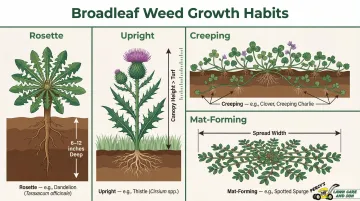
In Buffalo's clay-heavy soils, mat-forming weeds tend to establish fast in compacted spots where turf already struggles.
Look for Flowers, Seed Heads, or Other Identifying Features
Many broadleaf weeds produce distinctive flowers:
- Dandelion – bright yellow blooms and fluffy white seed heads
- Clover – white or pink puffball clusters
- Creeping buttercup – shiny yellow petals
- Creeping Charlie – small purple tubular flowers
Spotting flowers means seeds are close to dispersing — act quickly before they spread. A single dandelion plant can produce 15,000 seeds that scatter across your lawn and neighborhood.
Note other species-specific features:
- Milky sap when broken – spurge, dandelion
- Strong minty smell when crushed – creeping Charlie
- Thorny leaf margins – thistle
- Square stems – creeping Charlie (mint family)
These help confirm the species when leaf shape alone is not definitive.
Determine Whether the Weed Is Annual or Perennial
Once you've identified the species visually, knowing its life cycle tells you when and how aggressively to treat it.
Annual broadleaf weeds — chickweed, spurge, bittercress — complete their full life cycle in one season and are easier to control. Perennials like dandelion, clover, creeping Charlie, and plantain return year after year from established root structures and require more persistent treatment. Dandelion taproots can reach depths of 6 to 18 inches, which is why a single application rarely does the job.
Biennial weeds add another layer of timing. They spend their first year as vegetative growth, then flower and seed in year two. Bull thistle and wild carrot follow this pattern, so early treatment in year one — before flowering — is the most effective window. Once they bolt and produce seeds in year two, control becomes much harder.
How to Control Broadleaf Weeds: Step-by-Step
Assess the Scope of the Problem
Walk the full lawn and estimate how much area is affected. Isolated patches of a few weeds call for hand removal or targeted spot spraying. Infestations covering a significant portion of the lawn may require broadcast herbicide treatment or professional service. Note whether weeds have already flowered—this changes urgency dramatically.
Early detection prevents small problems from becoming widespread infestations.
Hand-Pull Small or Isolated Infestations
Use a dandelion fork, hori-hori knife, or hand trowel to extract the full root system. For perennials like dandelion with roots reaching 10+ inches deep, partial removal leads to regrowth. Dandelions can regenerate from root fragments as small as 1 inch. Work in moist soil after rain for easier, more complete root extraction. In Buffalo's dense clay soils, wet soil makes the difference between pulling a full taproot and snapping it halfway.
Bag and remove pulled weeds immediately. Do not compost plants that have flowered or gone to seed, as seeds can survive and spread.
Apply Pre-Emergent Herbicide Before Weeds Emerge
Pre-emergent herbicides work by creating a chemical barrier in the soil that prevents weed seeds from germinating. They must be applied before seeds sprout. In Buffalo, this typically means early spring before soil temperatures at 2-inch depth reach 50-55°F for 3-5 consecutive days—usually late April to early May according to local soil temperature data.
Common pre-emergent active ingredients for broadleaf weeds:
- Isoxaben – targets broadleaf weeds like spurge, chickweed, and plantain
- Prodiamine – controls annual grasses and select broadleaf weeds including spurge and chickweed
Important: Pre-emergents do not kill existing weeds. Check the product label for re-seeding restrictions—most require waiting 60 days before overseeding.
Apply Post-Emergent Herbicide on Actively Growing Weeds
Use a selective broadleaf herbicide containing active ingredients such as 2,4-D, dicamba, or MCPP. These are Group 4 synthetic auxins that mimic plant growth hormones, causing unregulated growth and death in broadleaf plants while leaving turfgrass unharmed.
One critical distinction: never apply glyphosate or other non-selective products to a lawn you intend to keep. Unlike selective herbicides, glyphosate kills all plants by inhibiting protein synthesis — grass included.
Application safety checklist:
- Avoid windy conditions (wind speeds over 10 mph cause drift)
- Do not apply if rain is expected within 3-4 hours
- Do not mow for 1-2 days before or after treatment
- Do not water for 24-48 hours after application
- Spot-spray individual weeds wherever possible to limit unnecessary chemical use
- Wear protective clothing per label instructions
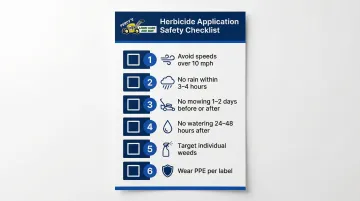
Apply when air temperatures are between 60-85°F and weeds are actively growing. Temperatures above 85-90°F increase risk of turf injury and herbicide volatilization.
Monitor Results and Re-Seed Bare Spots
Perennial weeds like dandelion and creeping Charlie often require 2-3 herbicide applications spaced 2-4 weeks apart for complete kill. Check treated areas every few days. Signs the herbicide is working include:
- Wilting or drooping stems
- Yellowing or browning leaves
- Twisting or curling growth patterns
Reapply if regrowth appears after 2-4 weeks.
Once weeds die back, overseed bare spots promptly. Thin turf is the primary reason weeds return. In Buffalo's clay-heavy soils, core aeration before overseeding is worth the extra step — compacted soil blocks seed-to-soil contact and stunts root establishment.
Timing and Factors That Affect Treatment Success
Even using the correct herbicide will fail if applied at the wrong time or to weeds in the wrong growth stage. Timing and environmental conditions are the variables most homeowners overlook.
When to Treat: Seasonal Windows for Buffalo Lawns
Spring is the primary action window. Apply pre-emergents in early April before weeds germinate, and post-emergents when weeds are young and actively growing in temperatures between 60–85°F. Avoid treatment during heat stress or drought — stressed plants absorb herbicides poorly.
Fall is an underused second window for perennial weeds. As plants draw energy back into roots before winter, systemic herbicides move more effectively through the plant. Targeting dandelion, plantain, and clover from September through late October can sharply cut next spring's weed population.
Research shows that perennial weeds move carbohydrates down into root systems during fall, pulling systemic herbicides deeper into taproots for more thorough root kill.
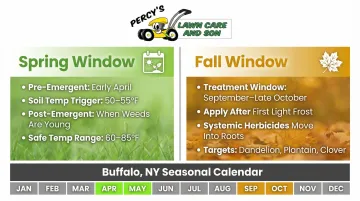
In the Buffalo area, the average first fall frost occurs around October 21. Fall applications are most effective after the first light frosts but before the ground freezes.
Weed Growth Stage and Lawn Grass Type
Herbicides work best on young, actively growing weeds. Stressed, dormant, or very mature plants absorb products poorly — target weeds in the rosette stage, before they flower.
Grass type also matters. Certain selective herbicides can damage fine fescue and other cool-season grasses, so check label compatibility before applying anything. Key things to confirm before you treat:
- Weed is actively growing (not dormant or heat-stressed)
- Grass type is listed as tolerant on the product label
- Product does not contain dicamba or triclopyr if you have fine fescue
- Temperature is between 60–85°F at time of application
Common Mistakes to Avoid
Avoid these four errors and you'll cut your broadleaf weed problems significantly:
- Check the herbicide label before buying. A product designed for grassy weeds won't touch broadleaf species, and non-selective formulas will take out your lawn too. Look for "broadleaf weed control" language and confirm compatibility with your specific turfgrass.
- Apply pre-emergent before weeds appear — not after. This is the most common timing mistake. Pre-emergent applied to a visible weed does nothing. Monitor soil temperatures in late March and early April to catch the optimal application window.
- Kill the full root system, not just the top growth. Deep-rooted perennials like dandelion and mat-forming species like creeping Charlie will bounce back from partial removal. Perennial weeds regenerate from root fragments, so half-measures — whether hand-pulling or under-dosing herbicide — reset the problem for next season.
- Follow up and reseed bare spots. One treatment rarely ends a perennial weed problem. Gaps left by dying weeds become open germination sites for the next wave. Reseeding those areas promptly is what closes the cycle for good.
Preventing Broadleaf Weeds Through Proper Lawn Care
A thick, dense lawn is the most effective long-term weed prevention strategy. Maintain mowing height at 3-4 inches—taller turf shades the soil and blocks sunlight from reaching weed seeds. Follow the one-third mowing rule (never remove more than one-third of the grass blade in a single mowing). Water deeply and infrequently, roughly 1 to 1.5 inches per week, to build a strong, deep-rooted lawn that outcompetes weeds.
Regular fertilization feeds the grass and makes it more competitive against invading weeds. Annual fall core aeration relieves compaction, improves water and nutrient penetration, and is especially important for Buffalo's clay-heavy soils where compaction accelerates weed establishment.
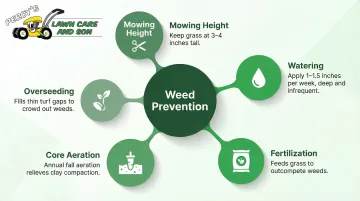
Buffalo's clay soils retain moisture but resist air and nutrient penetration—conditions that favor weeds like broadleaf plantain over desirable turfgrass. Scheduling aeration every fall addresses this directly before weeds can exploit thin or stressed turf.
For homeowners who want professional support keeping broadleaf weeds from getting a foothold, Percy's Lawn Care and Son has served Buffalo, Amherst, Cheektowaga, and surrounding communities for over 25 years. Their familiarity with Buffalo's clay soils and seasonal conditions means lawn care decisions—mowing schedules, aeration timing, fertilization—are tailored to what actually works here, not generic advice.
Frequently Asked Questions
What kills broadleaf weeds but not grass?
Selective broadleaf herbicides containing active ingredients like 2,4-D, dicamba, or MCPP-P are designed to target broadleaf plants while leaving established turfgrass unharmed. The label must confirm compatibility with your specific grass type, especially if you have fine fescue varieties.
Is broadleaf the same as crabgrass?
No, they are not the same thing. Crabgrass is a grassy weed with narrow, grass-like leaves and parallel veins, while broadleaf weeds have wide leaves with branching veins. They respond to different herbicides and require separate control strategies.
When is the best time to treat broadleaf weeds in my lawn?
Spring and early-to-mid fall are both effective treatment windows. Apply pre-emergents in early spring before germination, and post-emergents when temperatures are between 60–85°F for best absorption.
Can I pull broadleaf weeds by hand?
Hand-pulling works well for small infestations and annual weeds, but perennials like dandelion and creeping Charlie will regrow unless the full root is removed. A dandelion fork used in moist soil is especially effective in Buffalo's clay-heavy ground.
Is it worth it to hire a lawn service for broadleaf weed control?
Professional treatment is worth it for large or persistent infestations, where correct product selection and timing matter most. A good lawn service also addresses the underlying conditions — compaction, thin turf, poor drainage — that let weeds return year after year.
How do I prevent broadleaf weeds from coming back?
Dense, healthy turf is the best defense. Achieve this through proper mowing height (3-4 inches), deep watering (1-1.5 inches per week), annual fertilization, core aeration, and overseeding thin areas. Pre-emergent applications each spring add another layer of protection.