
Introduction
Most homeowners treat lawn mowing as a weekend chore and move on. In reality, it's one of the most underestimated practices in property maintenance. A consistent mowing routine directly impacts lawn health, weed suppression, pest control, and property value — especially in Buffalo's climate, where lawns must survive harsh winters and push hard through spring-to-fall growing seasons.
When mowing is skipped or done sporadically, problems multiply quickly. Weeds get a foothold, pests find cover, and fungal diseases spread through stressed turf — all of which lead to costly remediation down the road. This article explains why regular mowing matters, what goes wrong when it's neglected, and how to get the most out of every cut.
Key Takeaways
- Regular mowing builds denser, drought-resistant turf by stimulating lateral growth and deeper roots
- Consistent cutting height (2.5–4 inches) suppresses weed germination and eliminates pest habitat
- Well-maintained lawns directly improve curb appeal and can increase property value by up to 7%
- Skipping mowing causes scalping stress, weed invasion, and disease—all costlier to fix than prevent
- Professional mowing services remove guesswork and keep lawns in peak condition throughout Buffalo's May–October growing season
What Is Regular Lawn Mowing?
Regular lawn mowing means cutting grass at consistent intervals—typically every 7–10 days during active growth—to maintain an ideal height for turf health, not just aesthetics. The practice is guided by the one-third rule: never remove more than one-third of the grass blade in a single cut. This principle protects the plant's ability to photosynthesize, maintain carbohydrate reserves, and develop deep roots.
According to Cornell University, removing more than one-third of the blade severely depletes stored energy, restricts root growth, and increases vulnerability to drought, pests, and disease. The one-third rule is endorsed universally by turfgrass authorities including Purdue, Penn State, and Ohio State.
That science has a practical consequence: regular mowing is the foundation on which all other lawn care efforts are built. Keep mowing frequency tied to growth rate rather than a fixed calendar, and every downstream effort—fertilization, aeration, weed control—works more effectively as a result.
Key Benefits of Regular Lawn Mowing
The advantages below extend beyond curb appeal. Each benefit ties directly to measurable outcomes: lawn health, pest risk reduction, maintenance cost savings, and property value protection.
Benefit 1: Stronger, Healthier Grass from Root to Blade
Regular mowing encourages grass to grow laterally rather than vertically, producing denser turf. With each cut, the plant redirects energy into deeper root development instead of upward blade growth. This biological response builds a lawn that's more resilient to foot traffic, weather stress, and drought.
Leaving clippings on the lawn after each cut adds another layer of benefit. Penn State research shows that Kentucky bluegrass clippings return 46% to 59% of applied nitrogen over three years—and the University of Missouri Extension notes clippings can cover up to 25% of a lawn's total fertilizer needs without any added cost.
Mowing height shapes root depth, too. Keeping grass at 2.5–4 inches promotes deeper, more extensive root systems. Ohio State University confirms that deeper roots allow turf to access soil moisture more effectively during dry periods. Lawns cut too short develop shallow roots that struggle through Buffalo's summer heat.
That root strength matters most in spring. After harsh winters, consistent mowing helps lawns transition out of dormancy and build the foundation they need before summer stress arrives—particularly in neighborhoods like Hamlin Park and Elmwood Village where mature soils benefit from early-season care.
Benefit 2: Natural Suppression of Weeds, Pests, and Disease
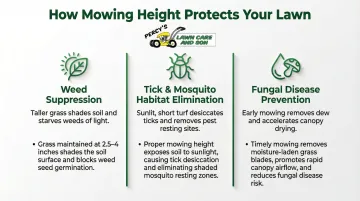
Tall, overgrown grass creates conditions for three problems at once: weed seeds germinating in exposed soil, pest insects nesting in dense canopies, and fungal diseases spreading in trapped moisture. Consistent mowing disrupts all three.
Weed, pest, and disease pressure each drop when grass stays at the right height:
- Weed suppression: Grass maintained at 2.5–4 inches shades soil enough to block weed seed germination. Penn State Extension reports that mowing height alone reduces weed pressure significantly—lawns cut below 3.5 inches see measurable increases in dandelion, clover, and crabgrass.
- Tick and mosquito habitat: The CDC recommends keeping grass mowed to reduce blacklegged tick habitat, the primary vector for Lyme disease. Ticks desiccate in short, sunlit lawns; adult mosquitoes use tall grass as daytime resting sites. Mowing eliminates both shelters before populations establish.
- Fungal disease: Dollar spot and brown patch thrive in prolonged leaf wetness. Penn State research shows that mowing in early morning removes dew and guttation fluids from the canopy, promoting rapid drying and reducing disease severity.
This benefit has the highest impact during Buffalo's warm, humid summer months (June–August), when fungal disease and insect activity peak. Consistent mowing through this window is the most effective preventive measure available.
Benefit 3: Curb Appeal, Property Value, and Municipal Compliance
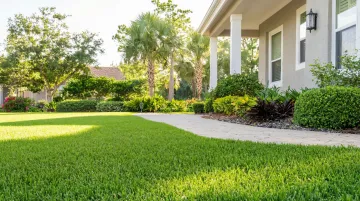
A consistently mowed lawn signals to visitors, neighbors, and potential buyers that a property is well-maintained. In Buffalo's historic districts and for small commercial properties making first impressions on clients, that signal carries real financial weight.
The numbers back this up. The National Association of Realtors' 2023 Remodeling Impact Report found that standard lawn care service yields the highest ROI of any outdoor project—recovering an estimated 217% of its cost at sale. A University of Texas at Arlington study found that strong curb appeal accounts for up to 7% of a home's sale price. Lawns maintained consistently also require less corrective work over time—less patching, reseeding, and intensive cleanup compared to sporadically maintained ones.
There's a compliance dimension, too. Buffalo's Property Maintenance Code Chapter 341 requires property owners to cut overgrown weeds and grass between May 1 and June 1, and as needed after that. Grass exceeding 10 inches is a violation carrying a $150 fine. Owners who don't comply within 5 days of notice may have the city hire contractors to cut the grass—and bill them directly.
Curb appeal and compliance both peak in importance from spring through fall, when lawns grow actively and property presentation is most visible. For homes listed for sale or commercial properties with regular foot traffic, that window is too valuable to leave to chance.
What Happens When You Skip Regular Mowing
Inconsistent mowing creates a cascade of compounding problems:
Scalping Stress
Allowing grass to overgrow and then cutting it back to normal height violates the one-third rule — a process called "scalping." This strips most of the photosynthetic tissue, shocks the plant, and stops root growth — conditions that can kill turf during summer stress. Virginia Tech research confirms that removing more than one-third of the blade severely depletes carbohydrate reserves.
Weed and Pest Invasion
Overgrown grass creates dense thatch and clumps that smother healthy turf. Weed seeds find exposed soil and establish quickly. Pests and moisture-loving fungi move in once the canopy gets too thick.
Mechanical Problems
Cutting extremely tall grass in one session often requires multiple passes, adding equipment wear and lawn stress while leaving behind clumps of clippings that block sunlight and airflow. That physical damage adds up — and so does the bill when turf needs active restoration.
Financial Cost of Neglect
Here's what reactive lawn repair typically costs compared to routine maintenance:
| Service Type | Estimated Cost | Use Case |
|---|---|---|
| Routine Lawn Mowing | $30–$85 per visit | Preventative maintenance |
| Lawn Seeding/Overseeding | $70–$230 per 1,000 sq. ft. | Repairing thin, weed-invaded turf |
| Sod Installation | $1,700–$2,600 per 1,000 sq. ft. | Total lawn replacement after failure |
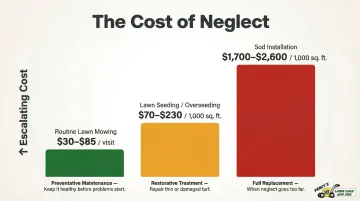
In Buffalo, where lake-effect snow can batter lawns through March, skipping spring mowing startup often pushes homeowners straight into the mid-tier or top-tier costs above — especially when turf doesn't bounce back on its own.
How to Get the Most Out of Your Lawn Mowing Routine
Regular mowing works best when frequency is tied to growth rate, not a fixed day of the week. During Buffalo's spring growth flush, this may mean mowing every 5–7 days. During dry summer stretches, every 10–14 days may suffice.
Two High-Impact Best Practices:
Keep mower blades sharp: Dull blades tear grass rather than cutting it cleanly. Jagged wounds cause rapid water loss and provide entry points for fungal pathogens.
Leave clippings on the lawn: Short clippings decompose rapidly and return valuable nitrogen to the soil, reducing fertilizer needs. Only bag clippings when grass has been cut too infrequently and clumps would smother the turf.
For homeowners and property managers in Buffalo who want consistent results without the guesswork, Percy's Lawn Care and Son provides professional mowing using commercial-grade equipment and more than 25 years of local knowledge. The fully insured team keeps lawns at the right height, at the right time, all season long, with clipping removal available as an add-on option.
Percy's serves residential properties and small commercial clients throughout Buffalo, Amherst, Cheektowaga, and surrounding areas, including historic neighborhoods like Linwood and Hamlin Park.
Conclusion
Regular lawn mowing delivers results that build on each other: healthier turf that needs less intervention, a natural defense against weeds, pests, and disease, and consistent curb appeal that holds property value over time.
Regular mowing is not a one-time effort or seasonal chore—it's an ongoing practice where consistency is what separates a thriving lawn from one that perpetually needs rescuing. In Buffalo's climate—where harsh winters and compressed growing seasons put real stress on turf—staying on schedule with mowing is the most cost-effective thing you can do for long-term lawn health. If you'd rather leave that consistency to someone who knows Buffalo lawns inside and out, Percy's Lawn Care and Son has been doing exactly that since 1999.
Frequently Asked Questions
What are the benefits of mowing your lawn?
Regular mowing promotes denser, healthier grass growth through lateral shoot and root development. It suppresses weeds by shading soil, reduces pest habitat, improves curb appeal, and protects property value. These benefits build on each other when you mow on a consistent schedule.
How often should you mow your lawn?
Follow the one-third rule: mow when grass reaches one-third taller than your target height. During Buffalo's active growing season (spring and early fall), most lawns need mowing every 7–10 days. In summer, growth slows and mowing frequency can be reduced to every 10–14 days.
What happens if you don't mow your lawn regularly?
Overgrowth leads to weed establishment, pest habitat creation, fungal disease risk, and thatch buildup. Cutting neglected grass violates the one-third rule, causing scalping stress that weakens or kills turf.
Is it better to leave grass clippings or bag them after mowing?
Leave clippings on the lawn when mowing at the right frequency. Short clippings decompose quickly and return up to 25% of nitrogen needs to the soil. Only bag clippings when grass has been cut too infrequently and clumps would smother the turf or block sunlight.
What is the one-third rule in lawn mowing?
The one-third rule means never removing more than one-third of the grass blade's height in a single mowing session. Cutting more than this depletes carbohydrate reserves, stops root growth, and increases vulnerability to drought, weeds, and disease.
Can regular lawn mowing improve my property value?
Yes. According to the National Association of Realtors, standard lawn care service recovers 217% of its cost at resale. A University of Texas study found that strong curb appeal, including a well-maintained lawn, adds up to 7% to a home's sale price.