
Maintaining a healthy lawn isn't just about keeping up with the neighbors. A thick, well-maintained lawn increases your property's perceived value, naturally suppresses weeds and pest pressure, and protects soil health through Buffalo's punishing freeze-thaw cycles and heavy snow seasons. This guide covers the core practices that make the difference—mowing height and blade sharpness, deep watering schedules, seasonal fertilization windows—plus a Buffalo-specific seasonal calendar, warning signs your lawn is struggling, and the most common mistakes that set yards back rather than move them forward.
Key Takeaways
- Mow at 3-4 inches and follow the 1/3 rule to prevent stress, reduce weed germination, and protect roots from summer heat
- Water deeply 1-2 times per week in early morning rather than daily sprinkles to build drought-tolerant root systems
- Fertilize in fall, not spring — late September to mid-October is the prime window for cool-season Buffalo lawns
- Aerate annually to relieve compaction in clay-heavy Buffalo soils and improve nutrient absorption
- Watch for yellow patches, thinning grass, or moss: these signal underlying issues like compaction, pH imbalance, or pest damage
Why Lawn Maintenance Matters
A healthy, dense lawn is its own best defense. Thick turf naturally crowds out weeds, resists pest infestations, and recovers faster from foot traffic, drought, and disease. Research shows that seeding at higher densities can reduce weed cover by 21% within just two months, proving that turf thickness alone is a powerful weed suppression tool—no chemicals required.
That same thick, healthy turf pays off at the curb, too. Upgrading a landscape from average to excellent can increase perceived home value by 10-12%, and according to the 2023 National Association of Realtors Remodeling Impact Report, standard lawn care service yields a 217% cost recovery upon resale. First impressions matter, and a lush lawn signals to buyers that the entire property has been cared for.
Catching a problem early—bare spots from compaction, the first signs of fungal disease, or thinning from grub damage—costs far less than full restoration. The cost gap is significant:
- Core aeration: $75–$205 per service
- Sod replacement for a damaged lawn: $1,000–$3,000+
- Overseeding a thin lawn: $200–$400, compared to full lawn renovation at $3,000+

Routine maintenance keeps those expensive repairs off the table.
Essential Lawn Care Practices for a Green, Healthy Lawn
Mowing: Height, Frequency, and the 1/3 Rule
The 1/3 Rule: Never remove more than one-third of the grass blade at a single mowing. If you're cutting at 3 inches, mow when the grass reaches 4.5 inches. Removing too much at once stresses the plant, thins the canopy, and invites weeds to germinate in the newly exposed soil. For cool-season grasses common in Buffalo—Kentucky bluegrass, tall fescue, and perennial ryegrass—maintain a mowing height of 3-4 inches. Taller grass shades the soil, retains moisture better, and develops deeper root systems that handle summer heat and drought more effectively.
Blade Sharpness Matters: Dull mower blades tear grass rather than cut it cleanly, leaving ragged brown tips that lose moisture faster and create entry points for fungal diseases like leaf spot. Sharpen blades at least twice per season—more often if you're mowing frequently. Never mow wet grass; it clumps, clogs the deck, and increases the risk of disease spread.
Watering: Deep, Infrequent, and Timed Right
The goal of watering is to moisten the top 4-6 inches of soil, encouraging roots to grow deep rather than clustering near the surface. Light, frequent watering creates shallow roots that dry out quickly and leave grass vulnerable during dry spells. Cool-season lawns generally need 0.5 to 1.5 inches of water per week, including rainfall.
Best Practices:
- Water deeply once or twice per week, not daily
- Ideal time: 4:00-8:00 AM to minimize evaporation and allow grass blades to dry before nightfall, reducing fungal disease risk
- Use the footprint test: if grass doesn't spring back after you step on it, it's time to water
Fertilizing: Feed Your Grass, Not Your Weeds
For cool-season lawns in Buffalo, fall is the single most important fertilizing window. A fertilizer program should focus on fall months, with 50-75% of all nitrogen applied between August and November. Late-season feeding promotes deep root development before winter dormancy and sets up healthier, more vigorous spring green-up.
Why avoid heavy spring feeding? Heavy spring nitrogen pushes lush top growth at the expense of root development—leaving lawns shallow-rooted heading into summer heat. A light slow-release application in late spring is fine if you missed fall feeding, but avoid heavy applications until conditions cool again in fall.
Soil Testing First: Before choosing a fertilizer, get a soil test. A soil test reveals exactly what your lawn needs — and what it doesn't:
- Identifies pH imbalances (lime to raise pH, sulfur to lower it)
- Pinpoints nutrient deficiencies so you're not guessing at products
- Required under New York law before applying fertilizers with more than 0.67% phosphate on established lawns
- Guides you toward slow-release nitrogen formulas that feed steadily without burning the lawn
Weed Control: Prevention First, Treatment Second
Two-Phase Approach:
- Pre-emergent herbicides — Applied in early spring before soil temperatures consistently reach 55°F, these prevent crabgrass and annual weed seeds from germinating. Crabgrass germinates when shallow soil temps hit 50-55°F for several consecutive days, typically in early May in Buffalo. Miss this window and you're fighting weeds all season.
- Post-emergent treatments — Target established broadleaf weeds like dandelions. Spot-treat problem areas rather than blanketing the entire lawn.
Organic Alternatives: Corn gluten meal (CGM) works as a natural pre-emergent, but it requires patience—about 60% control in Year 1, reaching 90%+ efficacy after four consecutive years of application. Hand-pulling with proper root removal works for isolated weeds. Either way, a dense, well-fed lawn is the real weed barrier — thin turf is an open invitation.
Aeration and Soil Health
What Aeration Does: Core aeration removes small soil cylinders, relieving compaction and allowing air, water, and nutrients to reach the root zone. Buffalo's clay-heavy soils are especially prone to compaction, making annual or biannual aeration particularly valuable. Compacted soil restricts root growth and water infiltration, leaving grass stressed and vulnerable.
Best Practices:
- Aerate in early fall when soil is still warm but air is cooling
- Follow immediately with overseeding—the open holes are ideal seedbeds for new grass
- Apply a thin layer (¼ inch) of compost after aeration to improve soil structure and accelerate thatch breakdown
Signs Your Lawn Is Struggling and Needs Attention
Visible Warning Signs:
- Yellowing or brown patches — Possible drought stress, fungal disease (dollar spot, brown patch), or grub damage
- Thin or bare areas — Compaction, thatch buildup, shade issues, or heavy foot traffic damage
- Moss or excessive weeds — Poor drainage, low fertility, or pH imbalance (moss thrives in acidic, poorly drained soils)
- Dull blue-gray color — Early drought stress before browning begins
DIY Diagnostic Tests:
- Step on the grass — if it doesn't spring back within a few seconds, it needs water
- Grab a handful of grass and pull gently. If it lifts like a carpet with no resistance, grubs may have severed the root zone. Treatment is typically needed at 5–10 grubs per square foot.
When to Call a Professional:
Some problems go beyond what most homeowners can tackle alone — persistent fungal disease, widespread grub infestations, or compacted soil that doesn't recover after DIY aeration are good examples. When the same issues return season after season, a professional can pinpoint the cause and match the treatment to the timing.
Percy's Lawn Care and Son has worked with Buffalo-area homeowners since 1999, providing the kind of locally-informed diagnosis that generic treatments can't replicate.
Seasonal Lawn Care Schedule for Buffalo, NY
Buffalo's climate presents unique challenges: long winters averaging 95.4 inches of snow, cool and wet springs, humid summers, and a short active growing season. Because local lawns are predominantly cool-season grasses, timing is everything. The right task done in the wrong window can set your lawn back rather than help it.
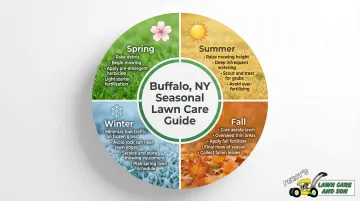
Spring (April – May): Wake Up and Protect
Key Tasks:
- Start with a light raking to remove winter debris and dead material
- Wait until the ground is fully thawed and grass has begun greening before mowing
- First mow: Cut slightly lower than normal (around 2.5 inches) to remove dead tips, then raise the deck back to 3-4 inches
- Apply pre-emergent weed control before soil temps hit 55°F consistently (typically early May in Buffalo)
- Aerate if soil is heavily compacted (fall is the primary window, but spring is acceptable)
- Avoid heavy fertilizing—a light slow-release application is fine if you missed fall feeding, but hold off on heavy nitrogen
Summer (June – August): Maintain and Monitor
Key Tasks:
- Raise mowing height to 4 inches during peak heat to reduce stress and retain soil moisture
- Water deeply 1-2 times per week, not daily
- Avoid fertilizing during July-August heat stress periods unless using slow-release product and irrigating regularly
- Scout regularly for grub activity (brown patches that tug up easily), sod webworm damage, or fungal disease. Buffalo's summer heat and humidity make conditions especially favorable for lawn disease outbreaks
- Spot-treat weeds as they appear
Fall (September – October): The Most Important Window
Why Fall Matters Most:
Fall is the single most critical season for Buffalo lawns. Cool nights and warm soil create ideal conditions for root growth and seed germination.
Key Tasks:
- Aerate and overseed in early September while soil is still warm enough for germination but air is cooling
- Apply the season's most important fertilizer in late September to mid-October to build root reserves before dormancy
- Continue mowing until grass stops growing
- Final mow: Gradually lower deck to 2.5 inches for the last cut to reduce snow mold risk
- Remove fallen leaves promptly—heavy leaf cover smothers grass and creates fungal conditions under snow
Winter (November – March): Protect and Plan
Key Tasks:
- Minimize foot traffic across frozen or snow-covered turf—compaction and crown damage is real in Buffalo winters
- Avoid piling heavy snow or road salt runoff onto lawn areas
- Use this time to sharpen mower blades, service equipment, and map out spring seeding plans
Common Lawn Care Mistakes to Avoid (and When to Call a Pro)
Most Common DIY Errors
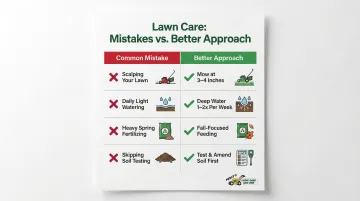
- Scalping (mowing too short) removes too much leaf surface, stresses the grass, and exposes soil to weed pressure
- Watering every day instead of deeply encourages shallow roots that dry out quickly in summer heat
- Heavy spring fertilizing while skipping fall drives weak top growth and misses the most important feeding window
- Ignoring the soil means treating yellowing or thinning without testing pH or addressing compaction — you're masking symptoms, not fixing them
Treating Every Problem the Same Way
Overwatering a fungal-affected lawn makes disease worse. Applying the wrong herbicide can damage certain grass types. Using synthetic chemicals repeatedly can harm beneficial soil microbes over time. Diagnose the problem first, then treat it — not the other way around.
When It Makes Sense to Hand Off to a Pro
- Problems recur year after year despite your best efforts
- Your lawn is recovering from major damage (winter salt damage, grub infestation, renovation)
- Consistent scheduling and professional-grade equipment would save more time and money than DIY trial and error
Percy's Lawn Care and Son has served Buffalo-area homeowners since 1999 with exactly this kind of locally-informed, hands-on care. With over 25 years of experience in Buffalo's specific soil and climate conditions, the team knows what to look for — and how to fix it before small issues turn into costly ones.
Frequently Asked Questions
How do I make my lawn healthy?
A healthy lawn starts with soil health: test and amend pH as needed. Follow with consistent mowing at 3-4 inches, deep infrequent watering, seasonal fertilizing (fall is critical for Buffalo's cool-season grasses), and annual aeration. Get these fundamentals right and most other problems solve themselves.
How often should I mow my lawn?
Mowing frequency depends on growth rate, not a fixed calendar. During peak spring growth, you may mow twice a week; in summer heat, once a week or less. The goal is to never remove more than one-third of the blade at a time, which keeps the plant healthy and the lawn thick.
What is the 1/3 rule for mowing?
The 1/3 rule means never cutting more than one-third of the grass blade's current height in a single mow. Removing too much at once stresses the plant, exposes soil to weeds, and weakens root development, leaving the lawn vulnerable to drought and disease.
Is October too late to fertilize grass?
For cool-season lawns in Buffalo, mid-October is actually an ideal time for the most important fertilizer application of the year. It feeds root development going into dormancy and produces a healthier, greener lawn in spring. Avoid fertilizing once the ground has frozen.
What's the difference between lawn care and lawn service?
"Lawn care" typically refers to treatments that improve the lawn's health, such as fertilization, weed control, aeration, and overseeding. "Lawn service" usually means routine maintenance tasks like mowing, edging, and cleanup. At Percy's Lawn Care and Son, we handle both.
What is the average cost of lawn care?
Professional lawn care typically costs $100-$500 per month for basic services, with mowing visits ranging from $50-$205 depending on lawn size and region. Preventive care like aeration and seasonal fertilizing is consistently more cost-effective than treating a neglected lawn.