

Watering after fertilization isn't optional — it's the difference between feeding your lawn and scorching it. This article explains the science of why watering matters, what specifically goes wrong when you skip it, how to handle granular versus liquid fertilizers, and what to do if the damage is already done.
Key Takeaways
- Granular fertilizer left unwatered can't reach roots — it sits uselessly on the surface
- High salt concentration draws moisture out of grass blades, creating fertilizer burn (yellow or brown patches)
- Water granular fertilizer within 24-48 hours; wait 2-4 hours before watering liquid fertilizer
- Light rain (¼ inch) works perfectly; heavy storms wash fertilizer away
- If burn has already appeared, water deeply right away to flush salts and stop further damage
What Happens When You Don't Water After Fertilizing
Fertilizer granules contain concentrated salts and nutrients that must dissolve in water to move from the grass surface into the soil. Without water, they remain inert on the surface and provide zero nutritional benefit to your grass. The granules simply sit there, wasting your time and money.
Burn happens through osmosis. When dry granular fertilizer sits on grass blades, the high salt concentration creates an imbalance that reverses normal water flow. Instead of nutrients moving into the plant, the fertilizer pulls moisture out of grass cells, dehydrating the tissue.
According to Oregon State University extension research on lawn fertilizing, this osmotic burn occurs when fertilizer becomes so concentrated around grass tissue that it essentially extracts water from the plant.
Visible symptoms of fertilizer burn include:
- Yellowing or browning grass blades in streaks or patches
- Dry, shriveled leaf tips
- Dead patches where grass has been completely scorched
- Symptoms appearing within hours on hot, sunny days
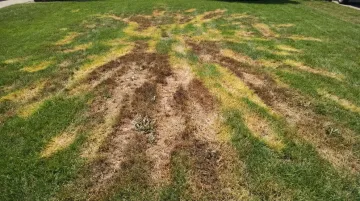
Buffalo's summer heat and humidity make timing critical. Fertilizer left unwatered on a hot afternoon carries far greater burn risk than in cooler conditions. The hotter the weather, the faster moisture evaporates from grass blades, accelerating the osmotic damage.
Burn is the most immediate threat, but it's not the only one. Even if scorching doesn't occur, unwatered fertilizer is vulnerable to being washed away by the next heavy rain — and that washes nitrogen and phosphorus into storm drains and local waterways, wasting your money and potentially harming the environment. Research shows only 16% of homeowners use soil tests to guide fertilizer application, contributing to widespread misuse and runoff.
Granular vs. Liquid Fertilizer: Does the Type Change What You Do?
These two fertilizer types work through completely different mechanisms and have opposite watering timing rules — which confuses many homeowners and leads to mistakes.
Granular Fertilizer: Water Within 24 Hours
Water immediately or within 24 hours of application. The granules need to be washed off grass blades and into the soil to dissolve and activate. Aim for about 15–20 minutes with a sprinkler (roughly ¼ inch of water) to move granules without over-saturating or causing runoff. According to Minnesota Department of Agriculture best practices, 0.1 to 0.25 inches of water is sufficient to activate granular fertilizer.
Liquid Fertilizer: Wait 2–4 Hours First
Wait 2–4 hours before watering. Liquid fertilizers absorb partially through grass blades — a process called foliar absorption — so watering too soon rinses the product off before the plant can take it in. Always check the product label, since timing varies by formulation.
Don't Overdo the Water
Too much water works against you. Excessive watering pushes nutrients past the root zone or causes runoff that can contaminate groundwater. One thorough session is all that's needed. Soaking for an hour or more can push nitrogen below root systems entirely, wasting fertilizer and harming the environment.
How to Water Your Lawn Correctly After Fertilizing
Follow these four steps to water correctly after fertilizing:
1. Check your fertilizer type first. Confirm whether granular or liquid was applied and reference the timing rules above before doing anything. Watering at the wrong time wastes product.
2. Target the right amount of water. The goal is to soak approximately 6 inches into the soil so nutrients reach the root zone. For most lawns, 15–20 minutes with a standard sprinkler achieves roughly ¼ inch of water — enough to activate granular fertilizer. According to Penn State Extension, irrigation should moisten the soil to about a 5-inch depth to reach the root zone.
3. Apply water evenly. Move hoses or sprinklers around to ensure even coverage across the entire lawn, not just one zone. Uneven watering leads to patchy fertilizer activation — some areas may burn while others receive no nutrients at all.
4. Hold off on additional watering for 1–2 days. After the initial post-fertilization watering, let nutrients settle into the soil before watering again. Then return to your regular schedule: roughly 1 inch per week, ideally in the early morning between 4 AM and 8 AM.
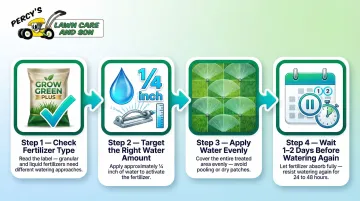
These steps apply to most lawns, but your local climate matters too — especially here in Buffalo.
Note for Buffalo-area lawns: The Buffalo region is dominated by cool-season grasses like Kentucky bluegrass and fescue, making fall fertilization (September–October) the most critical window of the year. Cornell University research on nitrogen timing shows that late summer and early fall applications deliver three key benefits:
- Promote recovery from summer heat stress
- Build root mass heading into dormancy
- Store carbohydrates that fuel spring green-up
Burn risk is lower in fall than summer, but watering in is still essential for nutrient activation.
What to Do If You Already Forgot to Water
If it's been less than 24-48 hours: There is still time to act. Water deeply right away — this can dissolve the granules, move them into the soil, and reduce burn risk before serious damage sets in. The warmer the weather, the more urgent this becomes.
If burn symptoms (yellow/brown patches) are already visible: Use a flushing approach to dilute the salt concentration in the soil. MasterClass recommends saturating the soil until it can't absorb any more, then repeating once daily for about a week.
LawnStarter suggests a similar method — about an inch of water daily for two weeks. Either approach works; consistency matters more than which one you choose.
For severely damaged areas:
- Remove any visible granular fertilizer remaining on the soil
- Flush the soil daily for one to two weeks
- Rake out dead grass to expose clean soil
- Reseed affected patches — the optimum time to establish cool-season turf in the Buffalo region is late summer to early fall (mid-August to mid-September)
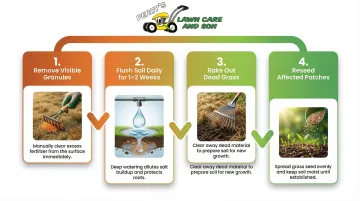
Recovery typically takes a few weeks with consistent care. If the damage is widespread or you're not sure where to start, Percy's Lawn Care and Son has been helping Buffalo homeowners recover from lawn setbacks since 1999 — with hands-on knowledge of local soil conditions and what it takes to get grass growing again.
Can Rain Replace Watering After Fertilization?
Light, steady rain shortly after fertilizer application is actually ideal — it provides even, natural coverage across the entire lawn and does the watering-in work without any extra effort. According to Minnesota turf fertilization best practices, rain of at least ¼ inch is sufficient to activate granular fertilizer.
However, heavy rainstorms are a different story. Intense rainfall can cause runoff, washing surface granules off the lawn before they have a chance to dissolve and absorb — resulting in both wasted product and potential water contamination. Regional clean water guidelines recommend avoiding fertilizer application if heavy rainfall is expected within 48 hours.
Check the forecast before applying and hold off if storms are in the 48-hour window. When in doubt, wait for a calm weather stretch — you'll get better results and avoid washing your investment down the drain.
Frequently Asked Questions
What happens if fertilizer is not watered in right away?
Granular fertilizer sitting on dry grass blades cannot reach the soil or root zone, making it ineffective. In hot weather, the longer it sits dry, the greater the burn risk — salt concentration in the granules pulls moisture out of grass tissue.
How long can I wait to water after fertilizing?
For granular fertilizer, watering should happen within 24-48 hours of application (sooner in hot weather). For liquid fertilizer, wait 2-4 hours first to allow foliar absorption, then water lightly.
What happens if you fertilize and it doesn't rain?
Run a sprinkler for 15-20 minutes within 24-48 hours of application. Without any rainfall or manual watering, granular fertilizer stays inactive and risks burning the grass or washing away in the next heavy rain.
What are common fertilizer mistakes?
The most common mistakes are skipping post-application watering, over-applying fertilizer, fertilizing at the wrong time of year for your grass type, and spreading unevenly. Each one can cause burn, wasted product, or patchy results.
How do I make my lawn healthier?
A healthy lawn comes from consistent basics: fertilizing at the right time for your grass type, watering correctly (deeply and infrequently), mowing at the proper height, and aerating periodically. In the Buffalo area, that means prioritizing cool-season fertilizing windows — typically early fall and spring — when Kentucky bluegrass and fescue actively grow.