This guide delivers practical, step-by-step advice covering layout planning, plant selection, hardscape swaps, and Buffalo-specific strategies that save both time and money season after season. You'll learn exactly which plants thrive in Western New York's Zone 6b climate and clay-heavy soil, which lawn areas to replace for maximum maintenance reduction, and how to source materials cheaply without sacrificing quality.
Key Takeaways
- Plan your layout before spending a dollar—a simple sketch prevents costly mistakes and guides every purchase.
- Choose native perennials, ground covers, and evergreens over high-maintenance annuals and large grass lawns.
- Replace sections of lawn with mulch, gravel, or hardscape to cut mowing, watering, and weeding dramatically.
- Source plants through end-of-season sales, perennial division, and seed starting to keep costs low.
- Once established, low-maintenance gardens need far less watering, weeding, and weekly attention than traditional lawns.
Plan First, Plant Second
Assess Your Yard Before Buying a Single Plant
Wrong plant placement is the leading cause of plant failure and wasted money. Before you buy anything, spend a week observing how sunlight moves across your yard. Note which areas receive morning sun, afternoon sun, and full shade. A shade-loving hosta planted in full sun will struggle and die, no matter how much water you give it.
Buffalo-area yards commonly feature clay-heavy soil that holds water tightly and drains slowly. A simple drainage test can save you from planting in the wrong spot:
- Dig a 1-foot deep hole and fill it with water; let it drain completely
- Fill it again and measure the water level
- Check back after 15 minutes, then again at 24 hours
If water is still sitting at the 24-hour mark, you have a drainage problem that will affect plant survival.
Sketch a Layout and Stage Your Spending
Grab graph paper or use a free online tool like Garden Planner. Mark existing features—trees, sidewalks, utilities—along with sun zones and drainage issues you identified. Focus your budget on high-impact areas: foundation plantings near the front door, pathway edges, and spots visible from the street deliver the most visual return per dollar spent.
Stage your spending over multiple years:
- Year 1: Plant trees and large shrubs — they take the longest to establish and anchor everything else
- Year 2: Add perennials to fill in around the established woody plants
- Year 3: Fill gaps with ground covers or seasonal annuals
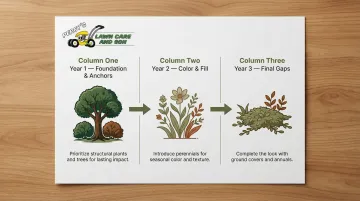
This approach spreads cost over time without losing sight of the big picture. A tree planted in the wrong spot in Year 1 is a cheap lesson; the same mistake made after planting $300 worth of perennials around it is not.
Before digging a single hole, lay out bed shapes on the ground using a garden hose or rope. This free technique lets you visualize scale and spacing, preventing beds that are too small to make an impact or too large to maintain.
Choose Plants That Do the Work for You
Plant selection is the highest-leverage decision in a low-maintenance garden. The right plant in the right spot needs little water, fertilizer, or intervention once established. The wrong plant creates ongoing work regardless of how much care it receives.
Prioritize Perennials Over Annuals
Perennials return year after year and spread to fill larger areas over time—the same $15 spent today keeps paying off for a decade. Annuals require replanting every single spring, draining both time and budget.
Reliable, low-effort perennials for Zone 6 Buffalo gardens:
- Black-eyed Susans (Rudbeckia hirta) – Hardy to Zones 3-7, thrives in full sun, tolerates clay and drought
- Purple Coneflowers (Echinacea purpurea) – Hardy to Zones 3-8, highly adaptable to poor soils, drought tolerant
- Daylilies (Hemerocallis) – Hardy to Zones 3-9, extremely clay-tolerant, handles summer heat
- Hostas – Hardy to Zones 3-8, perfect for shade areas, prefers moisture-retentive soil
- Catmint – Long blooming season, drought tolerant once established
Most perennials look their best by their third summer. Choosing varieties already adapted to Buffalo's climate shortens that curve considerably.
Use Native Plants for Hands-Off Results
Plants native to Western New York evolved to thrive in local soil, rainfall patterns, and temperatures without supplemental fertilizer or pesticides. Once established, native plants require little water beyond normal rainfall and do not need fertilizers, eliminating ongoing maintenance costs.
Native plants suited to the Buffalo region:
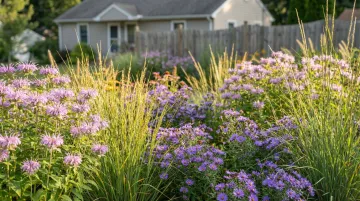
- Wild bergamot (Monarda fistulosa) – Drought-tolerant, attracts bees and butterflies
- Little bluestem (Schizachyrium scoparium) – Ornamental grass providing winter interest, erosion-resistant
- Calico aster (Symphyotrichum lateriflorum) – Supports native bees, thrives in clay and loam soils
Plant natives in groups of 3–5 of the same variety. Dense planting blocks sunlight at the soil surface, crowding out weeds without chemicals or ongoing labor.
Add Ground Covers in Problem Areas
Ground covers eliminate the need to mow, water, or edge problem areas—slopes, dry spots under trees, or narrow strips where grass never performs well. Good options for Buffalo yards include:
- Creeping thyme – Handles foot traffic, thrives in dry and sunny spots
- Creeping phlox – Low-growing, blooms in spring, spreads steadily
- Sweet woodruff – Ideal for shaded areas with moist soil
Important note: Avoid Vinca minor (common periwinkle). While commonly sold as low-maintenance, it's classified as invasive by WNY PRISM because it escapes cultivation and outcompetes native forest species.
Add Evergreens for Year-Round Structure
Arborvitae, dwarf spruce, and boxwood provide year-round structure with minimal pruning once established. They make your yard look "maintained" even when seasonal plants are dormant—an important consideration during Buffalo's long winters. As a backdrop for other plantings, they elevate the entire yard's appearance without requiring constant attention.
Replace Lawn with Low-Maintenance Hardscape
Every square foot of lawn you remove cuts down on mowing, watering, fertilizing, and weed treatment. Even replacing 25–30% of your lawn with hardscape or mulched beds makes a measurable difference in weekend upkeep.
Mulch Beds: The Most Cost-Effective Garden Investment
Mulch performs three core jobs: suppressing weeds, retaining soil moisture to reduce watering frequency, and insulating plant roots. A 2–3 inch layer over bed areas sharply reduces time spent weeding. Research shows mulch reduces soil water loss to evaporation by 33% or more, meaning you water less frequently.
Mulch needs annual refreshing but stays one of the least expensive landscaping materials you'll find—typically $25–$35 per cubic yard at local suppliers.
Gravel and River Rock as Ground Cover Accents
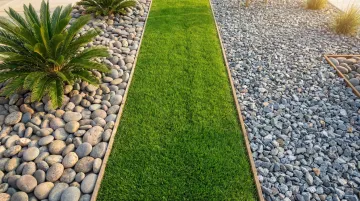
River rock and decorative gravel work well as ground cover inside mulch beds — especially in spots where grass struggles to grow, like narrow side yards or areas under tree canopies. Unlike organic mulch, stone doesn't decompose, so it rarely needs replenishing.
In Buffalo, stone ground cover also handles freeze-thaw cycles better than bare soil, which tends to heave and erode through winter. Costs typically run $50–$75 per ton, and once it's down, that area requires almost no attention season to season.
Simple Pathways to Eliminate Worn Patches
Bare patches in the lawn are almost always caused by repeated foot traffic following the same route. Installing a stepping stone or gravel path along that natural line solves the problem permanently. It eliminates that strip of lawn from your maintenance routine, adds visual structure to the yard, and costs far less than reseeding the same patch every spring.
A basic stepping stone path typically runs $1–$3 per stone at home improvement stores — a one-afternoon project with years of payoff.
Budget-Friendly Techniques to Reduce Ongoing Maintenance
Source plants cheaply without sacrificing quality:
- Buy perennials at end-of-season sales (late August through October) when garden centers discount heavily—often 50–75% off
- Divide existing clumps of perennials every 2–3 years; replant divisions or trade with neighbors
- Grow annuals for seasonal color from seed packets ($2–$4) rather than purchasing flats of starts ($15–$25)
- Attend the CCE Erie Master Gardener Annual Plant Sale held each May in Buffalo for locally adapted, budget-friendly plants
Use the cardboard-under-mulch weed prevention method:
Lay flattened cardboard or several layers of newspaper directly on the soil before adding mulch. This smothers existing weeds and their seeds without chemicals. Source cardboard free from moving boxes or local stores. This method extends the weed-free period between maintenance sessions by several weeks.
Consider professional setup for complex projects:
Some projects are worth getting right from the start. For Buffalo homeowners tackling large yards, complex bed layouts, or difficult soil conditions, Percy's Lawn Care and Son offers landscaping services backed by over 25 years of experience in the area. Professional setup—covering soil preparation, bed grading, and foundational planting—helps avoid problems like poor drainage, frost heave, and plants that won't survive a Western NY winter. Getting the groundwork right reduces the ongoing fixes that turn a "low-maintenance" garden into a recurring headache.
Low-Maintenance Garden Tips Specific to Buffalo, NY
Buffalo falls in USDA Hardiness Zone 6b, meaning plants must survive temperatures down to −5°F to 0°F. Always check the zone rating on plant labels before purchasing. Zone 7 plants are sometimes stocked at local nurseries but will not reliably survive a Buffalo winter.
Managing Buffalo's Clay-Heavy Soil
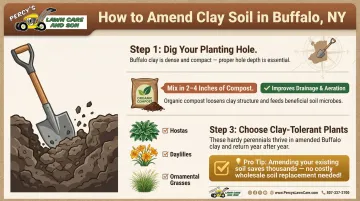
Clay retains water, which can cause root rot in plants that need good drainage. The budget-friendly fix is to amend planting holes with compost at planting time—work 2–4 inches of organic matter into the top 4 inches of soil. Or select plants naturally tolerant of clay conditions: hostas, daylilies, ornamental grasses, and native asters. This avoids the cost and effort of wholesale soil replacement.
Apply Fresh Mulch in Late Fall
Once your soil is addressed, one more seasonal task makes a real difference: winter mulching. Apply a 3-inch layer in late October or early November, after the ground has frozen. This timing is critical — winter mulch keeps soil consistently frozen and prevents the freeze-thaw cycles that push perennial roots out of the ground. Done once a year, it's one of the highest-return habits a Buffalo gardener can build.
Frequently Asked Questions
What is the cheapest way to landscape a front yard?
The most affordable approach combines reducing lawn area with mulch, planting perennials that return each year, and tackling the project in stages to spread costs over time.
What are the best low-maintenance plants for a budget garden?
Perennials like coneflowers, hostas, and daylilies offer the best combination of low purchase cost and minimal ongoing care. Add spreading ground covers like creeping thyme and evergreen shrubs for year-round structure.
How do I reduce the amount of lawn I have to mow?
Expand garden beds, replace high-traffic or difficult areas with mulch or gravel, and install ground cover in spots where grass struggles. These strategies shrink mowing area without major expense.
What ground cover is cheap and low maintenance?
Creeping thyme, creeping phlox, and sweet woodruff are affordable, spreading options that eliminate mowing and regular watering once established. All three handle Buffalo's cold winters well and thrive in similar cold-winter climates.
How do I keep weeds out of my garden without spending a lot?
A 2–3 inch layer of mulch combined with dense planting to shade out gaps is the most cost-effective weed control method available—more reliable and cheaper long-term than repeated chemical treatments.
Is it worth hiring a landscaper to set up a low-maintenance garden?
Professional setup can save money over time by preventing costly plant placement and soil mistakes, which are especially common in demanding climates like Buffalo. Lower ongoing maintenance and better plant survival rates typically offset the upfront cost.