

Introduction
Buffalo homeowners know the struggle: steep slopes where mowers won't grip, shaded corners where grass turns to mud, and freeze-thaw cycles that heave soil and stress traditional lawns. Maintaining a lush lawn through Western New York's 95.4 inches of annual snowfall and unpredictable spring thaws can feel like a losing battle.
Rock gardens offer a smarter alternative built for exactly these conditions. These features combine rocks, boulders, gravel, and cold-hardy plants to create low-maintenance displays that thrive in Buffalo's Zone 6b climate. Unlike grass that demands weekly mowing and constant watering, rock gardens work with the region's soil conditions and seasonal extremes rather than fighting them.
Inside, you'll find:
- Rock garden ideas organized by location and style
- Cold-hardy plant picks proven to survive Buffalo winters
- A practical planning and installation blueprint
Key Takeaways
- Rock gardens eliminate mowing on slopes and problem areas while adding year-round visual interest
- Styles range from small container troughs to full front yard displays, with builds starting under $200 for simple designs
- Choose Zone 4-6 hardy plants like creeping thyme, sedum, and mugo pine that survive Buffalo's harsh winters
- Proper drainage, stone placement, and soil prep determine long-term success—skip the landscape fabric
- Space plants 12–18 inches apart at planting time; they'll fill in within two seasons without crowding out neighbors
Rock Garden Ideas to Transform Your Outdoor Space
Rock gardens adapt to nearly any space—shaded corners, sloped front yards, sunny backyards, or even containers. The key is matching the style to your site's drainage, sun exposure, and scale.
Small Corner and Container Ideas
Stone Trough Gardens #### Stone Troughs and Raised Containers
A stone trough filled with alpines, sempervivums, and small rocks transforms tight patios or forgotten corners. These portable gardens can move indoors or to sheltered spots before Buffalo's harshest winter weather hits—protecting tender plants while keeping year-round interest.
Crevice Gardens
If container gardens feel too managed, the crevice garden concept offers a more naturalistic approach. Flat stones arranged vertically create narrow planting pockets that mimic natural rock strata and provide the sharp drainage alpines demand. Ideal plants include:
- Saxifraga (rockfoil)
- Sedums (stonecrop)
- Dwarf irises
- Hen and chicks
Penn State Extension recommends a 6-inch base layer of coarse builders' sand topped with 3/8-inch locally sourced stone for optimal drainage.
Front Yard Rock Garden Ideas
Once your corner or container ideas are in place, the front yard opens up bigger opportunities—especially on slopes. Large keystone boulders on graded front yards anchor soil, prevent erosion, and replace hard-to-mow turf. This works particularly well for Buffalo properties with steep lots near the street. Bury each boulder at least one-third of its depth and tilt it backward into the slope to mimic natural rock formations and direct water toward plant roots.
Add cascading color with:
- Creeping phlox (blooms pink, purple, or white in spring)
- Candytuft (white blooms, evergreen foliage)
- Creeping thyme (fragrant, pollinator-friendly)
Already have a retaining wall? Tuck low-growing ground covers into existing crevices to turn a functional wall into a colorful landscape feature. Recommended plants:
- Creeping thyme
- Sedum varieties
- Rock cress (Arabis)
Backyard and Zen-Inspired Ideas
The backyard gives you more room to experiment with atmosphere. A Zen garden built around smooth boulders, raked gravel in wave-like patterns, and drought-tolerant ornamental grasses or dwarf conifers keeps upkeep minimal while creating a meditative outdoor retreat—especially effective near a patio where you can actually sit and enjoy it.
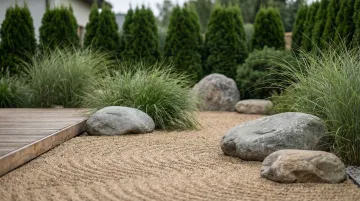
A dry creek bed takes that naturalistic feel a step further. It's a shallow, winding trench filled with river rock and gravel that mimics a natural stream—and it actually improves drainage, which matters during Buffalo's wet springs when snowmelt and rain can overwhelm traditional lawns.
Line the edges with:
- Native ornamental grasses (little bluestem, switchgrass)
- Hardy perennials (black-eyed Susan, coneflower)
- Moisture-tolerant sedges
Best Plants for Rock Gardens in Buffalo's Climate
Buffalo sits in USDA Hardiness Zone 6b, meaning plants must tolerate winter lows around -5°F to 0°F, wet springs, and summer dry spells. Alpine plants and native perennials thrive because they evolved in similarly challenging conditions.
Cold-Hardy Ground Covers
| Plant | Zone | Height x Spread | Best For |
|---|---|---|---|
| Creeping Thyme (Thymus serpyllum) | 4-8 | 3" x 12" | Full sun, sandy/gritty soil; fragrant, pollinator-friendly |
| Moss Phlox (Phlox subulata) | 3-9 | 3-6" x 12-24" | Spring color cascade, tolerates gravelly soil |
| Candytuft (Iberis sempervirens) | 3-8 | 6-12" x 6-18" | Evergreen foliage, drought-tolerant once established |
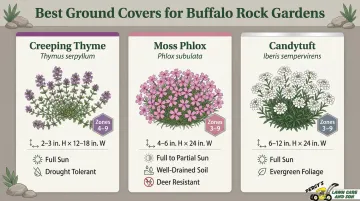
These spread to soften rock edges, bloom in spring, and survive Buffalo winters without protection. Space according to mature spread to avoid overcrowding.
Low-Growing Perennials and Succulents
For filling gaps and adding texture between rocks, these three plants are workhorses in Buffalo gardens:
Hen and Chicks (Sempervivum) — Zones 4-10 | Under 12" tall
Rosettes multiply quickly in well-drained compost mixed with up to 50% sand or grit. Requires almost no watering once established.
Sedum (Stonecrop) — Zones 3-9 | Varies by species
Drainage is non-negotiable here — sedums rot in heavy clay. Low-growing varieties like Sedum acre (goldmoss) or Sedum spurium (dragon's blood) work well along rock garden edges.
Blue Fescue (Festuca glauca) — Zones 4-8 | 4-20" tall
Blue-gray ornamental grass that thrives in full sun and lean, free-draining soil — exactly the conditions a rock garden naturally provides.
Dwarf Shrubs and Conifers
Mugo Pine (Pinus mugo)
Zones 2-7 | Dwarf cultivars stay under 4 feet
Provides year-round structure and winter interest. Tolerates dry, alkaline, and clay soils once established. Use as a woody anchor that maintains structure through winter when perennials die back.
Creeping Juniper (Juniperus horizontalis)
Zones 3-9 | 4-20" tall x 13-26 feet wide
Low-growing evergreen that cascades over rocks naturally. Tolerates any well-drained soil, including dry, chalky, or sandy conditions. Plant it where you want softness along a rock's edge without ongoing maintenance.
Avoid plants marketed for zones 8+. Before purchasing, verify hardiness ratings or consult a local nursery. If you'd rather skip the guesswork, Percy's Lawn Care and Son can handle plant selection and installation for your Buffalo property — they've been doing this kind of work locally since 1999.
How to Plan and Build Your Rock Garden
Site Selection
Choose a location based on:
- Drainage - Avoid low spots where water pools after spring thaw
- Sun exposure - Most rock garden plants prefer full sun (6+ hours daily)
- Accessibility - Keep rock gardens away from snow removal pathways and utility lines
Before you dig: New York State Code Rule 753 requires homeowners to call NY811/UDig NY at least two business days before breaking ground. Within the "tolerance zone" — two feet on either side of any marked utility line — hand-digging is required before using powered equipment.
Stone Placement Technique
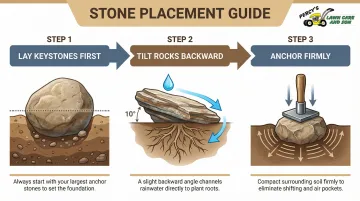
Step 1: Lay Keystones First
Select large "keystone" rocks to define the garden's shape. Bury at least one-third of each rock into the ground for stability and a natural look.
Step 2: Tilt Rocks Backward
Angle rocks slightly into the slope so water runs toward plant roots rather than away. This mimics natural rock strata and prevents erosion.
Step 3: Anchor Firmly
Buffalo's freeze-thaw cycles can shift rocks over time. Tamp soil firmly around each stone and check stability before moving to the next.
Soil and Drainage Preparation
DO NOT use landscape fabric under planted rock gardens. University extensions warn that fabric clogs with sediment over time, suffocates soil ecology, and allows weeds to germinate in the mulch above. Weeds root directly through fabric, making removal nearly impossible.
Instead, use this soil mix:
- 1 part loam
- 1 part horticultural grit (coarse sand or perlite)
- 1 part leafmould or coir
This gritty mix drains quickly—critical for preventing root rot in Buffalo's heavy spring rains. Avoid heavy clay soil common in many Buffalo yards.
The right soil sets the foundation; the right stone shapes the character. That's where local sourcing makes a real difference.
Sourcing Local Stone
Western New York contains significant limestone and dolostone deposits.
The Lockport Group (visible from Niagara Falls eastward) includes Gasport Dolomite, Goat Island Dolomite, and Guelph Dolomite. Active quarries operate in Lancaster, Cheektowaga, Akron, and Lockport.
Benefits of local stone:
- More cost-effective than imported materials
- Weathers naturally to match the regional landscape
- Supports local suppliers and reduces transportation emissions
If you'd rather skip the sourcing and heavy work entirely, Percy's Lawn Care and Son handles landscaping design and installation for homeowners across Buffalo, Amherst, Cheektowaga, and the surrounding communities.
Benefits of a Rock Garden for Your Buffalo Yard
Practical Climate Advantages
- Eliminates mowing on difficult slopes - No more struggling with mowers on grades or shaded areas where grass won't grow
- Reduces water usage - Xeriscape conversions save an average of 55.8 gallons per square foot annually compared to traditional turf
- Withstands harsh winters - Rocks and hardy perennials require minimal spring restoration after freeze-thaw cycles
Curb Appeal and Property Value
A well-designed rock garden adds structure and visual interest year-round. Unlike flower beds that look bare in winter, rock gardens provide consistent texture and form even under snow.
According to the 2023 National Association of Realtors Remodeling Impact Report, an overall landscape upgrade (including stone features, planters, shrubs, and trees) costs an average of $9,000 and recovers 100% of that investment at resale.

Eco-Friendly Advantages
- Reduces runoff - Permeable gravel and rock systems allow stormwater to infiltrate the ground, reducing strain on municipal systems
- Supports pollinators - Native plants like creeping thyme and moss phlox provide nectar and pollen for bees and butterflies
- Cuts long-term maintenance costs - Once established, rock gardens need far less fertilizer, watering, and seasonal replanting than traditional beds
Maintenance Tips and Common Mistakes to Avoid
Maintenance Essentials
First Growing Season:
Water newly planted rock garden plants regularly until roots establish (typically one full season). Once established, most alpine plants and succulents require minimal watering.
Spring Tasks:
- Pull weeds early before they root deeply between rocks
- Apply a light layer of gravel mulch around plants to suppress weeds and retain moisture through Buffalo's dry summers
- Check for frost heaving of shallow-rooted plants after winter and re-anchor as needed
Pest Management:
In Buffalo's wet spring conditions, slugs and aphids can target young plants. A gravel mulch barrier discourages slugs. Manual removal and natural predators (birds, ladybugs) handle aphids effectively.
Good maintenance habits only go so far if the original design works against you. Here are four mistakes worth avoiding from the start.
Common Design Mistakes to Avoid
- Overcrowding plants: Check mature spread dimensions before planting and space accordingly. Crowded plants compete for water and nutrients, weakening the whole bed.
- Mixing too many rock types: Choose one or two stone varieties for a cohesive look. Combining limestone, granite, river rock, and lava rock creates visual chaos. Locally sourced limestone suits Western New York's aesthetic well.
- Skipping proper drainage: Poor drainage kills rock garden plants faster than anything else—especially in Buffalo's heavy spring rains. Always confirm the site drains freely and amend with a gritty soil mix.
- Placing the garden in snow removal paths: Avoid areas where plows or blowers need to pass. Snow removal equipment can damage rocks, plants, and the garden's overall structure.
Frequently Asked Questions
What are some small rock garden ideas?
Container troughs filled with alpines and sempervivums work perfectly for patios and small yards. Corner crevice gardens using flat stones arranged vertically create planting pockets in tight spaces. Small raised rockeries built from locally sourced stone add vertical interest without requiring large footprints.
What is the least maintenance garden?
Rock gardens with drought-tolerant native plants, a gravel mulch base, and proper drainage are among the lowest-maintenance garden styles. They require no mowing, minimal watering once established, and little seasonal replanting compared to traditional lawns or annual flower beds.
What is the rule of 3 in landscaping?
The rule of 3 refers to grouping plants or design elements in odd numbers (especially threes) for a more natural, visually balanced look. In rock gardens, apply it to stone groupings, plant clusters, and height layers: pair low ground covers with mid-height perennials and one taller dwarf shrub or conifer for depth.
How do I start a rock garden from scratch?
Choose a well-drained, sunny spot and clear existing weeds. Set large anchor stones first, burying one-third of their depth and tilting them slightly backward, then fill with a gritty mix of loam, grit, and compost. Add smaller rocks and plant cold-hardy species suited to Zone 6b. Avoid landscape fabric — it restricts drainage and traps debris over time.
What plants work best in a rock garden in cold climates like Buffalo?
Zone 4-6 hardy plants perform reliably in Buffalo winters. Top choices include creeping thyme, sedum, moss phlox, hen and chicks, dwarf mugo pine, and creeping juniper. These thrive in rocky, well-drained soil and require minimal care once established.
Will a rock garden add value to my home?
Yes. A well-designed rock garden boosts curb appeal, reduces maintenance costs that deter buyers, and signals a professionally cared-for property. Landscape upgrades often recoup a significant portion of their cost at resale — making a rock garden one of the more practical improvements a Buffalo homeowner can make.