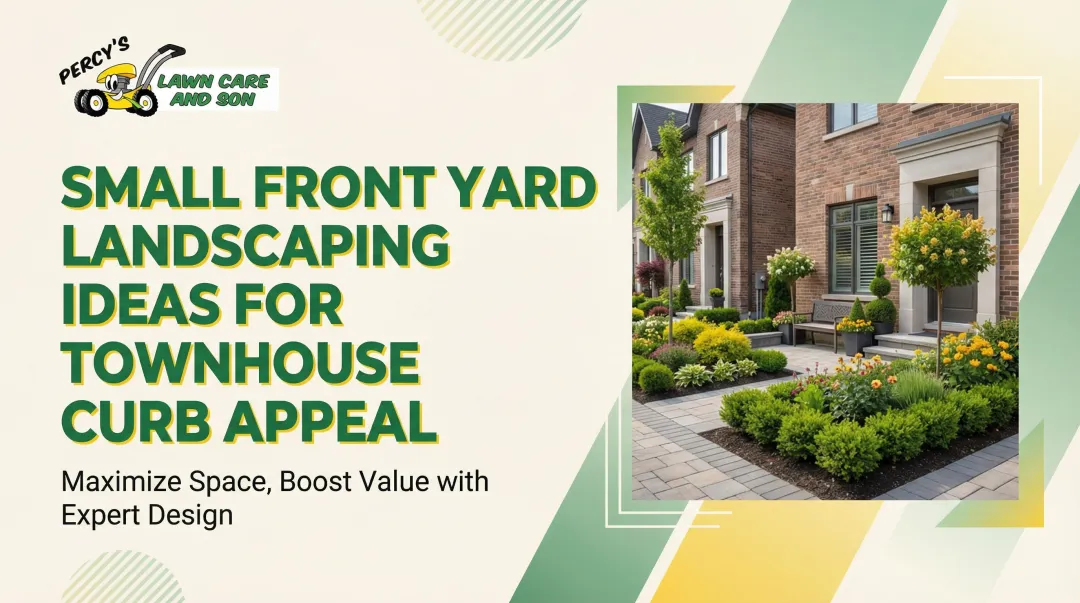

This guide walks you through actionable landscaping ideas organized by plant-based design, hardscape elements, and low-maintenance strategies that hold up through Buffalo's freeze-thaw cycles and heavy snowfall. Whether you're working with limited square footage, heavy shade, or compacted urban soil, you'll find practical solutions that fit your space and your schedule.
Key Takeaways
- Start with perennials and evergreens—they return year after year and reduce replacement costs
- Layer plants by height (tall shrubs at the back, mid-height in the middle, low ground cover at the front) for a polished look
- Define your beds with clean edging and add landscape lighting to boost curb appeal without heavy ongoing maintenance
- In Buffalo and WNY, stick to Zone 6b cold-hardy species so plants survive harsh winters without costly replacements
- Fresh mulch cuts down on weeding and gives any front yard a clean, finished appearance with minimal annual effort
Start With a Plan: What to Consider Before You Landscape
Skipping the planning phase is the most common mistake homeowners make. They buy plants impulsively at the garden center without considering sunlight exposure, mature plant size, or HOA restrictions, and end up with overcrowded beds or plants that fail within a season.
Assess sunlight first. Walk your front yard at different times of day and note which areas receive full sun (6+ hours), partial sun (3-6 hours), or full shade. Many shade-loving plants will scorch in full sun, and sun-loving perennials will languish in the shade. This simple step eliminates half the guesswork.
Match design to actual use. Is your front yard purely for show, or do people walk through it? Do kids play near the foundation plantings, or do delivery drivers cut across the lawn? A yard that sees foot traffic needs durable ground cover and defined pathways; a purely decorative yard can feature more delicate ornamental grasses and flowers.
Once you know how the yard is used, think through your plant choices before you buy. Small yards look cluttered fast, so limit yourself to 2-4 varieties and always plan around mature dimensions — not the 1-gallon pot you bring home. Ignoring mature plant size leads to overcrowding, poor air circulation, and premature removal, which is an entirely avoidable cost with a quick label check. Keep these sizing rules in mind:
- Shrubs labeled "compact" often reach 4–6 feet wide at maturity
- Ornamental grasses spread aggressively in well-drained soil
- Ground covers fill gaps in 2-3 seasons — leave room for them to do so
Simple Plant-Based Landscaping Ideas for Small Front Yards
Layer Plants for Instant Depth
In a small front yard, every square foot matters. The layering technique solves this by stacking plants at three heights — tall at the back against the foundation, mid-height shrubs in the middle, and low-growing plants or ground cover at the front edge. This mimics how landscape designers create depth and keeps every plant visible rather than lost behind taller neighbors.
Tall backdrop (3-6 feet):
- Calamagrostis x acutiflora 'Karl Foerster' (Feather Reed Grass) — hardy Zones 4-8, narrow upright habit, 3-6 feet tall
- Panicum virgatum 'Shenandoah' (Switchgrass) — hardy Zones 4-9, striking burgundy-red fall color, 3-4 feet tall
Mid-height structure (2-4 feet):
- Spiraea japonica 'Little Princess' — hardy Zones 4-8, mounded pink flowers, 1.5-2.5 feet tall
- Buxus 'Green Mountain' (Boxwood) — hardy Zones 5-9, evergreen, naturally forms a cone shape, 3-5 feet tall
Front edge & ground plane (under 12 inches):
- Phlox subulata (Creeping Phlox) — hardy Zones 3-9, mat-forming semi-evergreen, spring blooms
- Pachysandra terminalis (Japanese Pachysandra) — hardy Zones 4-9, spreads by rhizomes, thrives in shade
- Thymus serpyllum (Creeping Thyme) — hardy Zones 4-9, tolerates poor dry soil, releases fragrance when stepped on

Anchor the Space With Evergreens
Evergreens provide year-round structure, hide the foundation line, and require minimal pruning. Plant them first and build your design around them. Buffalo falls within USDA Hardiness Zone 6b, so select varieties rated for Zone 6 or colder.
Compact evergreens for tight spaces:
- Emerald Green Arborvitae (Thuja occidentalis 'Smaragd') — 12-14 feet tall x 3-4 feet wide, narrow pyramidal habit; avoid exposed windy sites to prevent winter damage
- Dwarf Alberta Spruce (Picea glauca 'Conica') — 10-13 feet tall x 7-10 feet wide, extremely hardy but intolerant of road salt spray
- Boxwood (Buxus 'Green Velvet') — 3-4 feet tall x 3-4 feet wide; shield from harsh southwestern winds to prevent winter burn
Add a Focal Point Tree
A single well-placed ornamental tree anchors the yard visually and prevents the space from feeling flat. Columnar or dwarf varieties are best for small yards to avoid root and canopy overgrowth issues.
Top picks for Buffalo front yards:
- Japanese Maple (Acer palmatum 'Tamukeyama') — 6-8 feet tall, weeping habit with deeply cut purple-red leaves, hardy Zones 5-8
- Eastern Redbud (Cercis canadensis 'Ace of Hearts') — 10-12 feet tall, compact dwarf cultivar with pink spring blooms, hardy Zones 4-9
- Crabapple (Malus 'Prairifire') — 15-20 feet tall, dense rounded tree with pinkish-red flowers and persistent fruit, hardy Zones 4-8

Use Symmetry for a Polished, Put-Together Look
Mirroring the same plants on both sides of the front door or walkway is the easiest way to achieve a high-end look with minimal design skill. This technique works especially well for traditional and Colonial-style homes common in Buffalo neighborhoods like Linwood Historic District and Parkside.
A few simple pairings that work well:
- Match boxwoods or arborvitae on either side of the entryway
- Flank porch steps with identical planters filled with seasonal annuals
- Frame the walkway with the same low-growing ground cover on both sides
The eye reads symmetry as intentional, instantly signaling a well-maintained property.
Bring in Seasonal Color Strategically
Select plants with staggered bloom times so there's always something in color from spring through fall. Perennials return each year and build garden structure over time, making them more cost-effective than annuals that must be replanted every season.
Low-maintenance perennials for Buffalo:
- Woodland Sage (Salvia nemorosa) — blooms summer to fall, attracts hummingbirds and bees, hardy Zones 4-8
- Purple Coneflower (Echinacea purpurea) — blooms summer to fall, attracts bees and butterflies, seeds feed goldfinches, hardy Zones 3-8
- Black-Eyed Susan (Rudbeckia hirta) — blooms summer to fall, provides nectar and serves as larval host for butterflies, hardy Zones 3-8
Plant all three together and you'll have color from June through October — with almost no intervention after the first season.
Hardscape and Decorative Ideas That Instantly Boost Curb Appeal
A well-maintained walkway—whether brick, flagstone, or clean concrete pavers—immediately upgrades the appearance of a small front yard. The walkway is often the first surface guests touch and sets the tone for the entire property.
In Buffalo's climate, the freeze-thaw cycle causes frost heave, which is the primary cause of walkway failure. A well-compacted aggregate base is essential to shed water and stay stable through freeze-thaw cycles. Interlocking concrete pavers, brick, and natural stone all hold up well when installed over proper drainage.

Use Planters and Window Boxes to Add Flexible Color
Planters on porch steps or flanking the front door are an easy, low-commitment way to add seasonal color. Window boxes extend the visual landscape upward and are especially effective when the front yard has very little horizontal space.
Swap out plantings seasonally—spring bulbs, summer annuals, fall mums, winter evergreen boughs—to keep the display fresh without reworking entire planting beds.
Go Vertical With Vines or a Trellis
When horizontal square footage is limited, going vertical with a trellis, arbor, or climbing vine draws the eye upward and adds dimension without taking up ground space.
Cold-hardy vines for Buffalo:
- Climbing Hydrangea (Hydrangea anomala subsp. petiolaris) — Zones 4-8, slow to establish but can reach 30-50 feet; minimal pruning required
- Clematis (Clematis virginiana) — Zones 3-8, blooms on new wood; prune hard in late winter and provide trellis support
Once you've made the most of your vertical space, lighting is the next easy upgrade that pays off well beyond daylight hours.
Add Landscape Lighting for Nighttime Curb Appeal
Pathway lights, uplighting on a focal tree, or a simple porch light upgrade can transform how the yard reads after dark. A Houzz study found that 81% of homeowners upgrading outdoor systems chose to add landscape lighting, making it one of the most popular curb appeal projects.
Low-voltage (12-volt) LED systems are safer to install than 120-volt systems and use minimal energy. Solar pathway lights offer a budget-friendly, DIY alternative that requires no wiring, though performance depends on receiving adequate daily sunlight.
Keeping It Low-Maintenance—and Buffalo-Weather-Proof
In Buffalo's climate (Zone 6b, heavy snowfall, freeze-thaw cycles), cold-hardy native or adapted plants aren't optional — plants outside your zone will die back each winter and need costly replacement every spring.
Native plants for Western New York:
- Pennsylvania Sedge (Carex pensylvanica) — low-growing (4-8 inches) grass-like groundcover for shade
- Little Bluestem (Schizachyrium scoparium) — 1-3 feet tall clumping grass for full sun and dry soils, copper-gold fall color
- Bearberry (Arctostaphylos uva-ursi) — creeping evergreen groundcover (3-9 inches tall) for acidic or sandy soils
Mulch matters. A 2-3 inch layer of hardwood mulch suppresses weeds, retains moisture, regulates soil temperature through harsh winters, and gives beds a clean, finished look. Penn State Extension recommends 2-4 inches of organic mulch for effective weed suppression and temperature regulation. Keep mulch 2-3 inches away from plant stems and tree trunks to prevent rot.

Reduce or eliminate turf grass. Small front yards often struggle with compacted urban soil and heavy shade, making grass patchy and high-maintenance. Replace lawn areas with ground cover (creeping phlox, pachysandra), gravel, or additional planting beds. Replacing turf with groundcovers reduces maintenance, lowers pollution from mowers and fertilizers, and offers higher wildlife value.
If you'd rather hand off the upkeep, Percy's Lawn Care and Son handles exactly this kind of recurring work — mulching, shrub pruning, seasonal cleanup — for homeowners across Buffalo, Amherst, Cheektowaga, and surrounding areas. They've been doing it since 1999.
Conclusion
A small front yard can make just as strong a first impression as a sprawling one. With the right plant choices, a clean hardscape, and a consistent maintenance routine, even the most modest space can become genuinely welcoming.
By layering plants by height, anchoring the design with evergreens, and adding defined walkways and landscape lighting, you'll achieve a clean, finished look without overwhelming your space or your schedule.
If you feel overwhelmed or short on time, reach out to Percy's Lawn Care and Son for a personalized landscaping consultation. Family-owned and serving Buffalo and surrounding communities since 1999, they bring over 25 years of local expertise to every project. Call (716) 245-5296 or email hello@percyslawncare.com to talk through what your front yard needs.
Frequently Asked Questions
What is the cheapest way to landscape a small front yard?
Start with perennials that return each year instead of annuals that require replanting. Use a 2-3 inch layer of mulch to fill space affordably while suppressing weeds, and add planters or window boxes for low-cost seasonal color without major investment.
How do I make a small front yard look bigger?
Use vertical elements like tall shrubs, trellises, or a focal tree to draw the eye upward. Keep the color palette simple with 2-4 plant varieties maximum, and install a curved or diagonal walkway to create visual movement and make the space feel more expansive.
What plants are best for a small front yard in a cold climate?
Choose cold-hardy evergreens like boxwood and Emerald Green arborvitae for year-round structure. Add native perennials suited to Zone 6 such as black-eyed Susan, purple coneflower, and woodland sage for seasonal color. Select dwarf ornamental trees like Japanese maple or Eastern redbud that handle freeze-thaw cycles.
How often does a small front yard need maintenance?
Basic maintenance includes spring cleanup, summer weeding and deadheading, and fall leaf removal with mulch refresh. Low-maintenance designs with native plants and mulch beds reduce weekly workload, often requiring attention only during seasonal transitions.
Should I hire a professional or DIY my small front yard landscaping?
DIY works well for simple planting, mulching, and adding planters. Professional help is worth considering for bed installation, grading, or ongoing seasonal maintenance. In Buffalo's climate, professional guidance on plant selection and winterization can save you from costly replacements after a harsh season.
What ground cover works best instead of grass in a small front yard?
Low-growing options like creeping phlox, pachysandra, or creeping thyme work well as grass alternatives. These spread to fill space naturally, require little to no mowing, and hold up well in colder climates while providing visual interest and suppressing weeds year after year.