

Introduction
You've just finished mowing, the lawn looks great — but the ragged grass spilling over your flower bed edges is ruining the whole effect. That overgrown, undefined line where your lawn meets your beds not only looks untidy, it undermines all the effort you just put into cutting the grass. Edging lawn beds and borders is the finishing touch that separates a tidy yard from a truly polished one.
While edging sounds simple, many homeowners end up with uneven lines, scalped turf, or edges that look worse than before. Getting a crisp, professional-looking border comes down to using the right tool, picking the right moment, and following a consistent technique.
According to the National Association of REALTORS®, 92% of real estate professionals recommend improving curb appeal before listing a home for sale — and clean, defined lawn edges are one of the simplest ways to deliver that impact.
This guide covers everything needed: the right tools, the exact steps, when to edge, what affects results, and the mistakes to avoid — so you walk away with the knowledge to cut sharp, consistent borders on every pass.
Key Takeaways
- Edging lawn beds creates a clean, defined line where grass meets a planting bed or border — and sharpens curb appeal fast
- The core process: mark the line, mow first, cut the edge, remove debris, and trim overhanging grass
- Best times to edge are spring (to establish clean lines), and then every 2–4 weeks through the growing season depending on grass growth rate
- Tool choice matters: a half-moon edger gives precision for bed edges; a rotary or power edger works best for long, straight borders
- Skipping prep steps like marking curves or mowing first is the #1 cause of uneven, messy-looking edges
What You Need Before Edging Lawn Beds and Borders
Having the right tools on hand before starting saves time and prevents mid-job problems — especially for irregular-shaped beds or established borders that haven't been edged in a while.
Tools and Equipment
Gather these before you start:
- Half-moon edger or flat-backed spade — cuts a clean line into soil along bed edges
- Long-handled edging shears or rotary lawn edger — trims grass that overhangs the border
- String line or garden hose — marks straight or curved edges before you cut
- Stiff rake or hand tool — clears loose soil and clippings after edging
Power edgers (corded, cordless, or gas) are also an option for larger properties. They speed up the process on long borders but require more care on curves.
Don't skip the safety basics either:
- Closed-toe boots when pressing edging tools into soil
- Eye protection if you're using a power edger
- Gloves to handle cut turf without cuts or blisters
Conditions That Must Be Met Before You Begin
Edging works best when the soil has some moisture. According to Michigan State University Extension, you can test soil readiness using the squeeze test: pick up a handful of soil and squeeze it. If it stays in a mud ball, it's too wet to dig. If it falls out in pieces or crumbles freely, it's dry enough to work.
Skip edging if:
- The ground is waterlogged or frozen — both damage soil structure and produce uneven lines
- The grass hasn't been mowed — tall grass hides the edge line and makes accurate cuts nearly impossible
Mow first. It's a small step that makes everything that follows easier and cleaner.
How to Edge Lawn Beds and Borders Step by Step
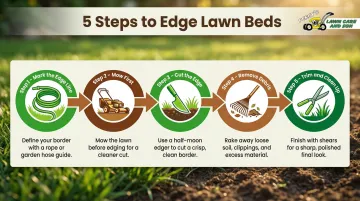
Step 1: Mark Out Your Edge Line
Use a string line stretched between two stakes for straight formal borders. Use a garden hose or length of rope to lay out smooth, flowing curves for rounded flower beds. Spray marking paint along the guide if needed for visibility.
Before cutting, view the marked line from multiple angles — including from a higher vantage point like an upstairs window. Adjust the line until the shape looks intentional and balanced from all perspectives. This prevents regret after the cut is made.
Step 2: Mow the Lawn First
Mow the entire lawn before edging. This sets the grass height and reveals exactly where the turf ends and the bed begins, making it easier to cut a clean, consistent edge without accidentally scalping low spots. It also keeps edging debris out of freshly mown areas, making cleanup easier.
Step 3: Cut the Edge
For beds and borders where a new or re-established edge is needed:
Use a half-moon edger or flat-backed spade. Insert the blade vertically into the soil along the marked line, then stand on the flat top of the blade to drive it to depth. Take small, overlapping steps to create a continuous, clean cut.
Depth guidance varies by source and soil type:
- Trade sources typically recommend 2–3 inches for standard maintenance cuts
- Johnson County K-State Research and Extension recommends 4–6 inches deep and wide, angled toward the bed to block root crossover
- In Buffalo's clay-heavy soils, where grass roots run aggressive, the deeper cut is worth the extra effort
For ongoing maintenance of an already established edge:
Use a rotary edger or power edger along the border line to trim the grass cleanly. Angle the blade slightly toward the bed to create a shallow trench, which sharpens the visual line and keeps mulch or soil from migrating onto the lawn.
Tip for curved beds: Move slowly and let the tool follow the hose or rope guide. Avoid rushing around curves as this leads to jagged, irregular lines that are difficult to fix.
Step 4: Remove Loose Debris and Grass Clumps
After cutting, go back along the edge and pull up any loose strips of cut turf or grass by hand. For larger lifted pieces, use a spade to slide under and remove. Compost the removed turf or bag it for disposal. Don't leave clumps on the lawn; they can smother the grass underneath.
Lightly rake the border trench clean of loose soil. This is also the right time to install physical landscape edging (metal strip, plastic border, or stone edging) if a permanent barrier is desired, since the trench is fresh and precise right after cutting.
Step 5: Trim Overhanging Grass and Clean Up
Use long-handled edging shears or a string trimmer (with head rotated 90 degrees to vertical) to trim any grass that hangs over the edge line. Work from left to right if using a string trimmer, so clippings are thrown back onto the lawn rather than into the bed.
After trimming, use a stiff brush to sweep any cut grass off hard surfaces (paths, patios) and back onto the lawn. Clean tools immediately after use: dried grass and soil on blades and trimmer heads make the next session harder.
When Should You Edge Lawn Beds and Borders?
Edging frequency depends on grass type, weather, and how established the edge already is. In Buffalo and similar climates with cool-season grasses (like fescue, bluegrass, or ryegrass), growth peaks in spring and early fall — these are the periods requiring the most frequent edging.
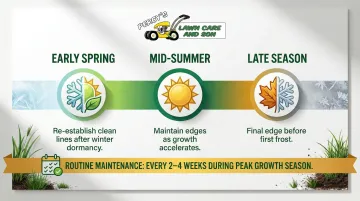
Seasonal guidance:
- Early spring - Re-establish clean lines after winter freeze-thaw cycles (which can blur or heave edges)
- Mid-summer - Edge again as growth accelerates with summer rain
- Late season - A final edge before the first frost keeps the lawn looking clean through dormancy
According to Penn State Extension, turfgrass root and shoot growth for cool-season grasses is greatest during spring and fall, and much reduced during summer and winter months.
If you're mowing weekly, edging every second or third mow keeps borders looking sharp. Popular Mechanics notes that homeowners typically edge two to four times each growing season.
If a lawn hasn't been edged in a full season, plan on a deeper re-cut to restore the original border line before resuming routine maintenance trimming.
Key Factors That Affect Your Edging Results
Even with the right technique, inconsistent results usually trace back to a few controllable variables. Get these right and clean edges become the norm rather than the exception.
Tool sharpness matters more than most homeowners realize. A dull half-moon edger or frayed trimmer line tears grass and soil rather than cutting it cleanly. According to UMass Extension, this causes a brownish cast to the turf and increases disease susceptibility. Sharpen manual edger blades each season and replace trimmer line when it gets short or frayed.
Cut depth directly affects how fast grass grows back. Too shallow and roots stay intact, triggering rapid regrowth. Too deep and you risk damaging bed plant roots or collapsing the edge wall. Aim for a consistent 2–3 inch vertical cut along bed borders.
The other two factors worth watching:
- Bed shape complexity — Tight, intricate curves require slower movement and a manual tool. Broad, sweeping curves are faster to maintain and look more natural. Simplify complex bed shapes if low-maintenance edges are the goal.
- Soil moisture — Moderately moist soil cuts cleanly and holds its shape. Dry soil crumbles; waterlogged soil smears and compacts. In Buffalo, where clay-heavy soils are common, edge after light rain or irrigation when the ground is firm but not soggy.
Common Mistakes When Edging Lawn Beds and Borders
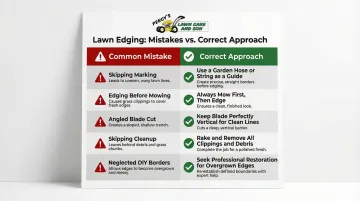
Skipping the marking step:
Cutting freehand along bed edges without a guide line results in wavy, inconsistent borders — especially on curved beds. Even experienced gardeners use a hose or string for reference.
Edging without mowing first:
Attempting to edge tall or overgrown grass means the line is harder to see and the trimming step becomes far more difficult. Always mow to working height before edging.
Cutting at an angle instead of vertically:
Angling the half-moon edger or spade inward undercuts the lawn and creates an unstable, crumbling edge that collapses within weeks. The initial cut should always be straight and vertical; a slight backward angle on power edgers is only appropriate for the trim pass, not the initial cut.
Neglecting cleanup:
Leaving cut turf and soil clumps along the edge not only looks untidy — it can smother the grass edge or introduce weed seeds into the border. Always rake and remove all debris after cutting.
Attempting to DIY severely neglected or complex borders:
Re-establishing edges that haven't been properly cut in a season or more is a different job entirely from routine maintenance. Compacted soil, overgrown grass, and years of border drift make this kind of restoration work genuinely difficult to execute cleanly.
For properties with heavily overgrown borders, mixed beds, or commercial requirements, Percy's Lawn Care and Son handles full edge restoration and ongoing seasonal maintenance. With over 25 years serving Buffalo, Amherst, and Cheektowaga, the team understands local soil conditions and seasonal challenges that affect edging results.
Frequently Asked Questions
How often should you edge lawn beds and borders?
During peak growing season (spring and summer), edging every 2–4 weeks is typical. In cooler months, once every 6–8 weeks is usually sufficient. Grass type and rainfall affect frequency — cool-season grasses common in Buffalo grow most aggressively in spring and fall.
What is the best tool for edging around flower beds?
A half-moon edger is best for re-cutting or establishing new bed edges due to its precision. For routine maintenance trimming, long-handled edging shears or a string trimmer with a rotated head work well.
Should you edge before or after mowing?
Mowing should always come first — it sets the grass height, reveals the edge line, and makes the trimming step after edging more accurate.
How deep should lawn bed edges be cut?
A clean vertical cut of approximately 2–3 inches is standard for bed borders. Going deeper risks disturbing plant roots in the bed; shallower cuts allow rapid grass regrowth back over the edge.
What is the difference between edging and trimming a lawn?
Edging creates or maintains the defined boundary line between lawn and bed (a vertical cut into soil), while trimming cuts grass that has grown beyond a surface or boundary.
Can a string trimmer be used to edge flower beds?
Yes, a string trimmer can be used for maintenance edging by rotating the head 90 degrees to vertical and moving left to right. However, for initially establishing or re-cutting bed edges, a manual half-moon edger or spade gives more precision.