

Introduction
One day there's a foot of wet snow weighing down your Bradford pear. The next, your neighbor is out in shorts firing up his leaf blower while you're still staring at patches of ice in the driveway. That's Buffalo spring: unpredictable by nature, and designed to make even the most eager homeowner feel overwhelmed the moment they step outside to survey the damage.
The real roadblock isn't motivation. It's not even time. It's the paralysis that hits when you see matted leaves plastered to the lawn, bare patches where the snowplow flung road salt, standing water that won't drain, and vole tunnels zigzagging across what used to be a nice Kentucky bluegrass lawn.
Where do you even start?
This guide is your prioritized, practical roadmap for tackling spring cleanup in Western New York's famously unpredictable season. The approach is simple: assess first, act second. Jumping in too early, or doing tasks in the wrong order, can set your lawn back weeks and waste effort and money.
TLDR: Spring Cleanup in a Nutshell
- Wait for soil to firm up and overnight temps to stay above freezing before starting any ground work
- Walk the full property and note all damage before touching a tool
- Clear debris and fix drainage issues first, then move to grass and garden work
- Fertilize and overseed only after soil temps hold steady at 50–55°F
- Start with one visible zone and finish it completely to build momentum
Why Buffalo Springs Make Cleanup Extra Complicated
Buffalo's spring isn't just late—it's violently unpredictable. The region's continental climate, heavily influenced by Lake Erie, delivers an average of 95 inches of snow annually and a median last frost date of May 6. That's not a typo. While homeowners in Charlotte are planting tomatoes in mid-April, Buffalo residents still face a 10% chance of a hard freeze as late as May 19.
What makes this season uniquely brutal for lawns:
- Freeze-thaw cycles that continue well into March and April, repeatedly expanding and contracting soil
- Heavy snow loads that linger into early spring, suffocating turf under wet, compacted layers
- Rapid snowmelt that leaves soil too waterlogged for foot traffic or equipment
- Lake-effect temperature swings that can deliver a 60°F afternoon followed by a 28°F overnight
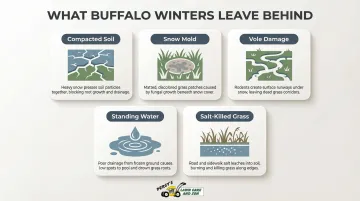
These conditions create problems that milder climates rarely see at the same scale. As the snow recedes, what's underneath tells the full story:
- Compacted soil from repeated freeze-thaw cycles
- Snow mold colonies that developed under prolonged cover
- Vole damage tracks running through the turf
- Standing water in low spots where grass has drowned
- Salt-killed grass along driveways and sidewalks
The "just get out there early" instinct backfires hard in Buffalo. Walking on saturated soil compacts it further, collapsing the pore spaces that grass roots need for oxygen and water movement. Removing protective leaf litter too early can harm beneficial insects that are still dormant and vulnerable. Acting before the lawn is ready doesn't save time—it creates work.
Step 1: Walk the Property Before You Touch Anything
Before you pull on gloves or grab a rake, walk your entire property with one purpose: observe and document, not fix. This is a damage assessment, not a cleanup. Treat it like a health check before you start any treatment.
Walk the full perimeter and interior zones. Note problem areas on your phone or a rough sketch:
- Matted turf — Gray or tan crusted patches where grass is plastered flat, often with a slight mushroom smell (snow mold)
- Thin or bare patches — Areas along driveways, walkways, and curbs where salt spray or plow damage killed grass
- Standing water — Low spots where drainage is poor and water pools for days after rain or snowmelt
- Surface runways — 1-2 inch wide trails of chewed, beaten-down grass (vole damage, not mole tunnels)
- Dead zones — Sections where grass pulls out effortlessly with no root resistance
Test whether the soil is ready to work: Dig down 3-4 inches and grab a handful. Squeeze it in your fist for five seconds, then open your hand. A slick mudball means the soil is too wet; if it crumbles like chocolate cake, conditions are ideal and it's safe to start.
Distinguish between dormant grass and dead grass: Cool-season grasses turn brown when dormant but remain alive. Perform the tug test—grasp brown grass near the surface and pull gently. If it resists and stays rooted with firm white roots visible, it's dormant. If it pulls out effortlessly with rotting or missing roots, it's dead.
Create a simple priority map. Divide your yard into three categories:
- Immediate attention — Debris removal, drainage fixes, and anything blocking access
- Wait and watch — Areas that may recover on their own as temperatures rise
- End-of-season projects — Major renovations that need active grass growth to succeed
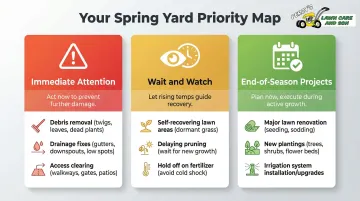
This breakdown turns an overwhelming yard into a workable to-do list.
Step 2: The Right Order — What to Tackle First
Clear fallen branches, matted leaves, and accumulated winter debris first. This lets light and air reach the soil and shows you what's actually happening underneath. You can start as soon as the ground is firm enough to walk on without sinking.
Once debris is out of the way, be careful about how aggressively you rake. Light raking to break up matted layers is fine, but hold off on mechanical dethatching. Dethatching in early spring can severely damage cool-season turf that's still recovering from winter stress — save that task for late summer or early fall when grass can bounce back quickly.
With the surface cleared, shift to structural tasks:
- Clear clogged gutters and confirm downspouts direct water away from the lawn
- Re-edge beds before spring growth accelerates
- Pull winter mulch back from perennial crowns to prevent rot at the base
These steps don't disturb dormant grass and produce visible results fast.
Dead perennial stalks and ornamental grasses can come down next — but timing matters. Native bees and butterflies overwinter in leaf litter and hollow stems, so wait until temperatures have held consistently above 50°F for five days in a row. Two reliable natural indicators: apple and pear trees finishing their bloom, or your lawn reaching the point of needing its first regular mowing.
Hold off on applying fresh mulch until the soil has warmed — more on that timing below.
Step 3: Timing Is Everything — What to Hold Off On
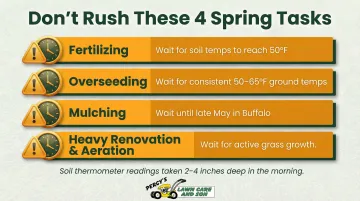
Rushing the calendar is one of the fastest ways to undo early spring progress. Four common tasks frequently get started too soon — and each one causes more harm than waiting would.
Fertilizing before soil temps hit 50°F is the most common spring lawn mistake. Dormant grass cannot properly absorb nutrients. Excess fertilizer leaches into groundwater and runs off into local waterways, contributing to algal blooms, while premature growth drains energy reserves that should go toward root development.
Cool-season turfgrasses produce the best root growth at soil temperatures between 50°F and 65°F. Nitrogen uptake increases meaningfully once soil temperatures exceed 50°F — applying it before that threshold wastes money and harms the environment.
The same temperature rule applies to overseeding. Cool-season grass seeds germinate best when soil temperatures are between 50°F and 65°F, measured 2–4 inches deep in the morning. Seed dropped into cold soil sits dormant, vulnerable to washout or rot — wait until the ground warms consistently before overseeding.
Mulching has its own timing window. In Buffalo, where spring soils stay wet longer than average, heavy mulch applied too early prevents soil from warming and encourages mold and fungal disease. Buffalo and surrounding suburbs fall within USDA Zones 6a and 6b, putting the safe planting date for warm-season annuals in late May — use that as your mulching benchmark.
Finally, resist the urge to heavily renovate compacted or saturated areas the moment temperatures climb. Tilling, reseeding, or aggressively working these spots before the lawn is actively growing causes more damage than waiting. Core aeration works best when grass can recover — not in the first week of warmth.
Quick Wins to Build Momentum When It All Feels Like Too Much
Spring cleanup feels manageable once you stop thinking about the whole yard and start finishing one thing at a time. These three strategies get you moving:
- Choose one visible, high-traffic zone—the front walkway, the side gate entrance, or the mailbox area—and finish it completely before moving on. A single finished area builds real momentum.
- Set a 20-minute timer and commit to one task: clearing a bed edge, pulling debris from the driveway strip, or cutting back one overgrown shrub. Small, completed tasks reduce overwhelm and build real progress quickly.
- Start where guests and neighbors see first. A clean front walkway, trimmed edge, and debris-free lawn signals progress even when the backyard still needs work.
When the To-Do List Feels Bigger Than Your Weekend
For many Buffalo homeowners—especially those with larger properties, severe winter damage, or years of deferred maintenance—spring cleanup is genuinely a big job. There's no shame in that. Trying to rush through it alone can lead to injury, costly mistakes, or a lawn that looks worse in June than it did in April.
Percy's Lawn Care and Son has served Buffalo homeowners since 1999, with deep knowledge of Western New York's climate and soil conditions. The team handles the full scope of spring work so you're not left guessing where to start:
- Debris and winter damage removal
- Lawn assessment and soil evaluation
- Seasonal cleanup and bed preparation
- Ongoing maintenance scheduling
That kind of structured start makes the difference between a lawn you enjoy all summer and one you're constantly playing catch-up on.
Frequently Asked Questions
When should I start spring cleanup in Buffalo?
Begin outdoor spring cleanup when soil has firmed up (passes the squeeze test) and nighttime temperatures stay consistently above freezing. Most active tasks like fertilizing and overseeding should wait until soil temperatures reach 50-55°F, typically mid-to-late May in Western New York.
What should I do first when starting spring lawn cleanup?
Start with a full property walk-through to assess winter damage before picking up any tools. Once the soil is firm enough to walk on without sinking, begin debris removal to reveal what's underneath and allow air and light to reach the turf.
Is it too early to fertilize my lawn in early spring?
Yes — in most cases, early spring fertilizing does more harm than good. Applying product before soil temperatures hit 50-55°F forces premature growth, wastes fertilizer, and risks runoff into local waterways. Waiting until mid-May in Buffalo protects both your lawn and the environment.
How do I know if my grass is dead or just dormant after winter?
Try the tug test: grasp brown grass near the surface and pull gently. Dormant grass resists with firm white roots; dead grass pulls out easily with rotting or missing roots. Give it a few weeks into the warming season before deciding on renovation.
Should I rake leaves before or after the first mow in spring?
Light debris removal and gentle raking to break up matted areas should happen before the first mow. This prevents the mower from pushing down wet leaf mats or clogging with winter debris, and it allows grass to breathe and green up properly.
When is it safe to apply mulch in spring?
Wait until late May in Buffalo, when soil has warmed enough to support planting. Applying mulch too early traps cold in the ground and encourages mold or fungal problems in Buffalo's wet spring conditions.