Introduction
Staring at a large, blank backyard in Buffalo can feel overwhelming. Instead of seeing potential, many homeowners see an impossible maintenance burden—acres of unmowed grass, empty corners collecting debris, and the daunting question: where do you even start?
A big yard is actually an advantage — you just need a plan for it. With the right landscaping design, that sprawling space becomes a functional outdoor living area that boosts property value and gives your family room to enjoy the outdoors year-round.
According to the National Association of Realtors, professional landscape maintenance delivers a 104% cost recovery at resale and a near-perfect 9.6 Joy Score from homeowners.
The 21 ideas below will help you figure out exactly where to start.
Key Takeaways
- Divide large yards into defined zones with specific purposes (entertaining, gardening, recreation)
- Mix hardscaping structures, garden beds, and outdoor living areas to make large spaces feel intentional rather than empty
- Choose climate-smart plants like arborvitae and native perennials suited to Buffalo's Zone 6b winters
- Tackle one zone at a time to keep costs manageable while building toward a long-term vision
- Seasonal upkeep — especially post-winter cleanup and fall prep — protects landscaping through Buffalo's harsh freeze-thaw cycles
How to Plan Landscaping for a Large Backyard
Large backyards require a zoning approach before you dig a single hole. Think of it like designing a home's interior—every room has a purpose. An unplanned yard quickly becomes unmanageable, with overgrown corners and wasted potential.
Start by answering these key questions:
- How will you use the space? (Entertaining guests, vegetable gardening, kids' play area, quiet retreat)
- What are your yard's conditions? (Sun/shade patterns, existing mature trees, slopes, drainage problems)
- What's your maintenance tolerance? (Weekly upkeep versus low-maintenance native plantings)
Buffalo's residential lots vary widely. Amherst properties average 0.50 acres, while Cheektowaga homes typically sit on 0.20-acre parcels. Larger suburban lots demand intentional design to avoid looking neglected.
Choose a cohesive landscape style that complements your home's architecture. Buffalo's historic neighborhoods feature Queen Anne, Colonial Revival, and Craftsman homes that pair well with naturalistic or classic American landscape styles. Cottage gardens, fieldstone pathways, and native plantings tend to fit far better than stark modern minimalism.
Design in phases to avoid budget shock. Identify 2-3 anchor projects that define your framework:
- Hardscaping first (patio, walkways, retaining walls)
- Structural plants second (privacy hedges, shade trees)
- Ornamental plantings third (flower beds, seasonal color)
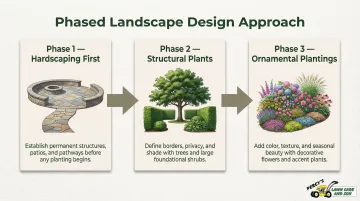
This approach lets you build over several seasons without compromising your long-term vision. It also keeps costs manageable — a wood deck addition in Buffalo costs around $17,615 but recovers 82.9% at resale, making it one of the strongest first investments for a large yard.
Establish a realistic budget upfront. Hardscaping runs $5-$25 per square foot depending on materials, and a phased plan ensures you get the most from every dollar.
Outdoor Living & Entertainment: Ideas #1–7
This is the most-used zone of any large backyard—the features that make outdoor spaces feel like true extensions of your home. Buffalo's cooler climate means these spaces need to work in April and October, not just July.
Create Designated Outdoor Zones
Draw clear boundaries between different activity areas using landscape borders, gravel pathways, or planted hedges. A well-zoned yard feels organized and purposeful.
Effective zone ideas:
- Entertaining area near the house with patio seating
- Kids' play zone with open lawn and swing set
- Quiet reading nook tucked behind flowering shrubs
- Vegetable garden in a sunny corner
Physical dividers like low stone walls, ornamental grasses, or stepping-stone paths guide visitors through the landscape and create visual interest.
Build a Fire Pit or Outdoor Fireplace
A fire pit serves as a natural gathering anchor and extends your outdoor season well into Buffalo's cooler months. It can be as simple as a $200 metal ring or as elaborate as a built-in stone structure with bench seating.
Position your fire pit at least 10–15 feet from structures and overhanging trees. Surround it with gravel or pavers to contain sparks, and add Adirondack chairs in a circle for comfortable conversation seating.
Design an Outdoor Kitchen or Grill Station
A well-placed grilling station with counter space and a small prep area transforms how you use your yard—without requiring full construction.
Budget-friendly outdoor kitchen elements:
- Built-in grill with side burners
- Weather-resistant countertop for prep work
- Mini-fridge for drinks and condiments
- Overhead pergola for shade and definition
Full outdoor kitchens are lifestyle investments—a backyard patio project averages $51,454 but only recovers 46% at resale. Start small and expand based on how you actually use the space.
Add Comfortable Seating Areas
Large backyards benefit from multiple seating areas, not just one patio. Different spots serve different needs throughout the day.
Strategic seating placement:
- Main lounging area near the house with cushioned furniture
- Adirondack chairs around the fire pit for evening gatherings
- Bench tucked into a garden corner for morning coffee
- Hammock strung between mature trees for afternoon naps
Mix permanent and movable furniture to adapt the space seasonally.
Install a Pergola or Covered Patio
A pergola provides shade, structure, and a defined entertaining zone. String lights, climbing vines like clematis, or outdoor curtains can be added for atmosphere and privacy.
Buffalo's freeze-thaw cycles make construction quality non-negotiable. Key structural requirements:
- Footings must extend 36+ inches below grade to stay below the frost line
- Use pressure-treated or cedar lumber rated for ground contact
- Anchor posts in concrete to prevent seasonal shifting
Set Up Landscape Lighting
Proper lighting extends how many hours per day your yard is usable and adds safety to pathways and steps.
Three tiers of backyard lighting:
- Pathway lighting for safety along walkways and steps
- Ambient string lights or lanterns for atmosphere and entertaining
- Uplighting to highlight specimen trees or architectural features
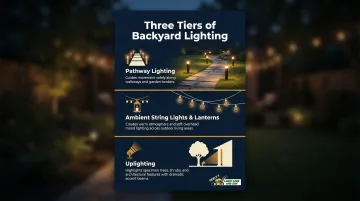
Solar-powered path lights work well for Western New York's shorter summer days, while low-voltage LED systems offer brighter, more reliable illumination.
Include a Multi-Level Deck
Lighting sets the mood—but for sloped Buffalo lots, a two-tier deck solves both grade challenges and zoning in one structure. Upper levels handle dining while lower sections work for lounging or a hot tub.
Deck code requirements:
- Footings below 36-inch frost line to prevent heaving
- Slope deck boards 1/8" to 1/4" per foot away from house for drainage
- Guardrails required for decks over 30 inches high (minimum 36" rail height, balusters spaced under 4")
Multi-level decks cost more upfront but solve grading challenges and add architectural interest to large properties.
Garden & Green Spaces: Ideas #8–14
This is the living layer of your landscape—the plants, gardens, and green spaces that add color, biodiversity, and seasonal interest. Buffalo's Zone 6b climate supports a wide range of reliable perennials and native species.
Design a Flower or Pollinator Garden
Choose perennials and native plants that return year after year without replanting. Buffalo's updated Zone 6b classification (shifting from 6a) means winter lows of -5°F to 0°F.
Reliable pollinator-friendly options:
- Purple coneflower (Echinacea purpurea)
- Black-eyed Susan (Rudbeckia hirta)
- Joe-Pye weed (Eutrochium spp.)
- Swamp milkweed (Asclepias incarnata)
- Ornamental grasses like little bluestem
These attract pollinators, handle Buffalo winters, and require minimal watering once established.
Start a Vegetable or Herb Garden
Large backyards offer space for proper raised beds or in-ground plots. Raised beds solve Western New York's clay-heavy soil issues by improving drainage and warming up faster in spring.
Raised bed advantages:
- Better drainage in clay soils
- Less soil compaction
- Easier access for planting and harvesting
- Extended growing season (soil warms earlier)
Build beds 4 feet wide for easy reach from both sides, using untreated cedar or composite lumber that won't leach chemicals.
Plant an Orchard or Fruit Trees
Three to five fruit trees create a productive and visually interesting zone in large yards. Top disease-resistant picks for Buffalo:
- Apples: Liberty, Freedom, GoldRush (resistant to apple scab)
- Pears: Bartlett, Bosc (on OHxF rootstocks for fire blight resistance)
- Cherries: Montmorency, Balaton (self-fruitful, hardy tart cherries)
Space trees 15-20 feet apart and plant in full sun. The average last spring frost hits Buffalo around May 7, so plan bloom times accordingly.
Create a Shade Garden
Naturally shaded corners under mature trees are ideal for low-maintenance perennials that thrive without full sun or frequent watering.
Best shade plants for Buffalo:
- Hostas (hundreds of varieties, deer-resistant when established)
- Astilbe (feathery plumes in pink, white, red)
- Ferns (native ostrich fern, lady fern)
- Hellebores (early spring blooms, evergreen foliage)
Amend clay soil with compost before planting to improve drainage in shaded areas.
Add Privacy Trees and Hedges
Fast-growing evergreens provide natural, attractive privacy screening and wind protection through Buffalo winters.
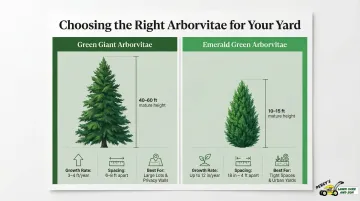
Arborvitae variety comparison:
| Cultivar | Growth Rate | Mature Size | Spacing | Best For |
|---|---|---|---|---|
| Green Giant | 3-4 ft/year | 40-60 ft tall, 12-18 ft wide | 6-8 feet | Large lots, perimeter screening |
| Emerald Green | Up to 12 in/year | 10-15 ft tall, 3-4 ft wide | 18 in - 4 feet | Tight spaces, formal hedges |
Green Giant suits expansive properties needing fast coverage, while Emerald Green works for narrow side yards requiring minimal pruning.
Choose Flowering Trees for Seasonal Interest
Flowering trees provide spring color, fall interest, and wildlife habitat without overwhelming large yards.
Top spring bloomers for Buffalo:
- Crabapple (disease-resistant varieties like 'Prairifire')
- Dogwood (Kousa dogwood handles Zone 6b winters)
- Redbud (Eastern redbud, early spring pink blooms)
Plant flowering trees as specimens in open lawn areas or along property borders for maximum visual impact.
Plant a Secret or Enclosed Garden
A secluded garden "room" tucked behind arching shrubs or a vine-covered arbor creates a destination within the larger landscape. Add a small fountain, ornamental bench, or specimen planting at the center for focal interest.
Fragrant plants amplify the sense of enclosure and make the space feel intentional:
- Lilac (early season, strong fragrance)
- Mock orange (Philadelphus) — blooms in late spring
- Climbing roses trained over an arbor entrance
Position this garden at the far end of the yard to give it genuine separation from play areas and gathering spaces.
Hardscaping, Water Features & Structures: Ideas #15–21
Structural elements define your yard's character and increase property value. These are permanent investments that shape how you use outdoor space for decades.
Install a Pool, Pond, or Water Feature
Water features range from simple bubbling fountains ($300–$500) to naturalistic ponds or in-ground pools. In-ground pools cost around $90,000 but only recover 56% at resale, despite delivering a 10.0 Joy Score.
Budget-friendly alternatives:
- Stock tank pools ($500–$1,500)
- Small pond with recirculating pump ($1,000–$3,000)
- Bubbling urn or fountain ($200–$600)
Even small water features add sensory dimension and become natural focal points in large yards.
Design Walkways and Garden Paths
Pathways connect zones and guide visitors through the landscape. Material choices affect both cost and style.
Pathway material options:
- Flagstone: $15–$50/sq ft, natural look, irregular shapes
- Gravel: $0.80–$2.75/sq ft, most economical, requires edging
- Pavers: $8–$15/sq ft, uniform look, individually replaceable
- Stamped concrete: $4–$5/sq ft, mimics stone at lower cost
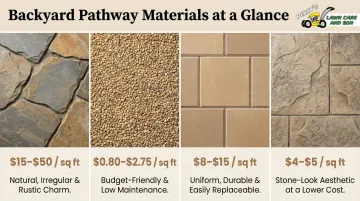
Winding paths add mystery and make yards feel larger, while straight paths convey formality.
Use Stamped Concrete or Pavers for Patios
Stamped concrete offers an upscale look at lower cost than natural stone. Pavers provide the advantage of being individually replaceable and permeable, supporting drainage on larger lots.
For patios specifically, scale matters: a 400 sq ft patio in pavers ($8–$15/sq ft) runs $3,200–$6,000, while stamped concrete covers the same area for $1,600–$2,000. In Buffalo's freeze-thaw climate, pavers hold a clear edge — individual units can be reset when frost heaves them, while poured slabs crack and require full-section replacement.
Build an Outbuilding, Shed, or She-Shed
Outbuildings serve double duty on large properties — meeting storage needs while potentially becoming destination spaces like art studios, reading cabins, or guest suites.
Position sheds away from the main house to free up backyard space. Match the architectural style to your home:
- Board-and-batten siding for Craftsman homes
- Victorian trim details for Queen Anne styles
- Clean horizontal cladding for mid-century modern properties
Create a Wide-Open Recreation Space
Not every inch needs to be planted or hardscaped. Intentionally leaving a large lawn section open for recreation — lawn games, kids' play, sports practice — creates visual breathing room and prevents large yards from feeling cluttered.
Plan for 30–40% of your total yard as open lawn to balance structured zones.
Install Retaining Walls for Sloped Yards
Retaining walls solve erosion issues while creating usable flat terraces on sloped Buffalo lots. Material choices should match your landscape style.
Retaining wall materials:
- Natural stone (rustic, cottage gardens)
- Concrete block (modern, cost-effective)
- Timber (temporary, 10–15 year lifespan)
Walls over 4 feet high typically require engineering and permits. Footings must extend below the 36-inch frost line to prevent winter heaving.
Consider Artificial Turf for Low Maintenance
Modern synthetic turf looks realistic and eliminates mowing in high-traffic zones. Poor installation in Buffalo's wet climate leads to pooling and premature backing failure.
Synthetic turf requirements:
- Minimum drainage rate of 10 inches/hour for backing
- Crushed stone base for drainage (14 inches/hour minimum)
- Proper surface grading to prevent pooling
Use it strategically in shaded areas where grass struggles and high-traffic side yards where natural turf wears thin. Like the other structural investments in this section, the right material in the right location pays off in reduced maintenance and a yard that actually gets used.
Keeping Your Large Backyard Beautiful Year-Round
Large backyards require a seasonal maintenance rhythm to stay healthy. Buffalo winters are especially hard on landscapes.
Seasonal maintenance checklist:
- Spring: Clear debris, apply mulch, prune damaged branches, and fertilize lawns
- Summer: Mow weekly, edge walkways, deadhead perennials, and monitor irrigation
- Fall: Remove leaves, cut back perennials, protect shrubs, and clear drainage paths
- Winter: Remove snow, protect young trees from snow load, and check for ice damage
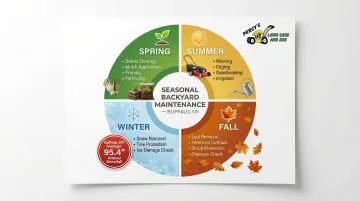
Consistent edging and lawn care separate well-kept yards from overgrown ones. On large properties, skipping even one seasonal task can trigger compounding problems — soil compaction, mold, and damaged plantings that become expensive to reverse.
Buffalo's average annual snowfall hits 95.4 inches, and that prolonged snow cover creates ideal conditions for snow mold (Typhula blight). That risk is why you should avoid fertilizing after October 1st — late-season feeding stimulates soft, succulent growth that's especially vulnerable to disease under snow.
Winter prep checklist for Western New York:
- Cut back perennials but leave some standing for pollinator habitat
- Apply 2-4 inches of mulch around young trees and shrubs
- Protect evergreens from snow load with burlap wrapping
- Ensure drainage paths are clear before first freeze
- Mark pathway edges before snow covers landscaping
Percy's Lawn Care and Son — serving Buffalo, Amherst, Cheektowaga, and surrounding Western New York communities since 1999 — provides year-round maintenance that keeps large properties healthy through harsh Zone 6b winters. With over 25 years of hands-on experience in the region, they know exactly what Buffalo landscapes need to come back strong each spring.
Conclusion
A large backyard is a genuine asset when approached with the right zoning strategy and phased execution. Even the most overwhelming outdoor space becomes a beautiful, functional retreat that adds lasting value to your home.
Pick two or three ideas from this list that align with your lifestyle and budget. Start there. Build out your vision over time—one anchor zone per season, one garden bed per year. Done right, the space stops feeling like a burden and starts working for you.
Buffalo-area homeowners who want expert help designing, maintaining, or transforming their large backyard can reach out to Percy's Lawn Care and Son. A family-owned team serving Buffalo since 1999, Percy's handles everything from landscape design and installation to ongoing yard maintenance—so your backyard vision doesn't stall at the planning stage. Contact them at (716) 245-5296 or hello@percyslawncare.com.
Frequently Asked Questions
What type of lawn edging is best?
The most common types are steel, aluminum, rubber, plastic, and natural stone. Steel and aluminum are the most durable, installed 2-3 inches below grade to contain creeping grass roots; natural stone suits cottage and rustic styles well.
What are some creative lawn edging ideas?
Try natural stone or brick borders for classic appeal, decorative metal edging for clean lines, log roll borders for rustic charm, or repurposed materials like wine bottles or cobblestones for a personal touch.
What are common mistakes when edging?
Key mistakes include edging too infrequently (allowing root overgrowth) and cutting too deep, which damages plant roots. For tools: use a flat-blade spade for first-time edging, then a rotary edger to maintain clean lines.
How do I landscape a large backyard on a budget?
Start with one anchor zone and use native plants — lower cost and less maintenance. Propagate perennials by division and choose gravel or stamped concrete over expensive pavers. Phasing projects across multiple seasons keeps costs manageable.
What are the best low-maintenance plants for a large backyard in the Buffalo, NY area?
Native and climate-resilient options for Zone 6b include coneflowers, hostas, ornamental grasses, arborvitae, and black-eyed Susans. These handle Western New York winters well and return reliably each year with minimal care.
How do I add privacy to a large backyard without a fence?
Fast-growing evergreens like Green Giant arborvitae (3-4 feet per year) create solid screening quickly. Tall ornamental grasses, mixed hedgerows, or a pergola with climbing vines also work well as fence-free privacy solutions.