
Introduction
You set aside Saturday and Sunday to tackle the garden. By Sunday evening, you've moved bags around, poked at the same overgrown bed three times, and maybe raked half the leaves—but the yard still looks messy.
The problem isn't effort. It's the lack of a clear plan. Buffalo-area homeowners face a real time crunch: a 185-day growing season squeezed between the median last spring freeze on April 24 and the first fall freeze on October 26. That narrow window makes cleanup feel urgent—and without a system, the weekend disappears before anything's actually done.
This guide gives you a realistic, prioritized approach so you stop spinning your wheels. You'll learn what to tackle first, what can wait, and what to skip entirely—so the yard gets done and you still have a Sunday left.
Key Takeaways
- Fall cleanup (before hard frost) and spring cleanup (after consistent 50°F nights) are Buffalo's two critical windows.
- Prioritize diseased plant removal, dead perennials, leaf management, visible bed weeding, and hardscape tidying.
- Leave some leaf litter and 8–24 inch hollow stems in place to shelter overwintering beneficial insects.
- A focused 4–6 hour block with a clear task list beats two unfocused days every time.
- Short on time or managing a larger property? Percy's Lawn Care and Son handles seasonal cleanup so your garden stays protected.
Why Garden Cleanup Takes Longer Than It Should
Most homeowners treat garden cleanup as one giant, vague task: "clean up the yard." Without breaking it into smaller, distinct jobs, you end up wandering from bed to bed, reacting to whatever catches your eye. This is the root cause of inefficiency and overwhelm.
Scope creep is usually the culprit. You start clearing leaves, notice the overgrown shrubs, and while trimming those, realize the tools are a disaster. Two hours disappear with little visible progress. By lunchtime, you're tired and the yard still looks chaotic.
Buffalo's climate makes this worse by compressing your working window. The gap between fall foliage drop and ground freeze—or between snowmelt and the growing season—is narrow. Rushing through everything at once because a hard freeze is a week out, or because the neighbors are already mowing, guarantees frustration and half-finished projects.
The fix is a priority triage approach: sort tasks into "must do now," "do when you can," and "skip entirely." Pair that with a simple time-block structure for your weekend, and cleanup becomes manageable—not a marathon you dread.
The Priority Triage: What Must Get Done vs. What Can Wait
Must Do — Remove Diseased and Pest-Ridden Material
Any plant debris showing fungal disease (powdery mildew, leaf blight, apple scab) or pest damage must be bagged and removed—not composted. Fungal spores and insect eggs overwinter in fallen leaves and can reinfect your garden next season. Common culprits in the Buffalo area include:
- Crabapples and apples (apple scab)
- Roses (black spot, downy mildew)
- Viburnums (downy and powdery mildew)
Home compost piles rarely reach the sustained high temperatures (130°F–160°F) needed to kill pathogens. Bag diseased material in brown paper yard waste bags or dispose of per local guidelines.
Must Do — Tackle Visible, High-Traffic Areas First
Start with front beds, borders along paths, and areas visible from the street. These deliver the fastest visual payoff—a clean front bed by lunchtime will keep you moving through the rest of the list. Focus on:
- Front foundation beds and entry borders
- Edges along sidewalks and driveways
- Any beds directly visible from the street
Must Do — Pull Weeds Before They Set Seed
Fall and early spring are critical windows to pull weeds while roots are shallow and before seed heads can drop thousands of seeds into your beds. Focus especially on perennial weeds like dandelions, creeping Charlie, and thistle—if you leave the root, they'll return stronger.
Timing tip: Work when soil is slightly moist (after rain or light watering). Roots pull cleanly and completely, reducing regrowth.
Can Wait — Cutting Back Healthy Perennials and Native Plants
Dead stalks of coneflower, goldenrod, bee balm, and similar plants should be left standing through winter. They provide nesting habitat for solitary bees and shelter for beneficial insects. Leave stems at varying heights from 8 to 24 inches—these stubs will be hidden once new growth starts in spring.

Can Wait — Dividing and Transplanting Perennials
This task often gets lumped into cleanup weekend. It doesn't need to happen now. Schedule it as a separate, smaller project: early fall for spring bloomers, or early spring for fall bloomers.
Your Practical Weekend Cleanup Plan, Step by Step
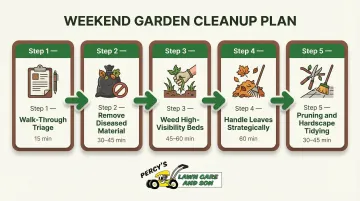
Block off 4–6 focused hours and work through this in order. The sequence matters — each step prevents you from undoing work you've already done.
Step 1 — Do a Quick Walk-Through Triage First (15 minutes)
Walk the whole garden before touching anything. Make a short list of what needs to happen and flag any diseased plants for immediate removal. This 15-minute investment prevents the "I'll just fix this one thing" spiral that derails your entire morning.
Step 2 — Remove Diseased Material and Bag It (30–45 minutes)
Collect infected leaves, stems, and debris in brown paper yard waste bags. Clean pruning tools with rubbing alcohol or a 10% bleach solution between cuts when dealing with diseased plants—this prevents spreading the problem from one shrub to another.
Step 3 — Weed High-Visibility Beds and Borders (45–60 minutes)
Focus weeding time on front beds and border areas. If soil is dry, water lightly the night before—moist soil makes root removal far easier and more complete. Pull the entire root system; leaving even a fragment of perennial weeds guarantees they'll be back.
Step 4 — Handle Leaves Strategically Rather Than Removing All of Them (60 minutes)
You have three options:
- Shred with a lawnmower and spread as mulch on beds (adds organic matter and retains moisture)
- Rake whole leaves onto garden beds as a natural insulating layer (protects roots and shelters beneficial insects)
- Start or add to a compost pile for future use
Leaves left in less visible areas benefit the soil and support ground-level wildlife. Just avoid thick matted layers on lawns, which can smother grass. Shredded leaves used as mulch improve soil structure and moderate soil temperatures.
Step 5 — Light Pruning and Path/Hardscape Tidying (30–45 minutes)
Cut back ground cover encroaching on paths and walkways for easier winter access. Clean patios, steps, and garden furniture. Save heavy pruning of shrubs for their correct seasonal windows—pruning now can eliminate next year's blooms on spring-flowering plants.
If your garden scope goes beyond what one weekend realistically covers, that's a signal worth taking seriously before Buffalo's winters set in. Percy's Lawn Care and Son has served Buffalo-area homeowners since 1999, and their seasonal cleanup services are built around exactly this gap — handling the tasks that fall through the cracks when time runs short.
What You Can Safely Skip (or Delay)
Skip — Cutting Everything to the Ground
Bare soil and fully cleared beds lose the natural mulch layer, require more amendments in spring, and remove the overwintering habitat that native bees and beneficial insects need. Leaving stems and seed heads standing through winter protects soil, feeds birds, and cuts your spring prep work significantly.
Hold Off — Heavy Fertilizing During Cleanup
Applying high-nitrogen fertilizer as part of fall or early spring cleanup can stimulate tender growth vulnerable to frost (in spring) or push plants into late-season growth before dormancy (in fall). Organic compost spread as a top-dressing is a better alternative that improves soil structure without triggering that unwanted flush of growth.
Delay — Aggressive Pruning of Shrubs That Bloom on Old Wood
Forsythia, lilac, many hydrangeas (Hydrangea macrophylla), and azaleas form their flower buds on last year's wood. Pruning these during cleanup eliminates next year's blooms. Reserve these for their correct pruning windows: immediately after flowering, not during fall or spring cleanup.
How to Keep It From Piling Up Again
Micro-Maintenance: The 10–15 Minute Weekly Habit
Spend 10–15 minutes in the garden after each mowing session or on a regular weekly basis. Pull new weeds before they establish, deadhead spent flowers, and spot-remove debris. This prevents the seasonal cleanup from ever becoming an overwhelming backlog.
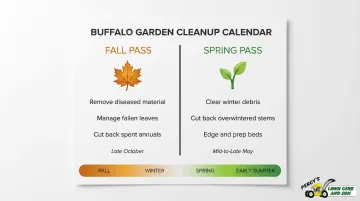
A Simple Two-Phase Cleanup Calendar for Buffalo Homeowners
Fall pass (before the first hard frost, typically late October):
- Remove diseased plant material before it overwinters
- Manage fallen leaves to prevent lawn suffocation
- Cut back spent annuals and heavily damaged perennials
Spring pass (once overnight temps consistently stay above 50°F, typically mid-to-late May):
- Clear remaining winter debris and matted leaf pockets
- Cut back perennial stems that sheltered over winter
- Edge and prep beds before planting season begins
When each pass handles half the work, neither needs to be a full-day project. Most Buffalo homeowners find that two focused two-hour sessions per year replace the one exhausting all-day push.
When to Call in Professional Help
For larger properties or homeowners who can't get ahead of the seasonal backlog, professional seasonal cleanup is worth considering. Buffalo's compressed spring and fall windows leave little margin for delay — a late start on fall cleanup can mean matted, disease-prone turf by April. Percy's Lawn Care and Son has handled seasonal cleanups across Buffalo since 1999 and can step in when weekend time simply runs out.
Frequently Asked Questions
What plants should I prune in October?
October is a good time for light pruning of dead or damaged branches on most shrubs and trees. Avoid pruning spring-blooming plants like lilacs and forsythia—they bloom on old wood, and fall pruning removes next year's flowers.
What should I do with fallen leaves in my garden?
Shred leaves with a mower and use them as mulch on beds, rake whole leaves onto garden beds as insulation, or add them to a compost pile. A thin layer left in less-visible areas benefits overwintering insects and improves soil health.
Is it bad to clean up the garden in the fall?
Fall cleanup is not bad—removing diseased material in fall is actually important. But stripping the garden completely bare removes beneficial overwintering habitat and natural mulch. Focus on clearing diseased or pest-damaged plants while leaving healthy stems and leaf litter in place.
When should I start cleaning up my garden in spring?
In Buffalo, the earliest advisable time is mid-April. Mid-May is ideal—once overnight lows consistently stay above 50°F—so overwintering insects have had time to emerge from hollow stems and leaf litter.
How long does a garden cleanup typically take?
A focused 4–6 hour session with a clear task list is realistic for a typical residential garden when tasks are prioritized correctly. Larger properties or heavily neglected gardens may need two focused sessions rather than one marathon day.
What should I not remove during garden cleanup?
Leave healthy plant stems—especially hollow ones from coneflower, goldenrod, and bee balm—along with undisturbed leaf litter and disease-free seed heads. All three provide food, shelter, and nesting sites for beneficial insects and birds.